Keyword Research Services: The Ultimate Guide to Ranking Higher and Converting Faster in 2026
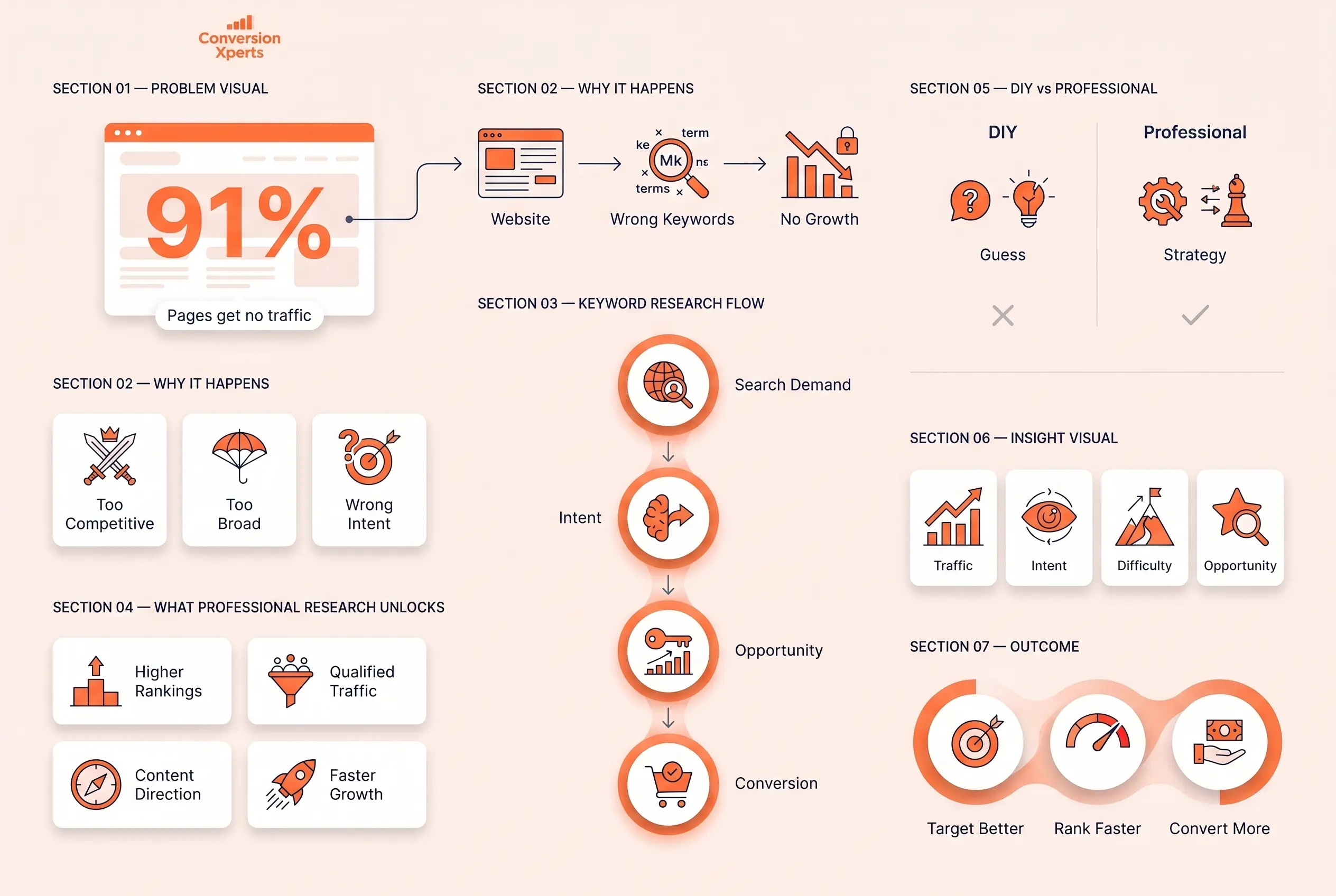
What Are Keyword Research Services?
Keyword research services are professional offerings provided by SEO agencies or specialists who conduct deep, data-driven analysis to identify the exact words, phrases, and questions your target audience types into search engines when looking for products, services, or information related to your business.
This is not about plugging a few words into a free tool and downloading a spreadsheet. Professional keyword research is a multi-stage strategic process that maps the entire demand landscape in your niche, identifies where you can win, and gives your content and SEO teams a precise roadmap to follow for months or years ahead.
The Core Components of a Professional Keyword Research Service
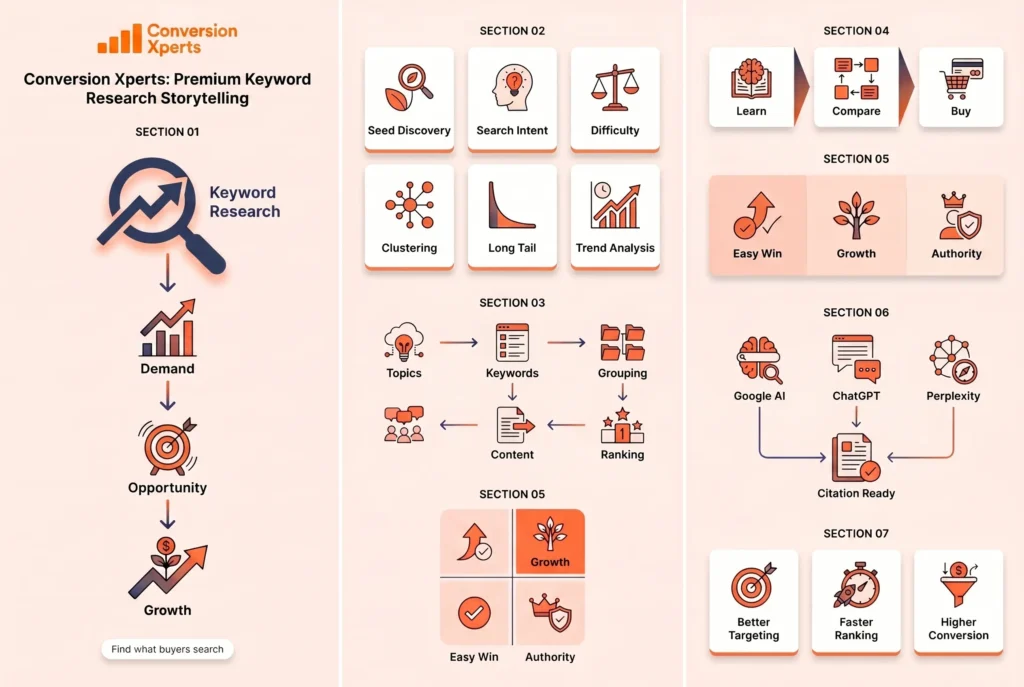
A truly comprehensive keyword research service covers six foundational areas that most business owners and even many in-house marketers overlook entirely.
Seed Keyword Discovery is the starting point where specialists identify your root topics, product categories, and service lines, then expand them into hundreds or thousands of keyword variations using professional grade tools and manual research methods.
Search Intent Classification goes deeper than keyword volume. Every keyword maps to a specific type of user intent. Understanding whether someone wants information, is comparing options, or is ready to buy changes everything about how you target that keyword and what kind of content you create around it.
Competitive Difficulty Analysis tells you which keywords are realistically winnable given your current domain authority, your backlink profile, and the strength of the competitors already ranking for that phrase. Targeting keywords you cannot win yet wastes your entire content investment.
Keyword Clustering and Grouping organizes your keyword list into logical topical groups that inform your site architecture, your internal linking strategy, and your content calendar. This is what separates professional keyword research from a raw data dump.
Long Tail and Question Research uncovers the highly specific, lower competition, higher conversion phrases that often drive more qualified traffic than broad head terms. These are the keywords that convert browsers into buyers.
Search Volume and Trend Analysis ensures you are targeting keywords with consistent or growing demand, not phrases that had a spike two years ago and are now declining.
How Keyword Research Has Evolved in the Age of AI Search
In 2025, professional keyword research services must account for a fundamentally different search landscape. Google AI Overviews, Perplexity, and ChatGPT Search are answering queries directly inside the search interface, which means the keywords that earn you AI citations are just as valuable as the ones that earn traditional blue link rankings.
Modern providers like ConversionXperts.com now research not just what people type into Google, but what questions they ask AI tools, which phrasing patterns trigger AI generated answers, and how to position your content to be cited as a primary source in those answers.
Why Professional Keyword Research Outperforms DIY Every Time
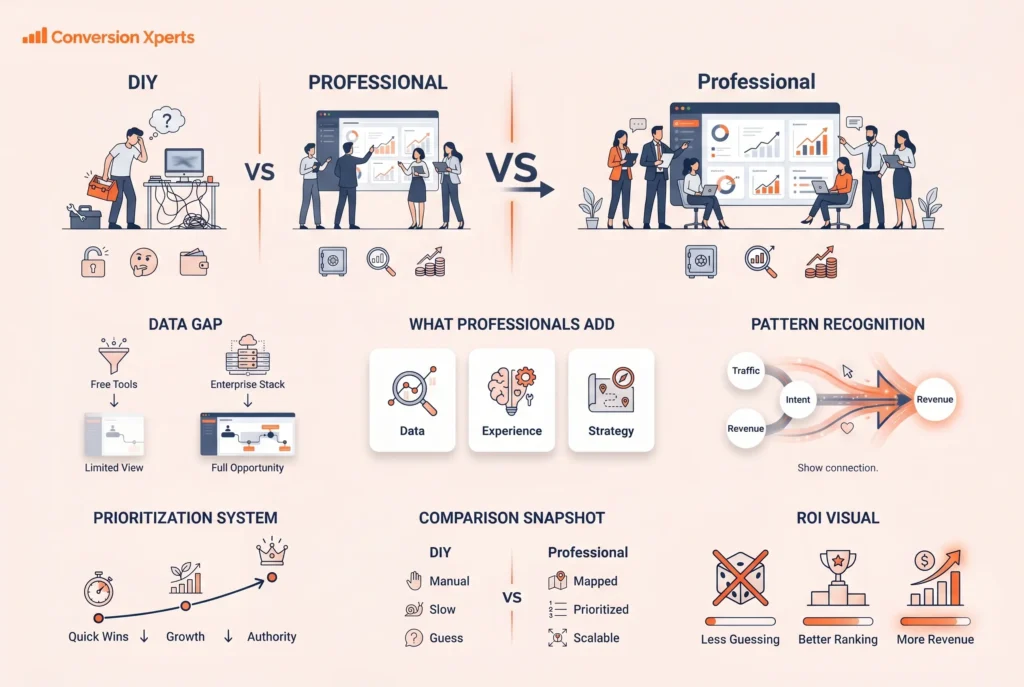
It is tempting to believe that keyword research is something you can handle in a weekend with a free tool. The reality is more nuanced, and understanding the gap between DIY and professional research will help you make a much better investment decision.
The Data Access Gap
Free and entry level keyword tools show you a fraction of the data that professional grade platforms surface. A professional keyword research service uses enterprise tier tools like Ahrefs, Semrush, and Moz Pro in combination, cross referencing data sets to build a picture of keyword opportunity that no single tool or free tier can provide.
For example, Ahrefs indexes over 36 trillion backlinks and tracks keyword rankings across 190 countries. Semrush’s keyword database covers over 26 billion keywords. The combination of these tools, used by experts who know how to interpret the data, produces insights that are simply not available through free research.
The Experience and Pattern Recognition Gap
Professional SEO specialists have conducted keyword research across dozens or hundreds of industries. They have seen which keyword patterns convert at high rates, which high-volume keywords are traps that bring traffic but zero revenue, and which low-volume phrases are goldmines hiding in plain sight.
This pattern recognition takes years to develop. When you hire a professional keyword research service, you are buying that accumulated experience along with the data.
The Strategy and Prioritization Gap
Raw keyword data is not a strategy. A list of 2,000 keywords with volume and difficulty scores tells you very little about where to start, what to prioritize, or how to structure your content to build authority over time.
Professional services translate keyword data into a sequenced action plan: which keywords to target in the first 90 days based on quick win potential, which to build toward over six to twelve months, and which to revisit once your domain authority has grown.
The Full Picture: DIY vs. Professional Keyword Research
| Factor | DIY Keyword Research | Professional Keyword Research Service |
Data Sources | 1 to 2 free tools | 4 to 6 enterprise platforms combined |
Time Investment | 10 to 30 hours per project | Done for you, delivered in days |
Search Intent Analysis | Basic or manual | Deep NLP-based intent mapping |
Competitive Intelligence | Surface level | Full SERP and competitor gap analysis |
Keyword Clustering | Manual, often missed | Systematic, architecture-ready groupings |
AI Search Coverage | Rarely included | Included in modern services |
Strategic Prioritization | Missing | 90-day and 12-month roadmaps |
Ongoing Updates | User dependent | Quarterly or monthly refreshes |
ROI Transparency | Difficult to measure | Linked to traffic and revenue goals |
What a World Class Keyword Research Service Actually Delivers
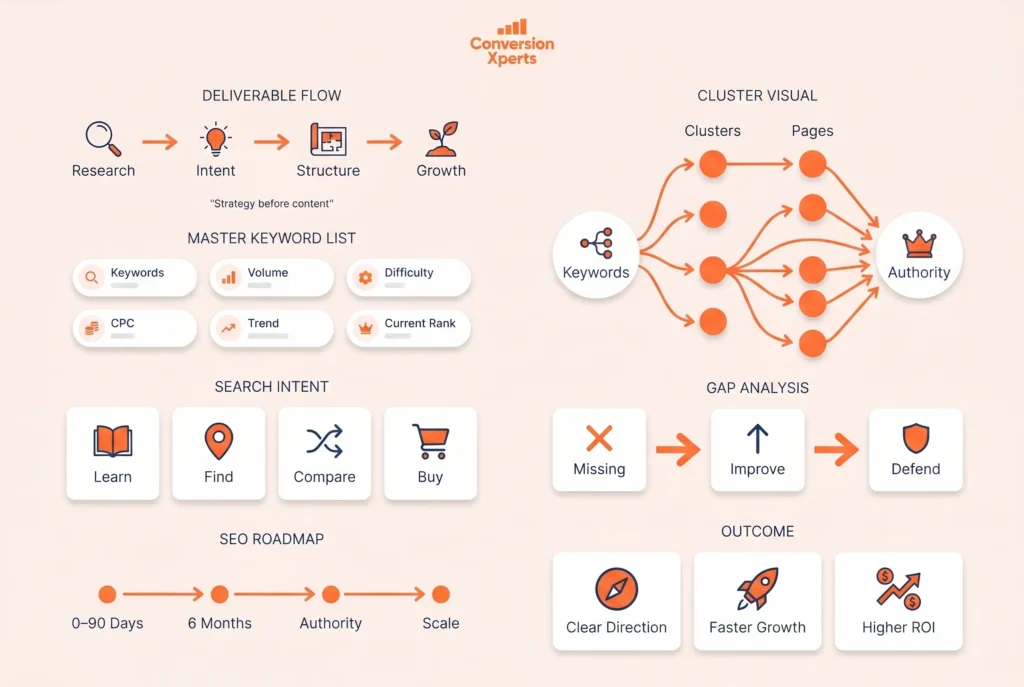
Let us go section by section through every deliverable you should expect from a professional keyword research engagement. If a provider does not include these elements, you are not getting world class service.
Deliverable One: A Comprehensive Master Keyword List
Your master keyword list is the raw dataset that everything else is built from. A world class service delivers a thoroughly validated list that includes the following data points for every keyword:
Monthly search volume gives you a reliable picture of demand, typically averaged across the past 12 months to smooth out seasonal spikes. Keyword difficulty score tells you how hard it will be to rank on page one based on the competition currently holding those positions. Cost per click data reveals the commercial value of the keyword and indirectly signals buyer intent. Search trend direction tells you whether demand is growing, stable, or declining. Current ranking position for your domain shows you where you already have footholds to build on.
A strong master keyword list for a mid-sized business will typically contain anywhere from 500 to 5,000 validated keywords depending on the breadth of your product or service offering.
Deliverable Two: Search Intent Mapping
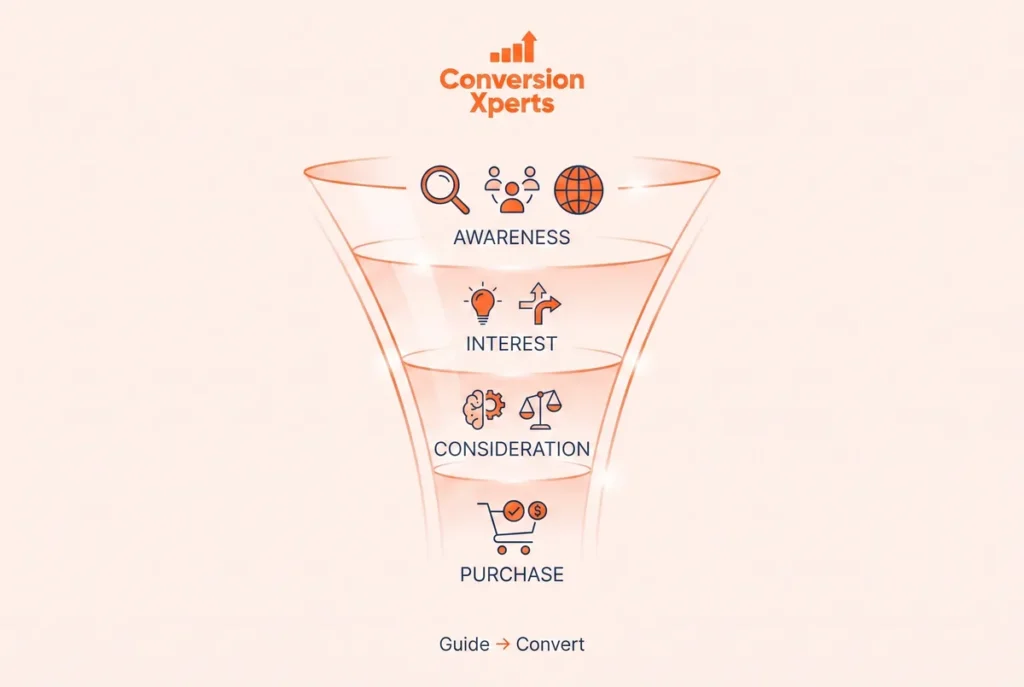
Every keyword in your list should be classified by search intent. Professional services use a four-category framework that maps directly to the buyer journey.
Informational intent keywords are searched by people who want to learn something. Examples include “what is keyword research” or “how does SEO work.” These keywords are best targeted with educational blog posts, guides, and explainer content.
Navigational intent keywords are searched by people looking for a specific brand or website. These are typically managed through brand presence optimization rather than content creation.
Commercial investigation intent keywords are searched by people who are comparing options before making a decision. Examples include “best keyword research services” or “keyword research agency vs in-house.” These are extremely valuable for agencies and service businesses because they capture buyers who are actively in the evaluation phase.
Transactional intent keywords signal that someone is ready to take action right now. Examples include “hire keyword research consultant” or “keyword research service pricing.” These keywords should be targeted with conversion-optimized service pages, landing pages, and direct response copy.
Deliverable Three: Keyword Clustering and Topic Architecture
This is arguably the most strategically valuable component of a professional keyword research service. Keyword clustering organizes your entire keyword list into logical groups based on semantic similarity and shared intent, then maps each cluster to a specific page or piece of content on your website.
The output of this process is a content architecture document that shows you exactly which pages to create or optimize, how to structure your internal linking to pass topical authority between pages, and which pillar pages should serve as the hub for each major topic cluster.
This is the foundation that allows your website to build genuine topical authority in the eyes of Google, which is increasingly the deciding factor in who earns top rankings for competitive keywords.
Deliverable Four: Competitive Gap Analysis
A competitive gap analysis compares your keyword footprint against your top three to five organic competitors. It answers three questions that are essential for smart SEO prioritization.
Which keywords are your competitors ranking for that you are not targeting at all? These are your content gaps and represent immediate opportunities to create new content and capture traffic you are currently missing entirely.
Which keywords are you and your competitors both targeting, but they are outranking you? These are your ranking gaps and represent optimization opportunities on pages you already have.
Which keywords are you ranking for that your competitors have not yet targeted? These are your competitive advantages and should be reinforced with additional content and link building before competitors catch on.
Deliverable Five: A Prioritized SEO Roadmap
The final deliverable that separates truly excellent keyword research services from mediocre ones is the actionable roadmap. This document translates your keyword data into a sequenced, prioritized plan of attack organized by time horizon and resource requirement.
A well-constructed SEO roadmap shows you the quick win opportunities to pursue in the first 30 to 90 days, the medium term content projects to build over the next six months, the authority building keyword targets to pursue as your domain strength grows, and the seasonal keyword windows to prepare for in advance.
This roadmap becomes the operating document for your entire content and SEO team.
The Best Keyword Research Tools Professionals Use in 2025
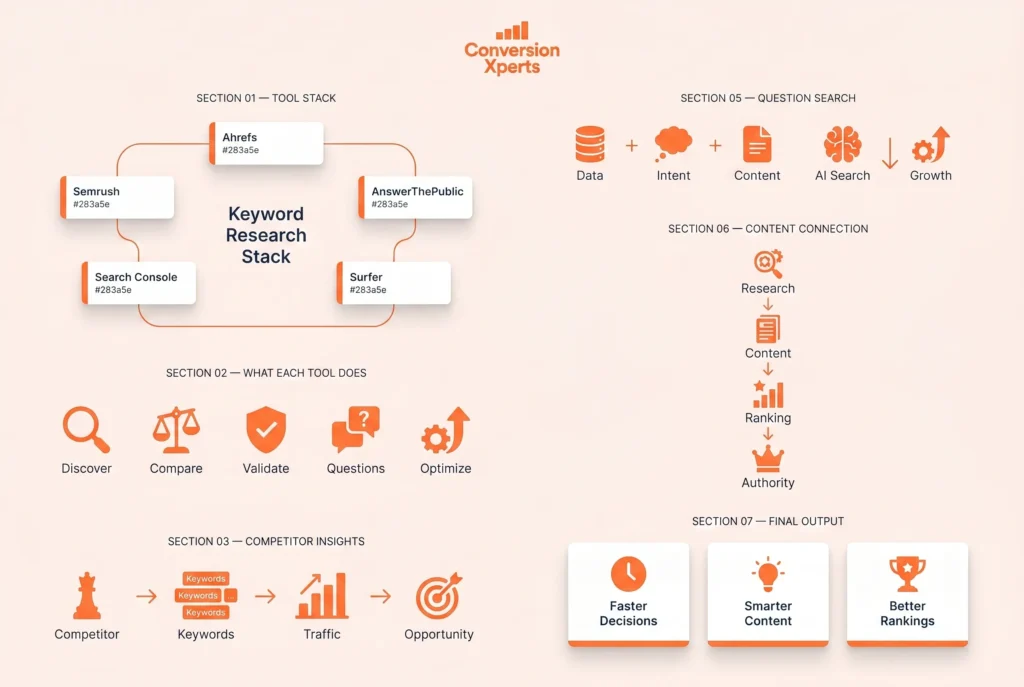
Understanding which tools professional keyword research services use gives you insight into the quality of research you should expect. Here is an overview of the leading platforms and what each contributes to the process.
Ahrefs
Ahrefs is the industry standard for keyword research and competitive backlink analysis. Its Keywords Explorer tool surfaces keyword difficulty scores, traffic potential estimates, click data, and SERP history for billions of keywords across all major search engines including Google, Bing, YouTube, Amazon, and others.
What makes Ahrefs particularly valuable for professional services is its Site Explorer functionality, which lets researchers see the exact keywords any competitor is ranking for, how much traffic those rankings generate, and which pages are driving the most organic visibility. This is the backbone of competitive gap analysis.
Semrush
Semrush’s Keyword Magic Tool is one of the most comprehensive keyword discovery engines available. With access to over 26 billion keywords, it allows researchers to filter by intent, question format, topic, difficulty, and more. Its Keyword Gap tool is particularly powerful for side-by-side competitor comparisons.
Semrush also integrates keyword data directly with content optimization through its SEO Writing Assistant and ContentShake AI, making it a natural bridge between the research phase and the content creation phase.
Google Search Console
Google Search Console is the only tool that shows you actual Google data for your own website, including which queries are triggering impressions, which are generating clicks, and the average position for each keyword. Professional services use this data to identify ranking opportunities on page one or two that are ripe for optimization, often called low hanging fruit keywords.
AnswerThePublic and AlsoAsked
These tools specialize in question-based keyword research, surfacing the exact questions real users are asking around any topic. In the era of AI search, question keywords are enormously valuable because they map directly to the format AI engines use when generating answers. Targeting question keywords with clear, structured answers increases your probability of appearing in both featured snippets and Google AI Overviews.
Surfer SEO
Surfer SEO bridges keyword research and content optimization. After keyword targets are identified, Surfer analyzes the top ranking pages to determine which related keywords, entities, and concepts must appear in your content to be considered topically comprehensive. This ensures that your content is not just targeting the right primary keyword but covering the full semantic landscape Google expects.
How to Evaluate and Choose a Keyword Research Service Provider
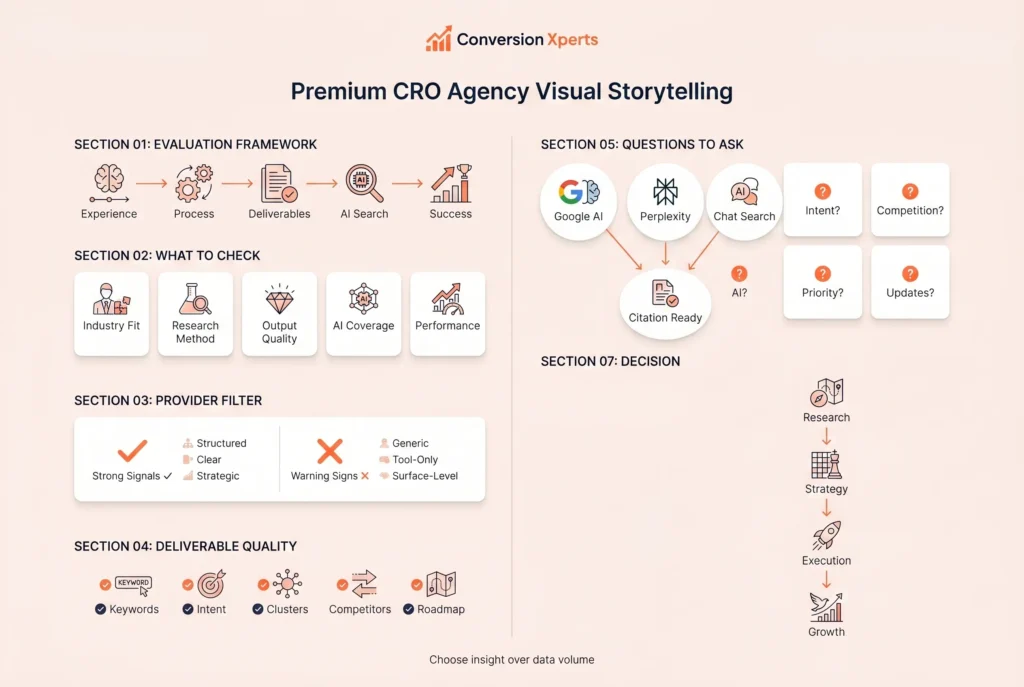
Not all keyword research services are created equal. Here is a practical evaluation framework for choosing a provider that will actually move your business forward.
Look for Industry Specific Experience
A keyword research service that has worked across your specific industry or business model will understand your audience, your buying cycles, and your competitive landscape far better than a generalist. Ask providers for examples of keyword research they have done in industries similar to yours, and look at the depth of the deliverables they share.
Ask About Their Research Process
The process matters as much as the output. A provider who can walk you through exactly how they move from seed keyword discovery to competitive analysis to clustering to roadmap creation is demonstrating real expertise. Vague answers like “we use all the top tools” are a warning sign.
Evaluate the Deliverable Format and Depth
Request a sample keyword research deliverable before you commit. A high quality sample should include a clearly structured master keyword list with full data points, intent classifications, keyword clusters mapped to pages, and at minimum a summary of competitive insights. If the sample is a raw CSV with volume and difficulty numbers and nothing else, keep looking.
Confirm They Cover AI Search Visibility
In 2025, any keyword research service that does not account for AI search engines is giving you an incomplete picture. Ask specifically whether their research includes identifying keywords that trigger Google AI Overviews, question clusters relevant to Perplexity and ChatGPT Search, and how they recommend structuring content for AI citation.
Understand How They Define Success
The best keyword research services tie their work to measurable business outcomes. Ask how they measure the success of their keyword research and what happens if the keywords they recommend are not generating rankings or traffic within a defined timeframe. Providers who offer ongoing research updates and are willing to refine their recommendations based on real world performance data are the partners worth investing in.
Questions to Ask Every Keyword Research Service Before Hiring
These questions will separate genuinely expert providers from those who rely on automated output and surface-level analysis.
How do you classify search intent for each keyword, and how does that influence your recommendations? What competitive intelligence do you include beyond basic difficulty scores? How do you approach keyword clustering and site architecture? Do you include AI search and featured snippet opportunities in your research? How do you prioritize keywords for businesses at different stages of domain authority? What does your delivery timeline look like, and what format do the deliverables take? Do you offer ongoing keyword research updates, and what triggers a refresh?
Keyword Research for Different Business Types
One of the most important things to understand about keyword research services is that the right approach varies significantly depending on your business model, your audience, and your stage of growth.
Keyword Research for E-Commerce Businesses
E-commerce keyword research centers on three types of keywords: product keywords that target specific items by name or SKU, category keywords that capture shoppers browsing a product type, and comparison keywords that capture buyers evaluating their options before purchase.
The most valuable e-commerce keywords are transactional and commercial investigation phrases with high purchase intent. Volume is important, but conversion rate correlation matters even more. A keyword with 500 monthly searches and a 4% conversion rate is worth far more than a keyword with 10,000 searches and a 0.1% conversion rate.
Professional keyword research for e-commerce also includes identifying keyword opportunities for product descriptions, review pages, buying guides, and category-level pillar content.
Keyword Research for Service Based Businesses
Service businesses like law firms, agencies, consultants, and healthcare providers have a different keyword landscape than product companies. The most valuable keywords for service businesses combine a service type with a geographic modifier or a qualifying intent signal.
Examples of high-value service business keywords include “SEO agency for e-commerce brands,” “keyword research services for small business,” and “conversion rate optimization consultant.” These keywords are lower in volume but extremely high in commercial intent, meaning the people searching for them are ready to hire.
Professional keyword research for service businesses also focuses heavily on local SEO keyword opportunities, question-based content keywords that build trust with prospective clients, and reputation-related keywords that influence the consideration phase of the buying journey.
Keyword Research for SaaS and Tech Companies
SaaS keyword research requires a nuanced approach that targets keywords across the entire product-led growth funnel. Top of funnel keywords target the problems your product solves rather than the product itself. Mid-funnel keywords target comparisons, alternatives, and category-level research. Bottom of funnel keywords target buyers who are ready to start a trial or purchase.
A significant opportunity for SaaS businesses is ranking for competitor comparison keywords, such as “your competitor versus your brand name.” Users searching these terms are actively evaluating their options and represent some of the highest-converting search traffic available.
Keyword Research for Local Businesses
Local businesses need keyword research that combines their core service or product categories with geographic signals at multiple levels, including city, neighborhood, region, and proximity-based intent phrases like “near me.”
The most sophisticated local keyword research also includes discovering which keywords trigger Google’s local pack results (the map listings at the top of Google), since ranking in the local pack for high-intent keywords can be more valuable than a traditional organic ranking.
How ConversionXperts.com Approaches Keyword Research
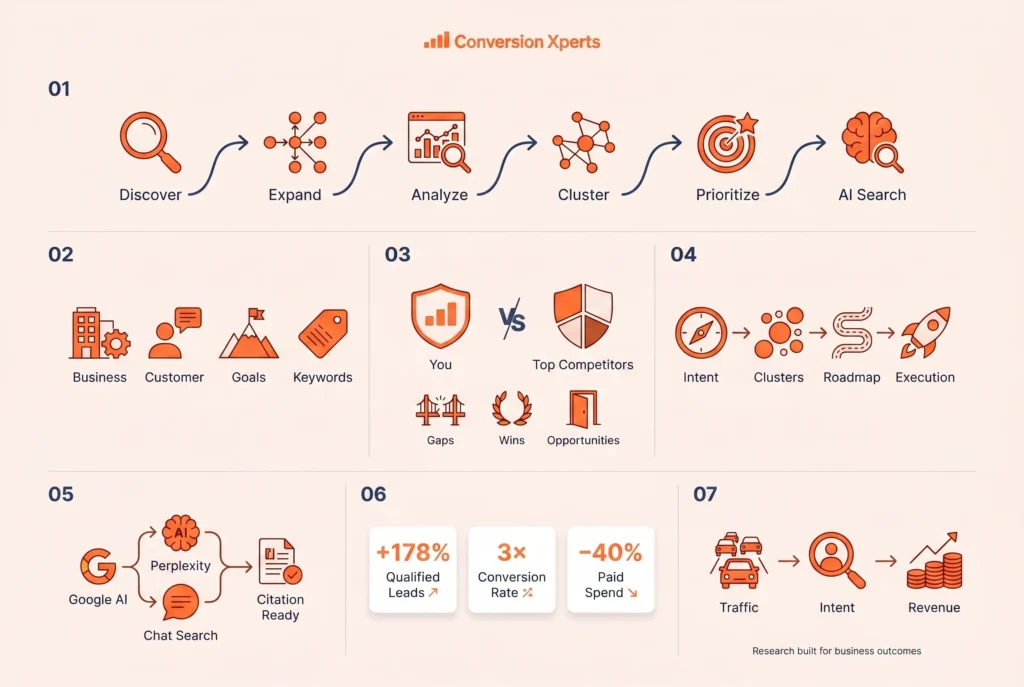
At ConversionXperts.com, keyword research is not a one-time deliverable. It is an ongoing strategic function that sits at the center of everything we do for our clients.
Our Keyword Research Philosophy
We believe that keyword research is only valuable when it is connected directly to revenue. That means we do not just look for keywords with high search volume. We look for keywords that attract the right visitors at the right stage of their buying journey and give our clients a realistic competitive path to ranking for them.
Every keyword research engagement we conduct starts with a business discovery phase where we understand your revenue goals, your ideal customer profile, your current competitive position, and the keywords you are already winning on. This context shapes every recommendation we make.
Our Research Process in Detail
Our process runs through six carefully structured stages that ensure nothing is missed and every recommendation is backed by real data.
In the discovery and seed keyword stage we work with you to identify your core product and service categories, your primary and secondary audience segments, and the language your customers actually use when describing their problems and goals. This is not something we can shortcut with a tool. It requires real conversations and close reading of your existing customer communication.
In the expansion stage we use Ahrefs, Semrush, and Google Search Console in combination to expand your seed keywords into a comprehensive list of thousands of relevant phrases, then filter aggressively for relevance, intent alignment, and competitive viability.
In the competitive intelligence stage we analyze your top five organic competitors in depth, identifying every keyword they rank for that you do not, every content gap in their strategy, and every area where we can produce more authoritative, more comprehensive content that outranks what they have published.
In the intent mapping and clustering stage every keyword in your validated list is classified by intent and organized into clusters that map to specific pages in your site architecture. This stage produces the content architecture document that your writers and developers will use as their operating blueprint.
In the prioritization and roadmap stage we rank your keyword opportunities by a combination of traffic potential, competitive difficulty, intent value, and strategic fit with your current domain authority. The output is a prioritized roadmap organized by 30-day, 90-day, and 12-month time horizons.
In the AI search integration stage we identify which of your priority keywords are generating Google AI Overviews, which question formats are being answered by Perplexity and ChatGPT, and how to structure your content to maximize the probability of being cited as a primary source in those AI-generated answers.
Results Our Clients Have Achieved
Our keyword research services have been the foundation of measurable growth across every type of client we serve.
A B2B software company came to us targeting broad, highly competitive keywords they had no realistic chance of ranking for at their current domain authority. After our keyword research engagement, we identified a cluster of mid-tail commercial investigation keywords with strong intent and achievable difficulty scores. Within six months of acting on our roadmap, they achieved first-page rankings for 14 target keywords and a 178% increase in qualified organic leads.
A professional services firm was publishing content regularly but seeing almost no organic traffic growth. Our research revealed they were targeting informational keywords with zero commercial intent while their highest-value transactional keywords had no content targeting them at all. After restructuring their content strategy around our keyword research findings, they tripled their organic conversion rate within one quarter.
An e-commerce retailer was investing in paid search at high cost per click because their organic rankings were weak. Our keyword research identified over 200 product and category keywords they were not targeting at all. Within nine months of implementing our recommendations, they reduced their paid search spend by 40% while maintaining the same revenue because organic had picked up the slack.
If you want to see what a keyword-first SEO strategy can do for your business, visit ConversionXperts.com today and schedule your free strategy session.