ConversionXperts is a Conversion Rate Optimization Agency helping eCommerce, SaaS, B2B, and lead generation businesses increase conversions through data-driven audits, user behavior analysis, UX improvements, and A/B testing.
We analyze user behavior, analytics, messaging, page experience, and conversion paths to identify where visitors hesitate, drop off, or leave without taking action.










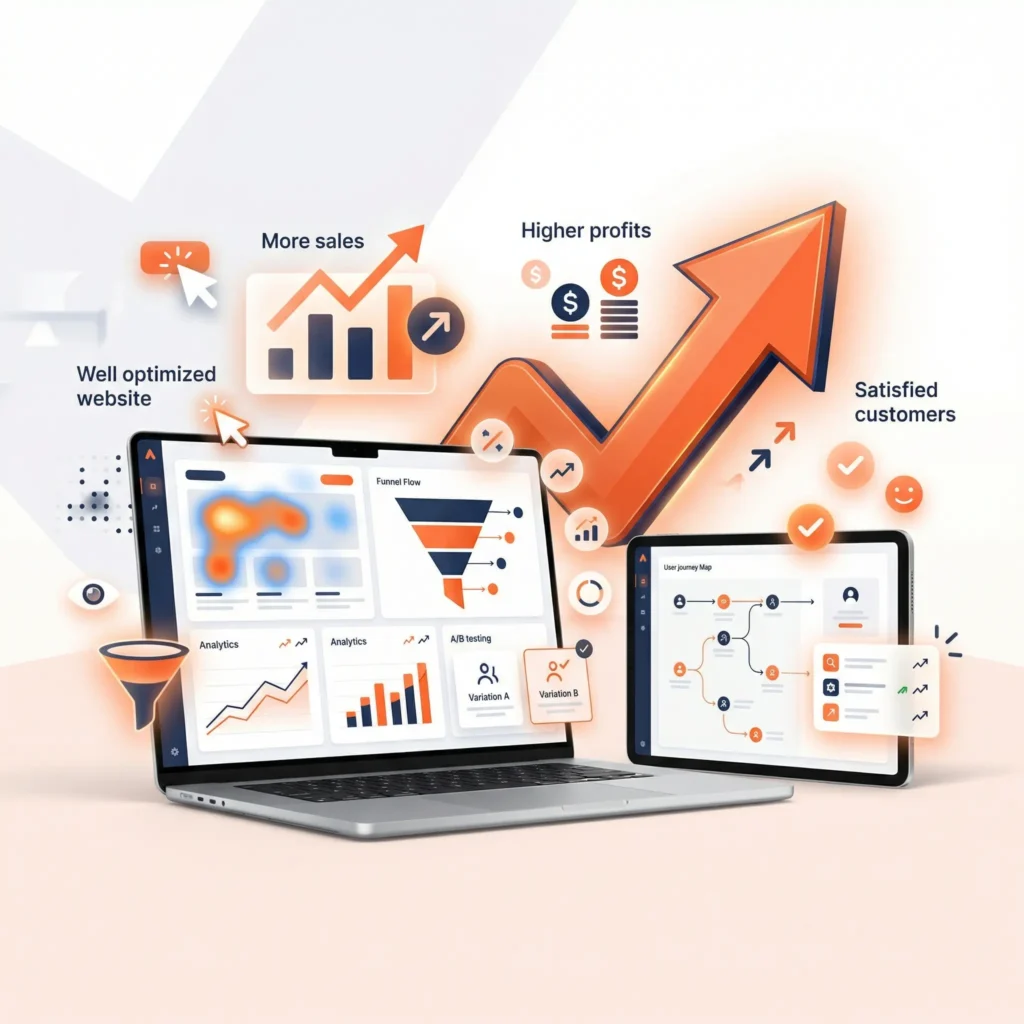
More traffic does not always mean more sales. A website can attract the right visitors and still lose them through unclear messaging, weak trust, confusing page flow, poor mobile experience, or unnecessary steps before conversion.
Our CRO agency reviews the complete customer journey to find where these problems occur. We then prioritize changes based on user behavior, business goals, and the impact each issue may have on conversions.
This may include improving landing pages, product pages, service pages, forms, calls to action, checkout steps, pricing presentation, or other high-value parts of the website.
The goal is simple: help more qualified visitors complete the action your business needs.
Feedback from businesses that worked with Conversion Xperts to improve website conversions and customer journeys.




Traffic can look healthy while important parts of the customer journey continue to lose potential customers.
Users may reach a product, service, landing, or pricing page but leave when the offer is unclear, important information is missing, or the page does not match their expectations.
Cart and checkout abandonment can point to unexpected costs, trust concerns, confusing steps, weak purchase confidence, or poor mobile usability.
A page can attract traffic from SEO or paid campaigns and still underperform when the message, offer, form, or call to action does not match visitor intent.
Changing headlines, layouts, buttons, or page designs without supporting evidence can create more work without fixing the actual conversion problem.
Conversion rate optimization improves the percentage of visitors who complete a valuable action, such as buying a product, requesting a quote, booking a call, starting a trial, or submitting a lead form.
It helps businesses generate more value from the traffic they already receive through SEO, paid media, email, social media, and referrals.
A structured CRO approach can identify:



As a conversion rate optimization agency, ConversionXperts works across research, experimentation, page improvement, and funnel analysis.
Each of our conversion rate optimization services addresses a different part of the conversion journey.
Identify the pages, user journeys, and conversion barriers that deserve attention first. We review analytics, important conversion paths, page experience, messaging, customer behavior, and business goals to create a prioritized CRO action plan.
Understand how visitors interact with important pages. Behavioral data can reveal where users hesitate, abandon a journey, overlook information, or struggle to reach the next step.
Test meaningful changes before treating them as permanent improvements. Each experiment starts with a clear hypothesis, defined conversion goal, and measurable reason for testing the proposed change.
Improve the parts of the shopping journey that influence completed purchases. We review product discovery, product pages, cart, checkout, mobile usability, product information, and trust signals.
We review visitor intent, value proposition, page structure, proof, calls to action, form friction, and the information users need before converting.
Identify where potential customers are being lost between their first visit and final conversion. We analyze key funnel stages to find major drop-off points and determine where improvements should be prioritized.
We review analytics, conversion goals, key pages, traffic sources, and funnel performance to establish the current baseline.
We examine how visitors interact with important pages and where the experience may not match their expectations or needs.
Findings are ranked based on evidence, potential business impact, implementation effort, and relevance to the main conversion goal.
For each major opportunity, we define what should change, why it may improve user behavior, and which metric should measure the result.
Changes are tested when traffic, technology, and project conditions support experimentation. Clear usability issues may move directly to implementation.
Performance is reviewed against the original conversion goal to determine what worked and what should be investigated next.
Analytics, customer behavior, messaging, page experience, and conversion data are reviewed before major recommendations are made.
Ecommerce businesses may focus on purchases or revenue per visitor, while SaaS and B2B companies may prioritize qualified leads, demos, trials, or booked calls.
Problems affecting checkout, forms, pricing pages, product pages, and other high-value parts of the customer journey take priority over minor design changes.
Each experiment should answer a defined business question with a clear hypothesis and measurable conversion goal.
Recommendations explain the problem, why it matters, what should change, and which metric should be monitored.
We identify what stops visitors from converting and recommend targeted improvements to increase sales and leads for your business.
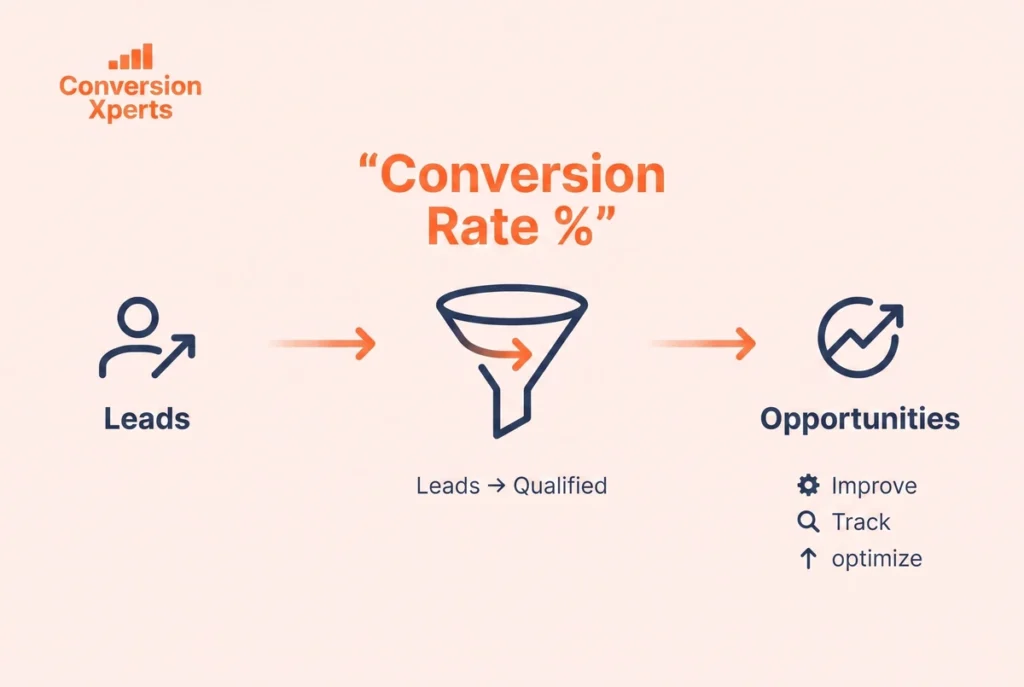
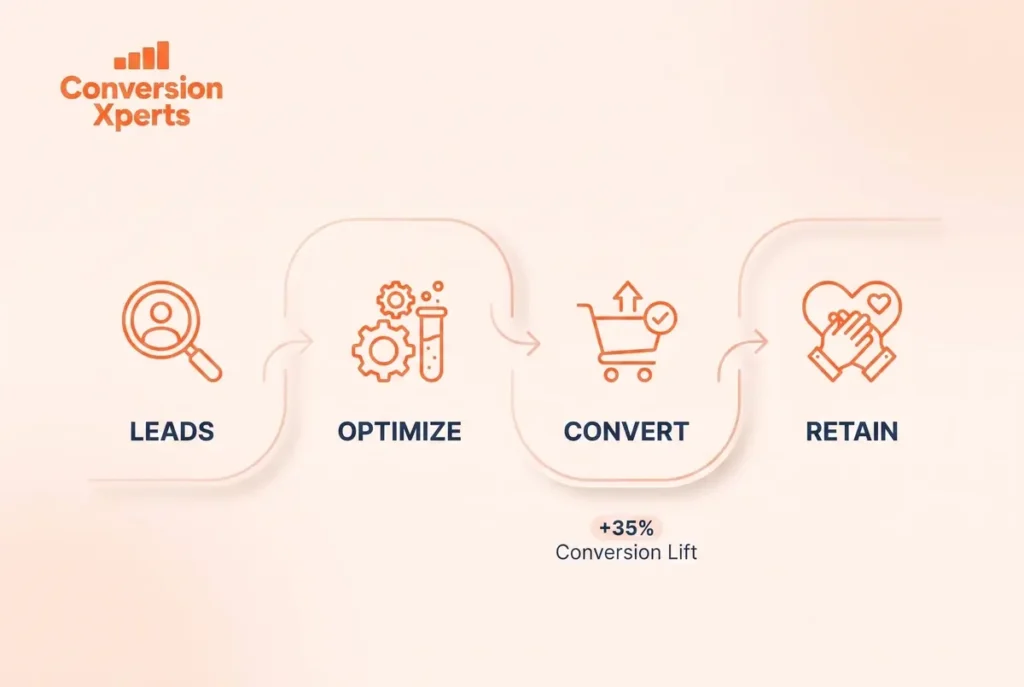
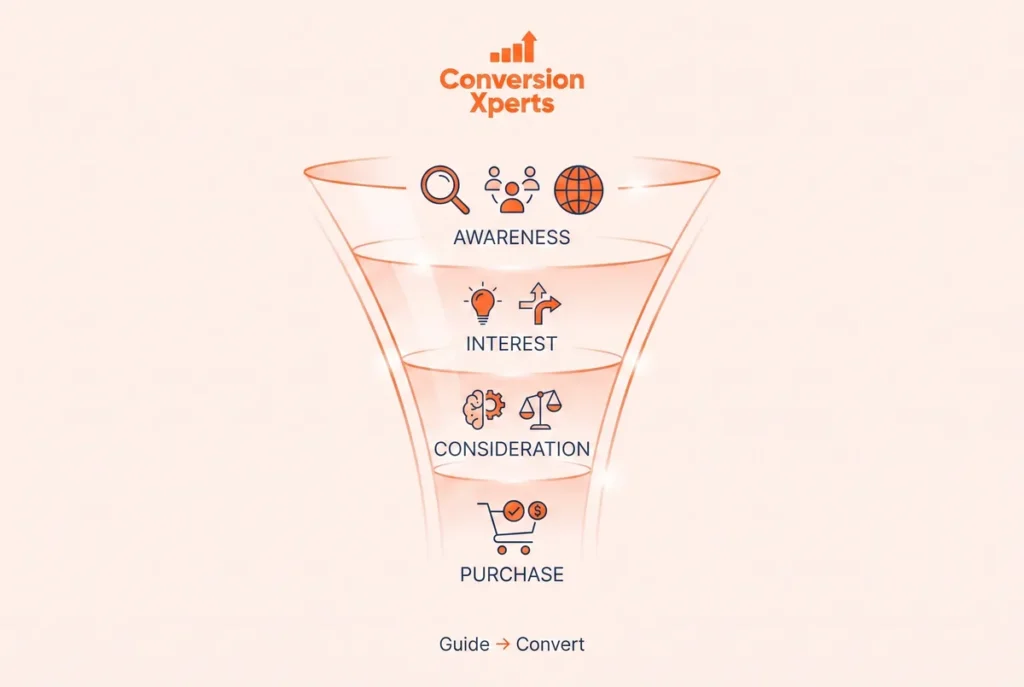
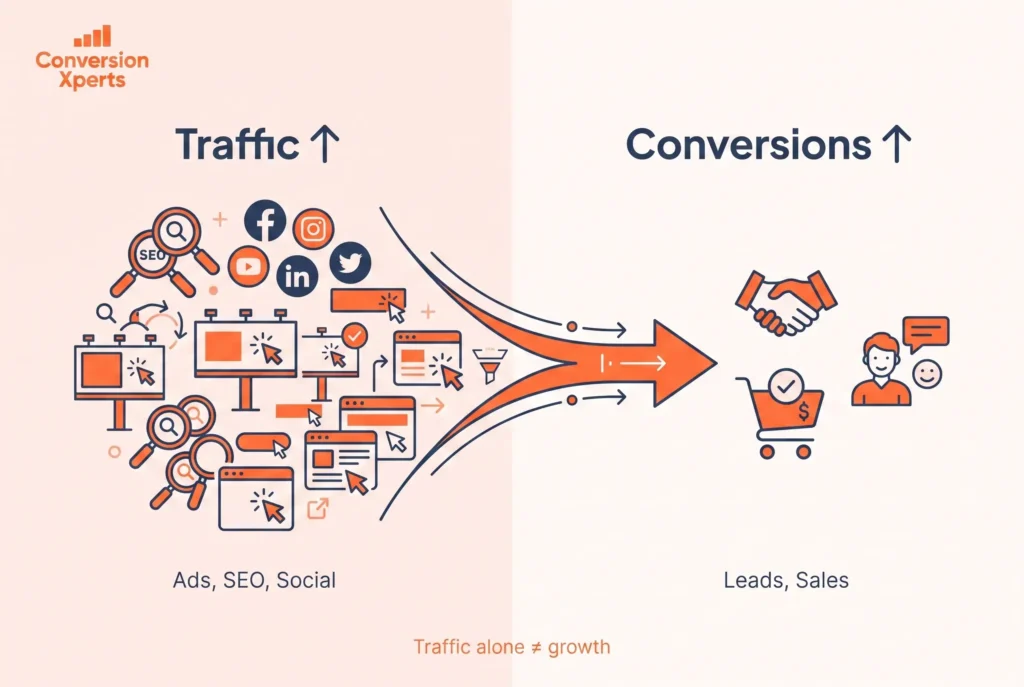
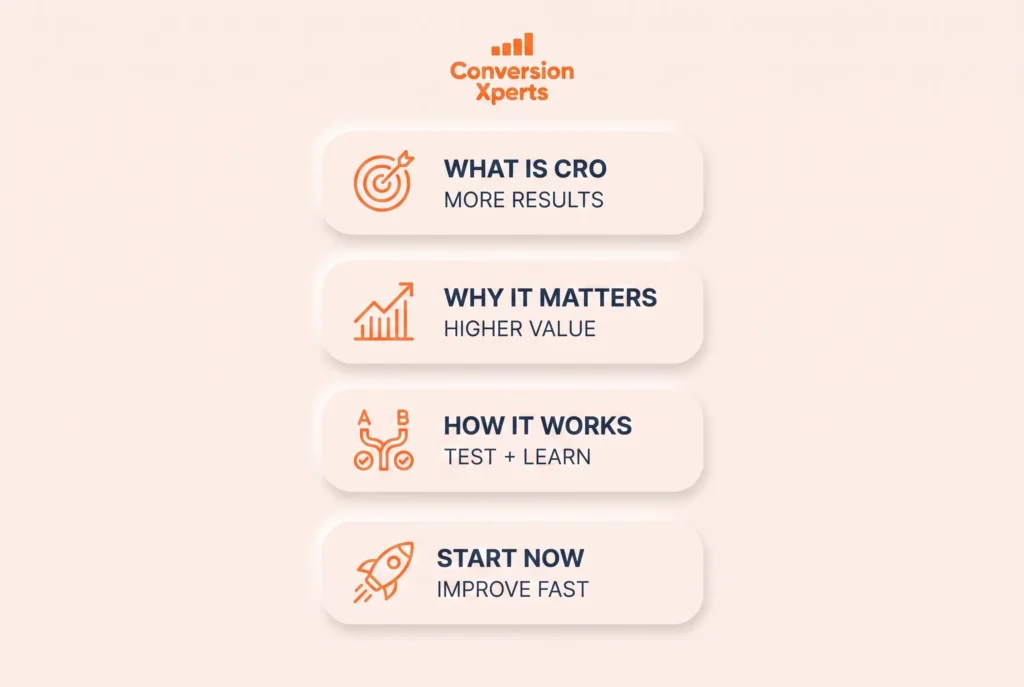
Conversion rate optimization (CRO) is the process of increasing the percentage of website visitors who complete a desired action, such as making a purchase, submitting a form, or requesting a quote. It uses data analysis, user research, and A/B testing to remove friction and improve how effectively a site converts visitors.
A CRO agency analyzes website data and user behavior to find why visitors leave without converting, then runs experiments to fix it. Its work typically includes conversion audits, A/B testing, landing page optimization, funnel analysis, and UX improvements that increase sales or leads without buying more traffic.
Hiring a CRO agency is worth it for businesses with enough traffic to test reliably, generally 10,000 or more monthly visitors or several hundred conversions. Because CRO increases revenue from existing traffic, even small conversion gains often outweigh agency fees. Lower-traffic sites may benefit more from foundational UX fixes first.
CRO still works on low-traffic sites, just through a different method. For sites under roughly 1,000 visitors per month, the focus shifts to qualitative research, user testing, and proven best practices rather than statistical A/B testing. Higher-traffic sites can support rigorous split tests that confirm changes before rollout.
No credible CRO agency can guarantee a specific percentage increase, since results depend on traffic, industry, and starting point. What a reputable agency commits to is a structured, evidence-based process and transparent reporting. At ConversionXperts, if we don’t improve your conversion rate within 90 days, we keep working at no additional cost until we do.
AI conversion rate optimization uses machine learning and behavioral data to detect patterns in how visitors interact with a website, helping teams prioritize which changes to test first. Tools like Microsoft Clarity and predictive analytics surface friction points faster, while human expertise decides how to test them and interprets what the results mean.