The Complete Guide (2026): Marketing Funnel Stages
What Are Marketing Funnel Stages
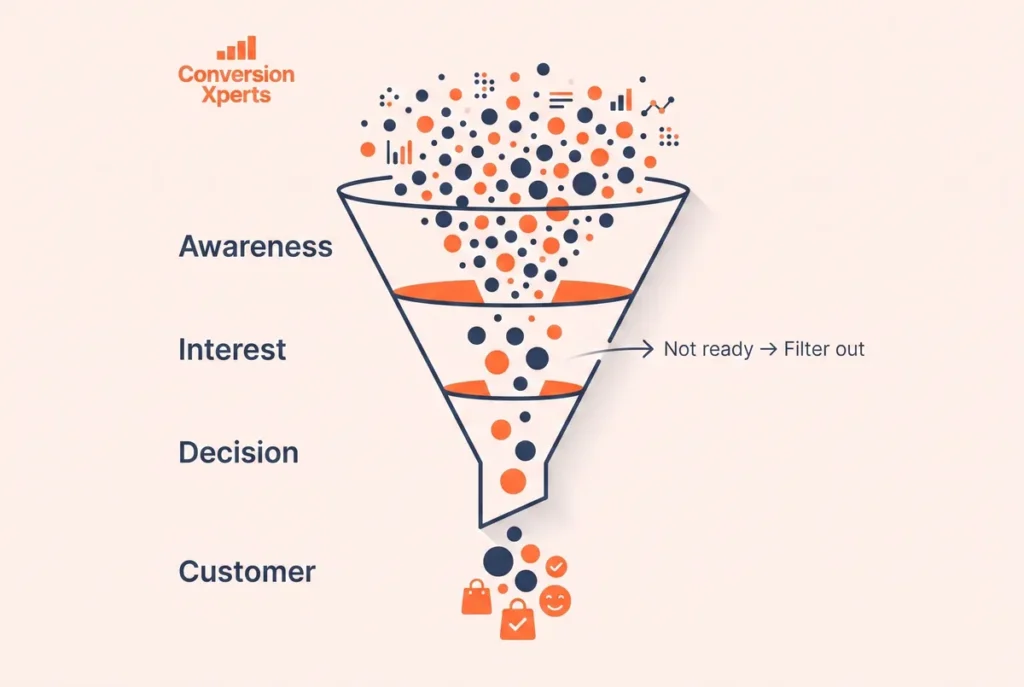
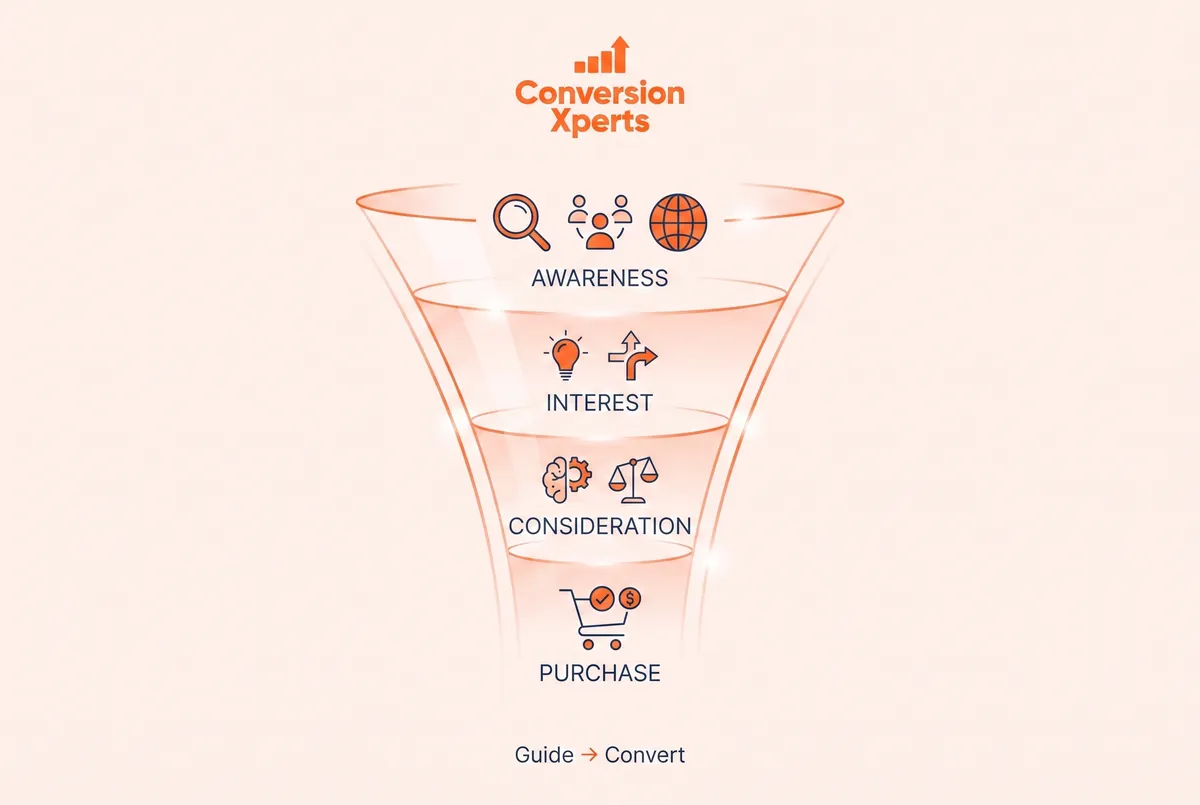
Marketing funnel stages are the sequential steps a potential customer moves through, starting from the moment they first become aware of your brand all the way to the moment they become a paying, and ideally repeat, customer.
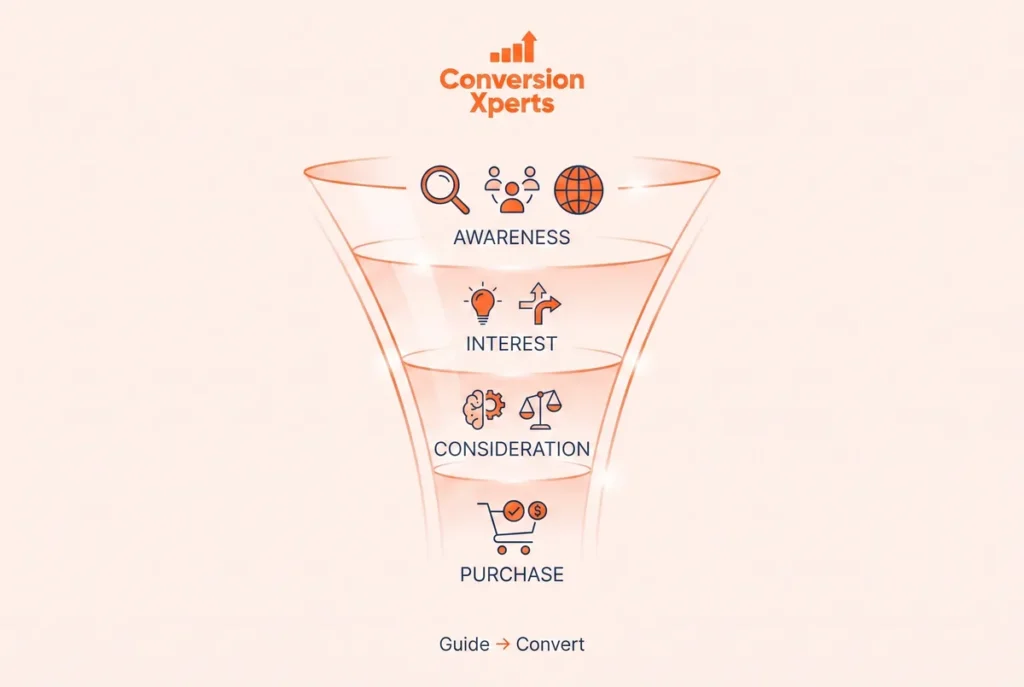
The concept borrows its shape from a funnel because many people enter at the top, and only a smaller, more qualified group makes it all the way to a purchase at the bottom. Every stage exists to filter out people who are not ready yet while pulling the right people closer to a decision.
Marketing teams use this model because it prevents a common and costly mistake, which is pushing a hard sales pitch at someone who has never heard of your brand before. A person at the very top of the funnel is not thinking about your product yet. They are thinking about a problem they have, and your job at that stage is simply to be helpful, not to sell.
For a deeper look at how this concept originated, HubSpot’s overview of the marketing funnel is a solid reference point.
Why This Differs From A Sales Pipeline
A sales pipeline usually tracks internal steps a sales team takes to close a deal that is already fairly qualified. A marketing funnel is broader and starts much earlier, often before the person has ever spoken to anyone at your company at all. Understanding this distinction helps marketing and sales teams avoid stepping on each other’s work.
Why Marketing Funnel Stages Still Matter In 2026
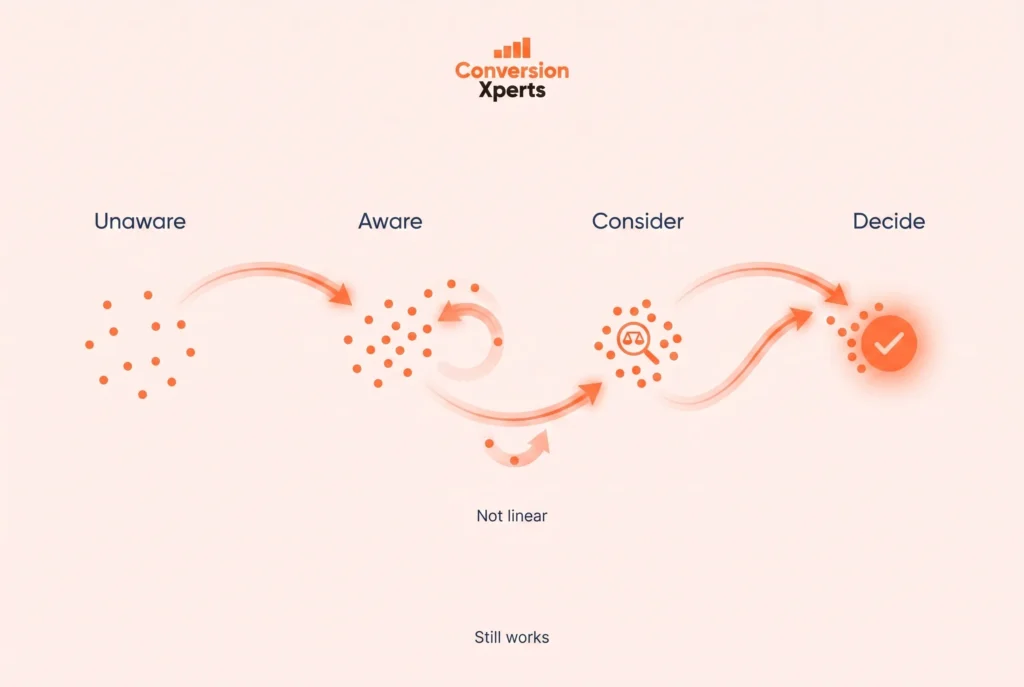
Some marketers argue the funnel model is outdated because buyer journeys today are messy, nonlinear, and often jump between channels. That criticism has some truth to it, but the underlying logic of the funnel still holds up, even if real journeys rarely move in a perfectly straight line.
Expert Insight: Even in a nonlinear buyer journey, every person still needs to move from unaware to aware, from aware to considering, and from considering to deciding, no matter how many channels they bounce between along the way. The funnel describes the mental shift, not a rigid path through specific web pages.
The rise of AI powered search tools has actually made funnel thinking more important, not less. When a shopper asks ChatGPT or a Google AI Overview to compare products, that interaction usually happens somewhere in the middle of the funnel, during the consideration stage, which means your content needs to be structured clearly enough for these systems to understand where it fits in the buyer’s decision process. Search Engine Journal has written extensively about how AI search is reshaping funnel strategy (https://www.searchenginejournal.com/category/generative-ai/).
The Four Core Marketing Funnel Stages Explained
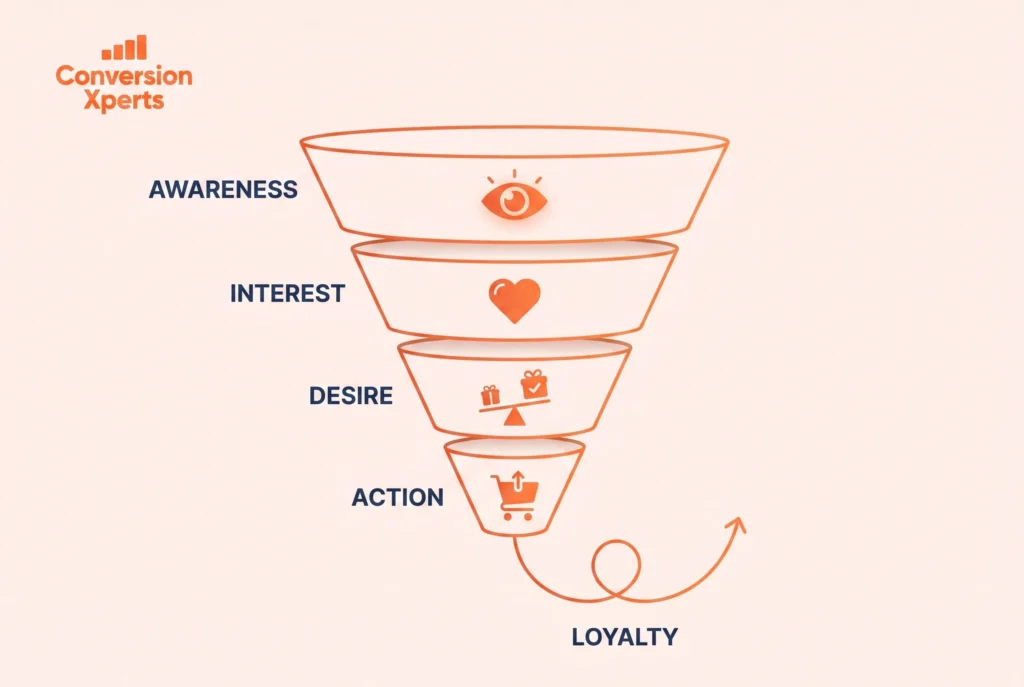
Most modern funnel models simplify down to four core stages, often remembered using the acronym AIDA, which stands for Awareness, Interest, Desire, and Action.
Stage One: Awareness
This is the top of the funnel, where a person first discovers that your brand exists. They usually arrive here through a blog post, a social media video, a search result, or a friend’s recommendation. At this stage they are not thinking about buying anything. They are simply learning that a solution to their problem might exist.
Stage Two: Interest
Once someone is aware of you, the interest stage is where they start paying closer attention. They might follow your social account, subscribe to your newsletter, or read a second and third piece of your content. Your goal here is to build trust and demonstrate expertise, not to push a sale.
Stage Three: Desire
At this point the person has moved from general interest into actively wanting what you offer. They compare you against alternatives, read reviews, and picture themselves using your product. This is where case studies, testimonials, and detailed comparison content do their heaviest lifting.
Stage Four: Action
This is the bottom of the funnel, where the person finally makes a purchase, signs up, or books a call. A smooth checkout process, a clear call to action, and removal of last minute friction all matter enormously at this final stage, since even a tiny obstacle here can undo weeks of earlier trust building.
Many modern frameworks add a fifth stage called Retention or Loyalty, recognizing that the funnel does not truly end at the sale, since a repeat customer is far cheaper to keep than a new one is to acquire. Salesforce covers this extended model in more detail (https://www.salesforce.com/resources/articles/marketing-funnel/).
How To Build A Marketing Funnel Step By Step
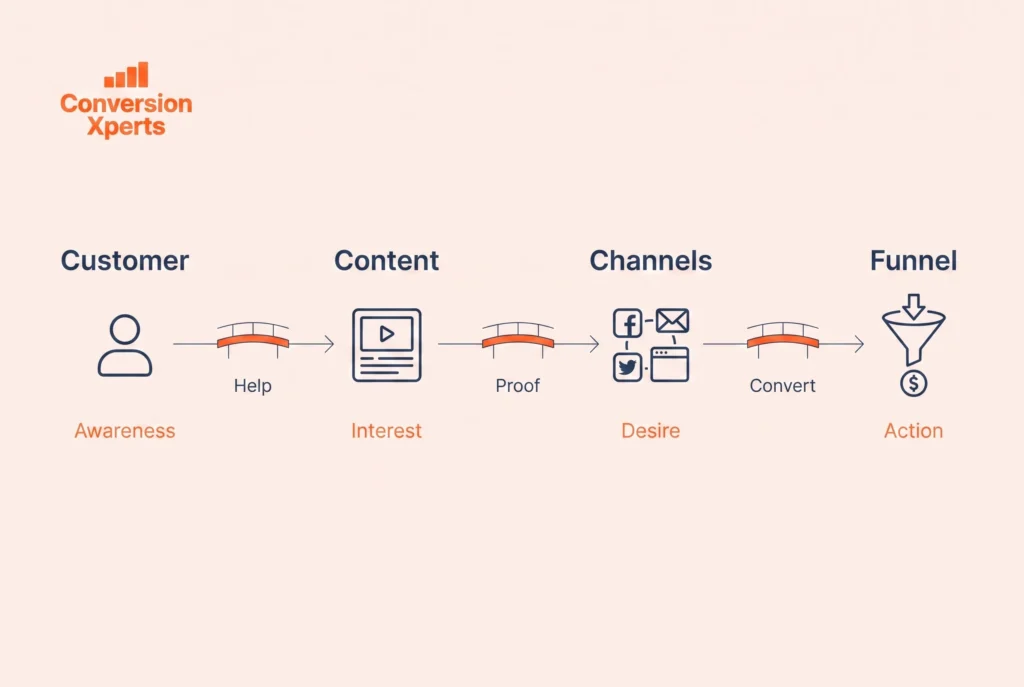
Follow this process in order, since each step depends on decisions made in the one before it.
- Define your ideal customer. Get specific about who they are, what problem they have, and where they spend time online before you create a single piece of content.
- Map content to each stage. Decide what type of content belongs at awareness, interest, desire, and action, so nothing in your funnel is doing double duty poorly.
- Choose your channels. Pick two or three channels where your ideal customer already spends time, rather than trying to be everywhere at once.
- Build your top of funnel content. This usually includes blog posts, short videos, and social content designed to attract attention from people who do not know you yet.
- Build your middle of funnel content. This includes email sequences, webinars, and comparison guides designed to build trust and answer objections.
- Build your bottom of funnel content. This includes case studies, testimonials, pricing pages, and a clear, low friction call to action.
- Track and refine monthly. Watch where people drop out of the funnel and strengthen that specific stage first, rather than making changes everywhere at once.
The Funnel Bridge Framework
Here is an original framework worth applying whenever you review your own funnel. Picture each stage as a room, and each piece of content as a door connecting one room to the next.
- Bridge one: Connects awareness to interest through helpful, non salesy content
- Bridge two: Connects interest to desire through proof, comparisons, and social validation
- Bridge three: Connects desire to action through urgency, clarity, and a frictionless next step
Most funnels leak not because a single stage is weak, but because one of these three bridges is missing or unclear. Auditing the bridges, not just the stages themselves, is often what actually fixes a stalled funnel.
Content That Works At Each Funnel Stage
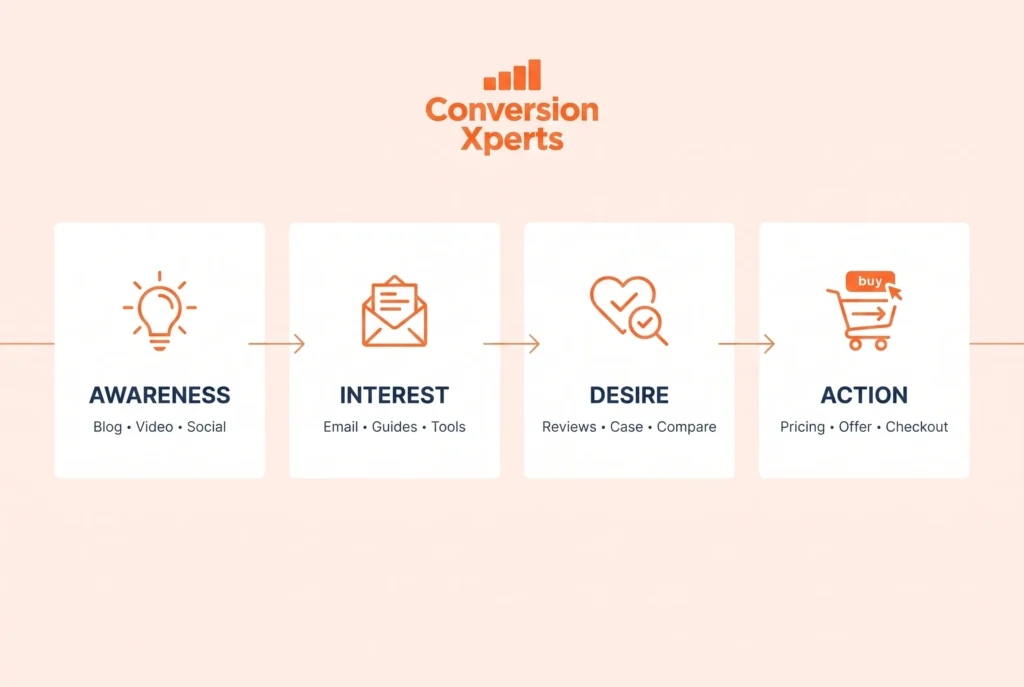
Matching content type to funnel stage is one of the highest leverage decisions a marketing team makes, and it is where most small businesses go wrong.
At the awareness stage, blog posts, short form video, infographics, and podcast appearances work best, since the goal is simply reach and helpfulness, not persuasion.
At the interest stage, email newsletters, in depth guides, and free tools or calculators work well, since the goal is to keep the relationship going and demonstrate real expertise over time.
At the desire stage, case studies, customer testimonials, comparison pages, and live demos work best, since the goal is to help the person picture themselves already using your product successfully.
At the action stage, clear pricing pages, limited time offers, and simple checkout flows work best, since the goal is to remove every possible reason for hesitation right when the person is closest to deciding.
Best Tools For Managing A Marketing Funnel
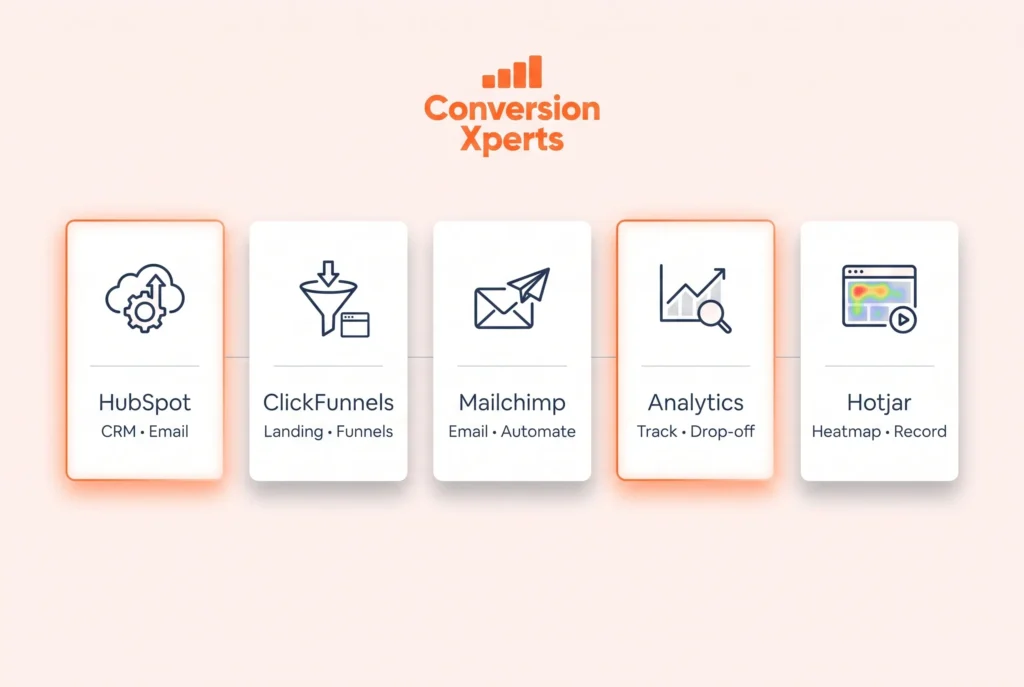
| Tool | Best For | Starting Price | Standout Feature |
HubSpot | Full funnel management | Free plan available | Built in CRM and email automation |
ClickFunnels | Landing page funnels | $97 per month | Drag and drop funnel builder |
Mailchimp | Email nurture sequences | Free plan available | Automated journey builder |
Google Analytics | Funnel tracking and drop off analysis | Free | Full funnel visualization reports |
Hotjar | Behavior and friction analysis | Free plan available | Session recordings and heatmaps |
For a comparison of funnel building platforms, Zapier maintains a regularly updated roundup worth checking.
Common Marketing Funnel Mistakes To Avoid
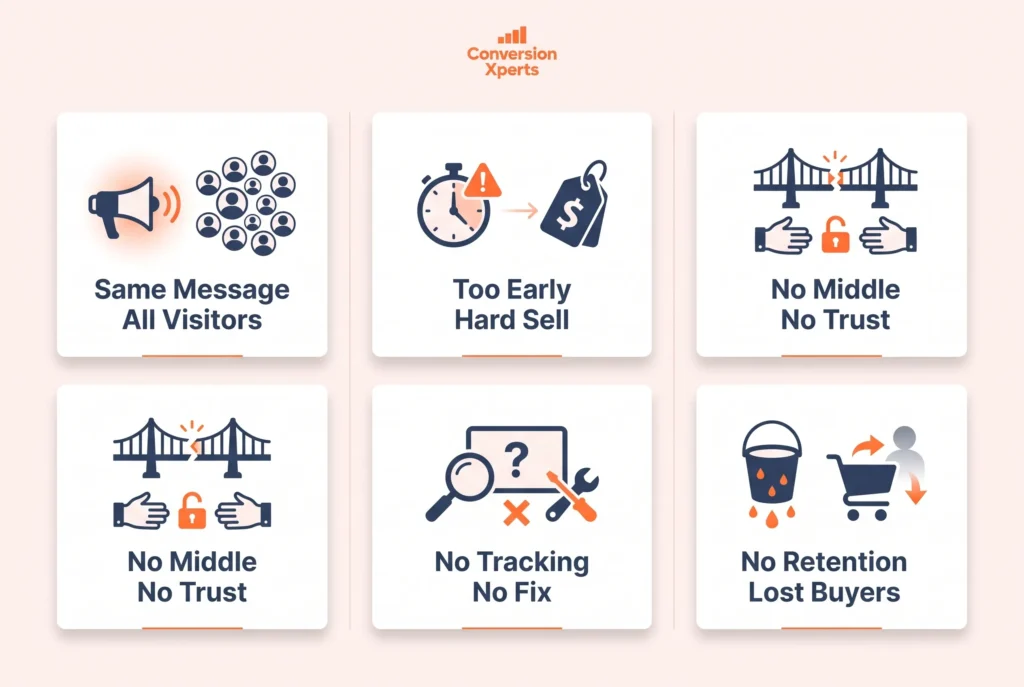
Even experienced marketers fall into these traps when building out their marketing funnel stages.
- Treating every visitor the same regardless of where they actually stand in the funnel
- Pushing a hard sales pitch at someone still in the awareness stage, which usually pushes them away instead
- Building beautiful top of funnel content while completely neglecting the middle stages, leaving interested people with nowhere to go
- Never measuring where people actually drop out, which means problems go unnoticed for months
- Assuming the funnel ends at the sale and ignoring retention and repeat purchase opportunities entirely
Real World Example: A small skincare brand we studied had strong social media reach but weak sales. Their awareness stage was excellent, yet they had almost no middle of funnel content to build trust before asking for a purchase. After adding a simple email sequence with customer testimonials and a routine guide, their conversion rate from new follower to first purchase nearly doubled within two months.
Marketing Funnel vs Customer Journey Map
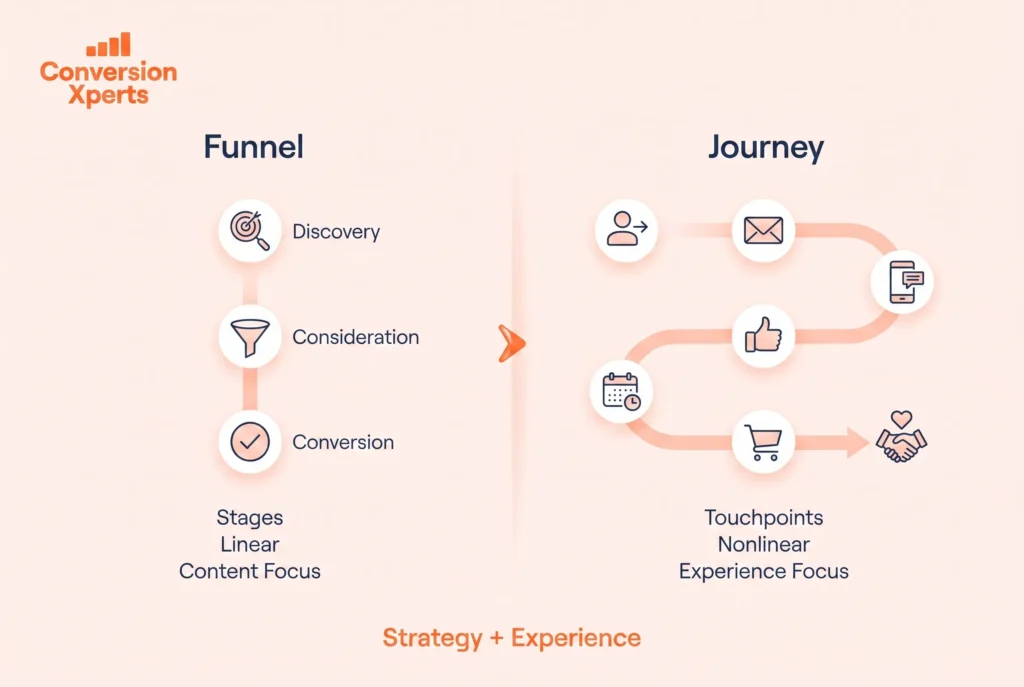
A common question marketers ask is whether they need a funnel, a customer journey map, or both. The honest answer is that they serve slightly different purposes and work well together.
| Factor | Marketing Funnel</b | Customer Journey Map |
Focus | Stages of decision making | Actual touchpoints and emotions |
Shape | Linear, top to bottom | Often circular or branching |
Best used for | Structuring content strategy | Understanding real customer experience |
Typical owner | Marketing team | Marketing plus product and support teams |
A useful way to think about it is that the funnel tells you what content to create, while the journey map tells you how that content actually feels from the customer’s side of the screen.
Expert Tips To Master Your Marketing Funnel
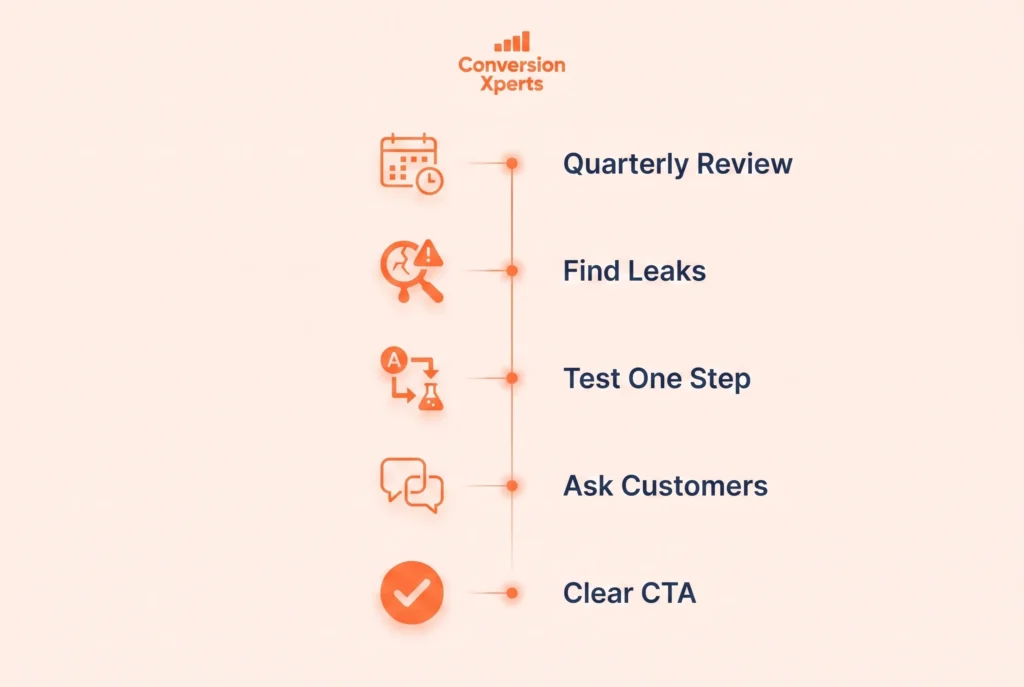
- Revisit your funnel every quarter, since buyer behavior and preferred channels shift faster than most teams expect
- Read your customer support tickets closely, since they often reveal exactly where confusion or hesitation is happening inside the funnel
- Test one stage at a time so you know precisely what caused a change in results
- Interview a handful of recent customers directly and ask them what almost stopped them from buying, since this often reveals a leak no analytics dashboard would show you
- Keep your bottom of funnel content painfully clear and simple, since this is the worst possible place for confusion to exist
Real World Example And Case Study
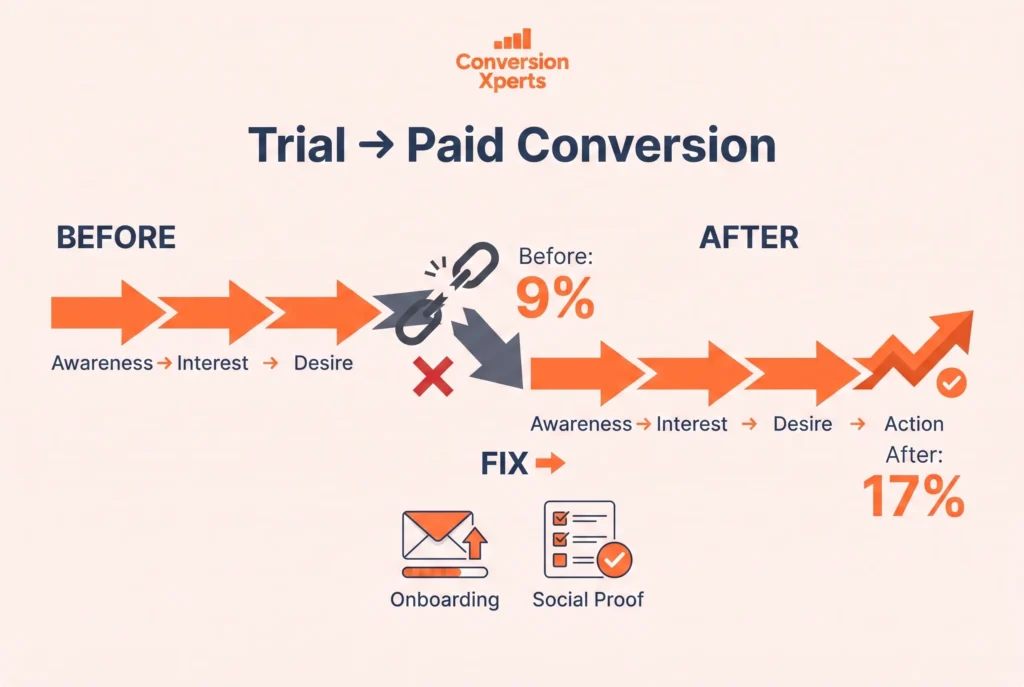
A software company selling project management tools applied the Funnel Bridge Framework described earlier. They noticed strong signups for their free trial, meaning awareness and interest were healthy, but very few trial users converted to paying customers, meaning the desire to action bridge was broken.
After adding a short onboarding email sequence with real customer success stories and a simple in app checklist showing quick wins, their trial to paid conversion rate rose from 9 percent to 17 percent within one quarter, without any increase in top of funnel spending at all.
How To Measure Funnel Performance
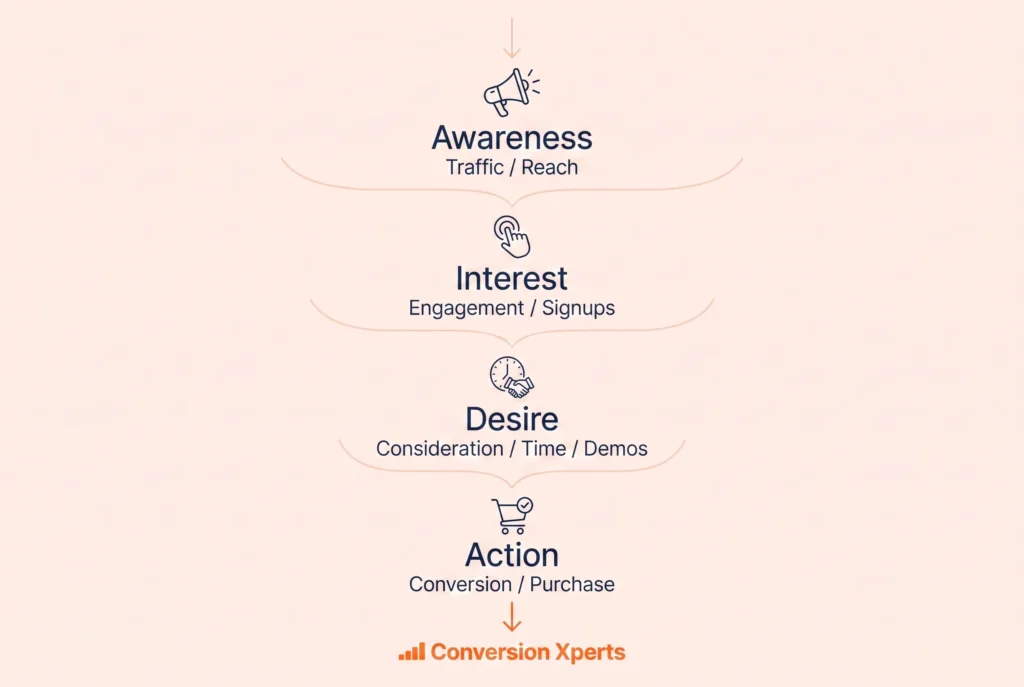
A funnel only improves if you actually measure it stage by stage rather than looking at overall revenue alone.
Awareness stage metrics include website traffic, social reach, and impressions, which tell you whether enough new people are entering the funnel at all.
Interest stage metrics include email signups, content engagement, and return visits, which tell you whether people are sticking around after their first encounter with your brand.
Desire stage metrics include time spent on comparison or pricing pages and demo requests, which tell you whether people are seriously considering a purchase.
Action stage metrics include conversion rate, cart abandonment rate, and average time to purchase, which tell you how smoothly people are completing that final step.
Reviewing these four sets of numbers together, rather than focusing on one alone, shows you exactly which stage of the funnel needs attention right now.