
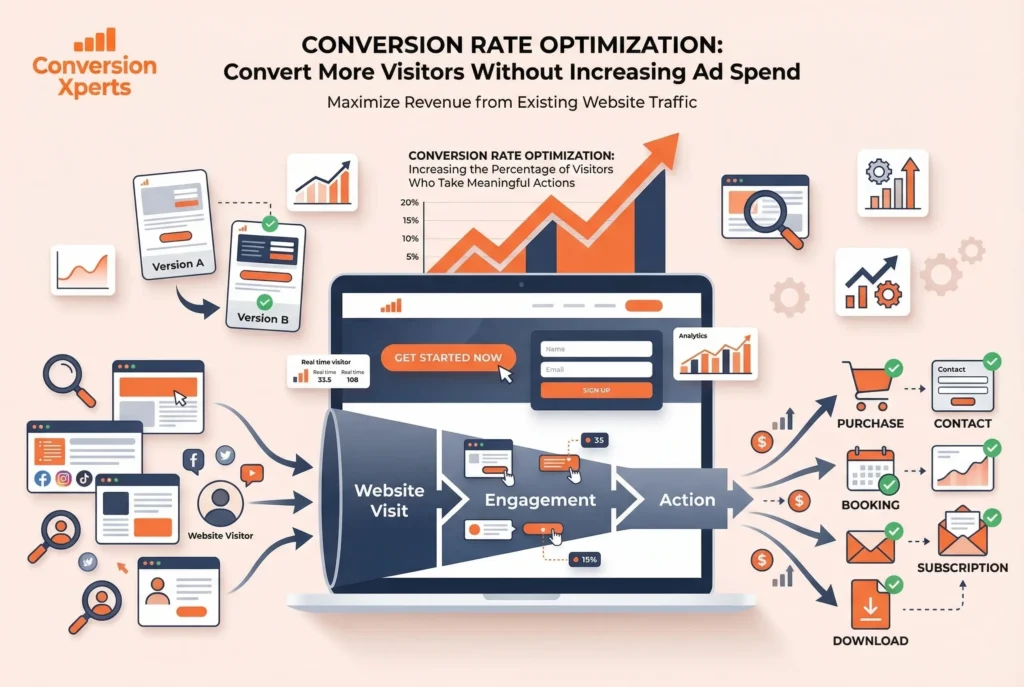







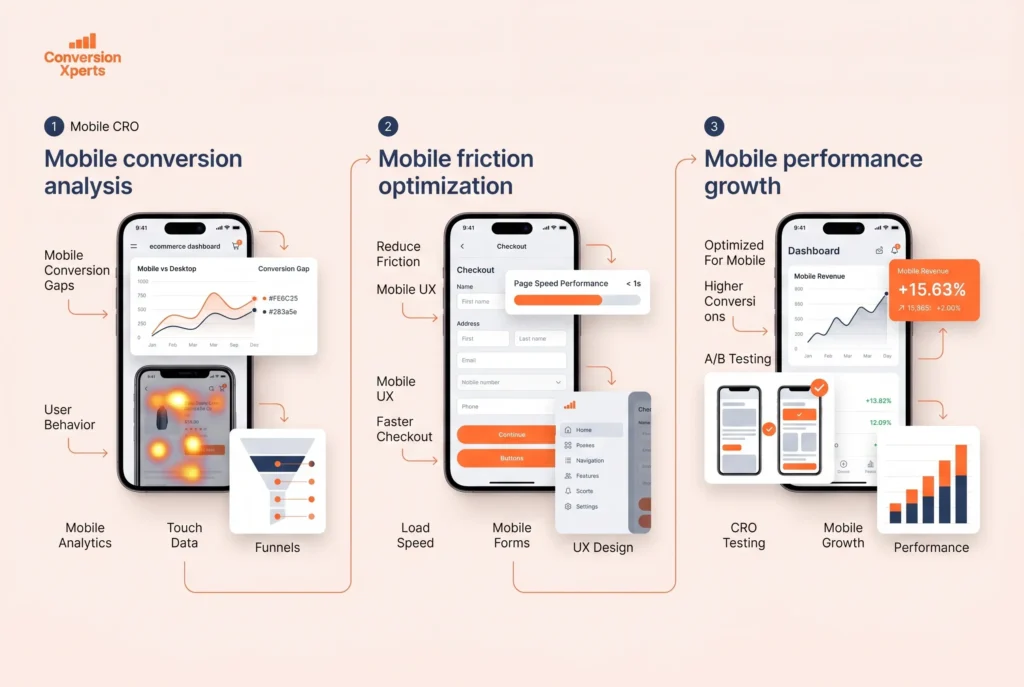



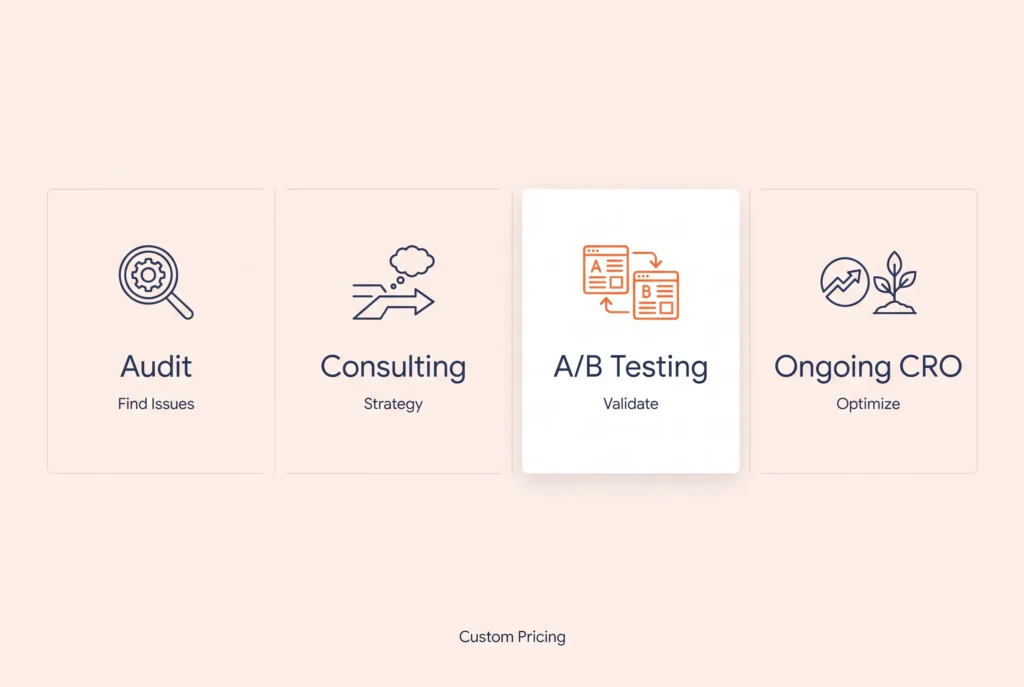


Conversion rate optimization is the practice of increasing the percentage of website visitors who take a desired action such as making a purchase, signing up for a free trial, or submitting a lead form. It works through a structured cycle of data collection, user behavior analysis, hypothesis development, controlled A/B testing, and implementation of validated improvements. Unlike tactics that chase more traffic, CRO improves performance from existing visitors, making it one of the most cost efficient growth levers available to ecommerce and SaaS businesses.
The global average ecommerce conversion rate sits between one and four percent. However, what counts as a good ecommerce conversion rate varies significantly by industry, traffic source, device type, and price point. Fashion and apparel typically sees lower conversion rates than health and beauty. Mobile ecommerce conversion rates are typically lower than desktop. A CRO program benchmarks your specific performance against relevant comparators and works to improve from your actual baseline rather than a generic industry average.
Some friction removal improvements produce measurable conversion lifts within days of implementation. Structural changes and A/B tests typically require four to eight weeks to reach statistical significance and produce reliable data. A well structured CRO roadmap sequences work so that quick wins create early momentum while longer term experiments run in parallel. Most clients see meaningful measurable improvements within the first 60 to 90 days of an engagement.
SaaS conversion rate optimization focuses on improving the multi stage journey from first website visit through to trial activation and paid subscription conversion. The key metrics are trial signup rate, onboarding completion rate, trial to paid conversion rate, and annual recurring revenue growth. Ecommerce conversion rate optimization focuses primarily on the path from product discovery to completed purchase, with secondary goals around average order value and repeat purchase rate. Both disciplines share the same core methodology but require different expertise because the friction types, user motivations, and conversion architectures are fundamentally different.
No ethical CRO agency guarantees specific numbers because conversion outcomes depend on factors including traffic volume, existing conversion rate baseline, industry, and the scope of changes that are feasible to implement. What we do guarantee is a rigorous, evidence based process and transparent reporting on every test outcome. Over the course of an engagement, the systematic application of this process consistently produces meaningful, measurable improvements for our clients.
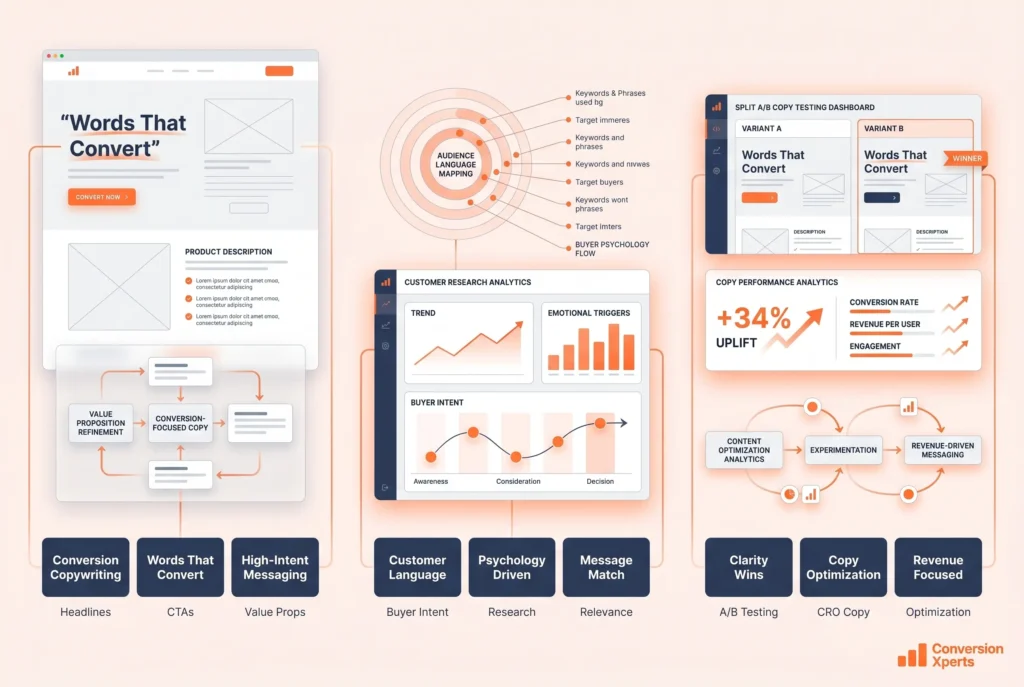
A/B testing does require meaningful traffic volumes to reach statistical significance in a reasonable time frame. However, CRO work encompasses far more than testing. Conversion audit work, funnel analysis, friction removal, trust optimization, and copywriting improvements can all produce significant conversion lifts regardless of traffic volume. We are transparent about what is and is not feasible at your current traffic level and will tell you directly if volume constraints affect what we can deliver.
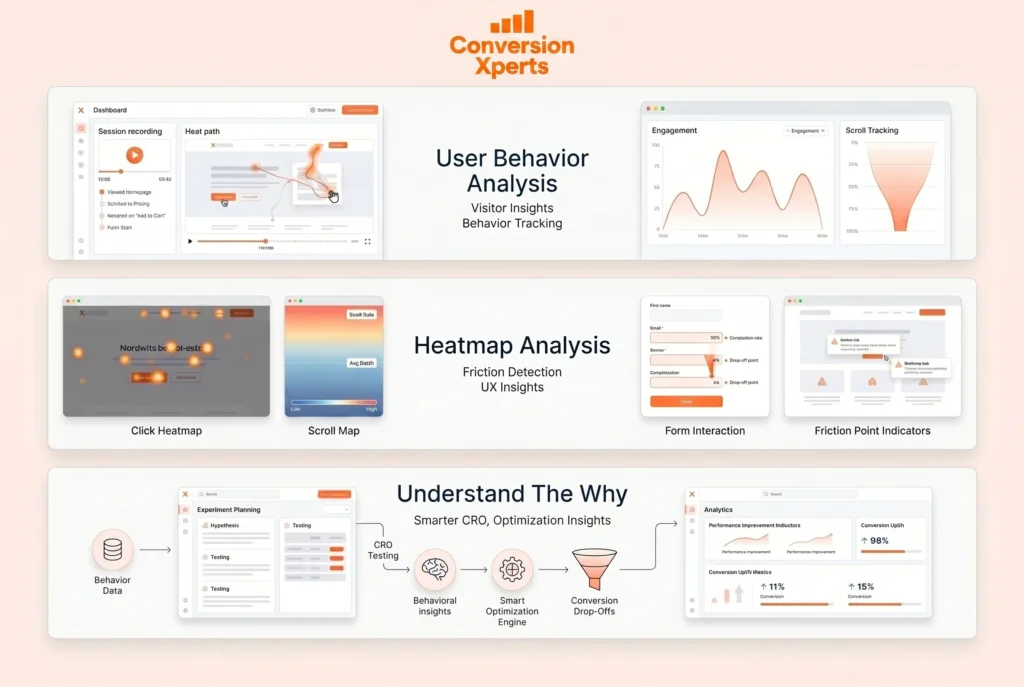
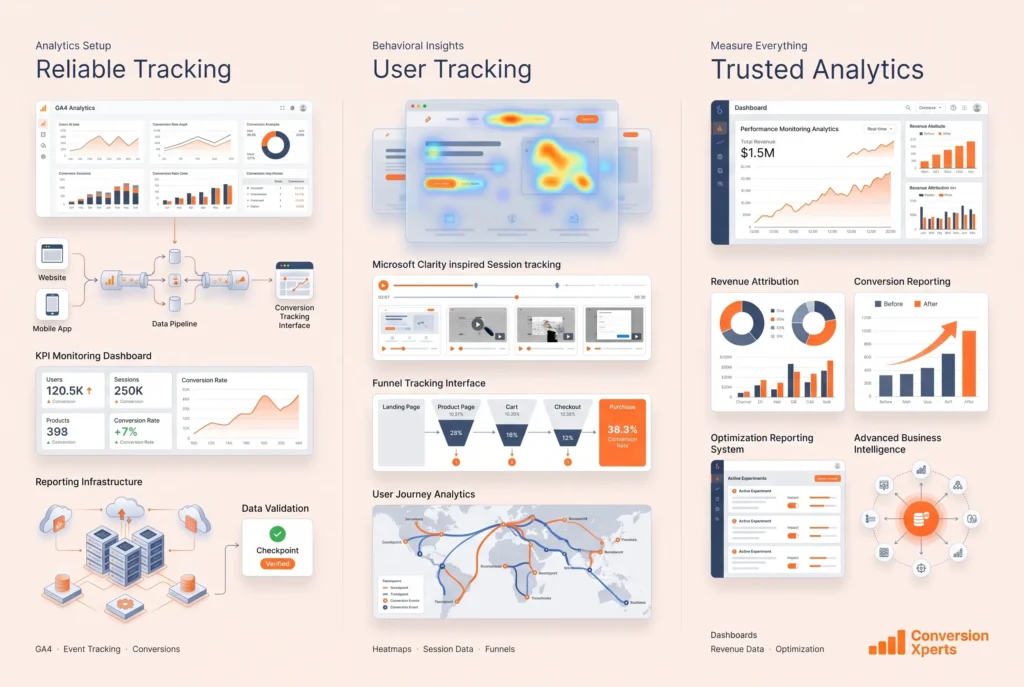
Our core stack includes GA4 for quantitative behavioral analytics, Hotjar for session recording and heatmap analysis, and either VWO, Optimizely, or Convert for A/B testing depending on your existing infrastructure. We also use Looker Studio for performance reporting and Microsoft Clarity as an alternative to Hotjar where clients prefer it. We work with whatever analytics and testing infrastructure you already have in place wherever possible rather than requiring you to adopt new platforms.
UX design focuses on the overall usability, accessibility, and experience quality of a website. Conversion rate optimization focuses specifically on measurable conversion outcomes and uses ongoing data analysis, user behavior research, and controlled experimentation to improve those outcomes. The disciplines overlap but CRO is driven by business metrics and never stops iterating, while UX work often concludes at the point of launch. The most effective digital teams use both in combination.
In most cases, yes. Increasing ad spend sends more traffic into a conversion experience that has the same problems. CRO improves the conversion experience itself, which means every current and future traffic source benefits. A business that improves its ecommerce conversion rate from two percent to three percent generates fifty percent more revenue from identical traffic without spending an additional dollar on acquisition. That improvement also permanently increases the return on every future paid media campaign.