How to Increase E-Commerce Sales and Grow Your Online Revenue in 2026
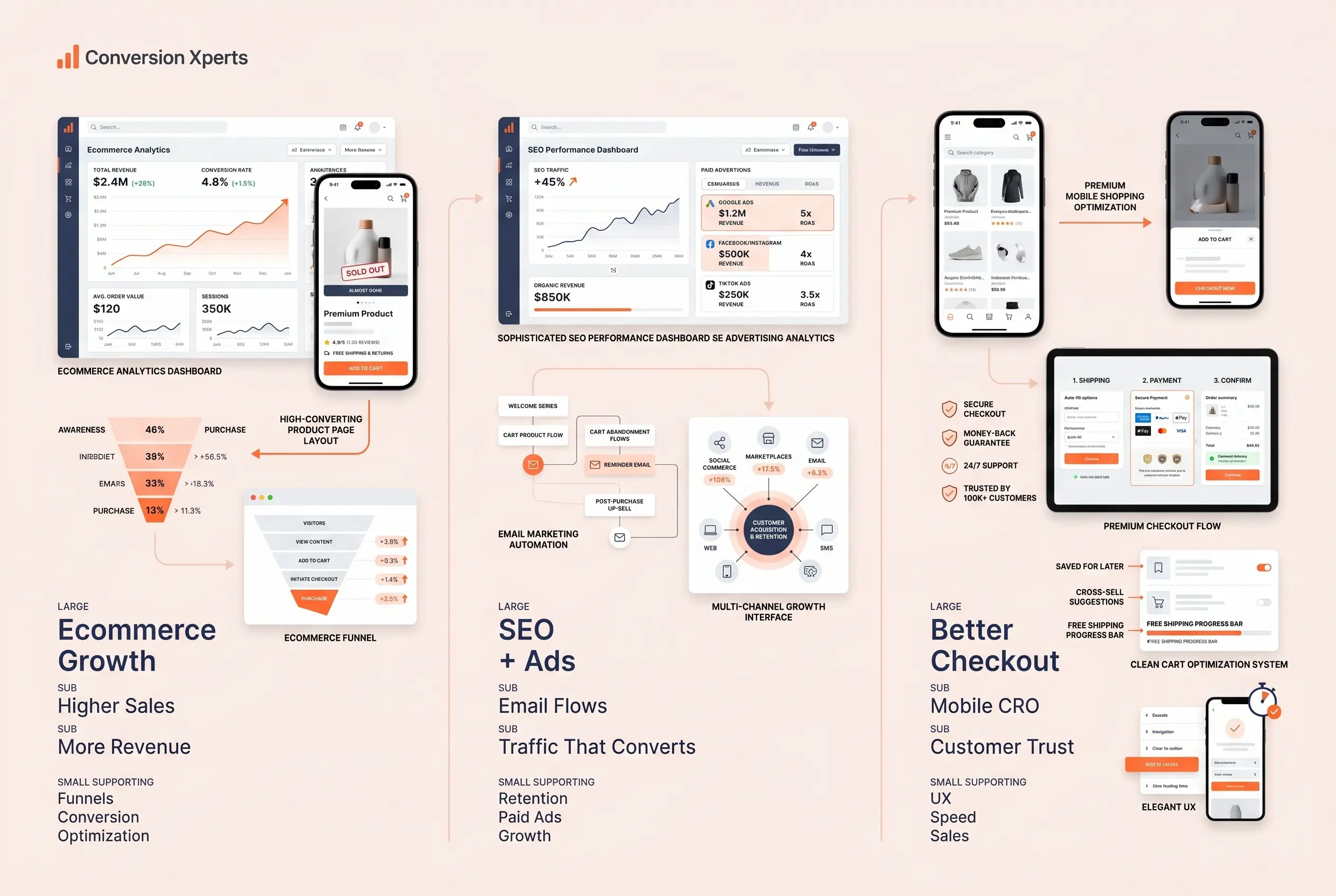
The global e-commerce market is projected to surpass $8 trillion by 2027, yet the average online store converts less than 2% of its traffic into actual buyers. That gap between visitors and customers is where fortunes are either made or lost. If you are running an online store and want to close that gap, you have landed on the right page.
This guide covers every major lever you can pull to increase e-commerce sales, from fixing the basics of your product pages and checkout experience to scaling with email, paid ads, and search engine optimization. Whether you are just starting out or running a seven-figure store, these strategies are built around data and real-world results.
Strategy 1: Optimize Your Product Pages for Conversions
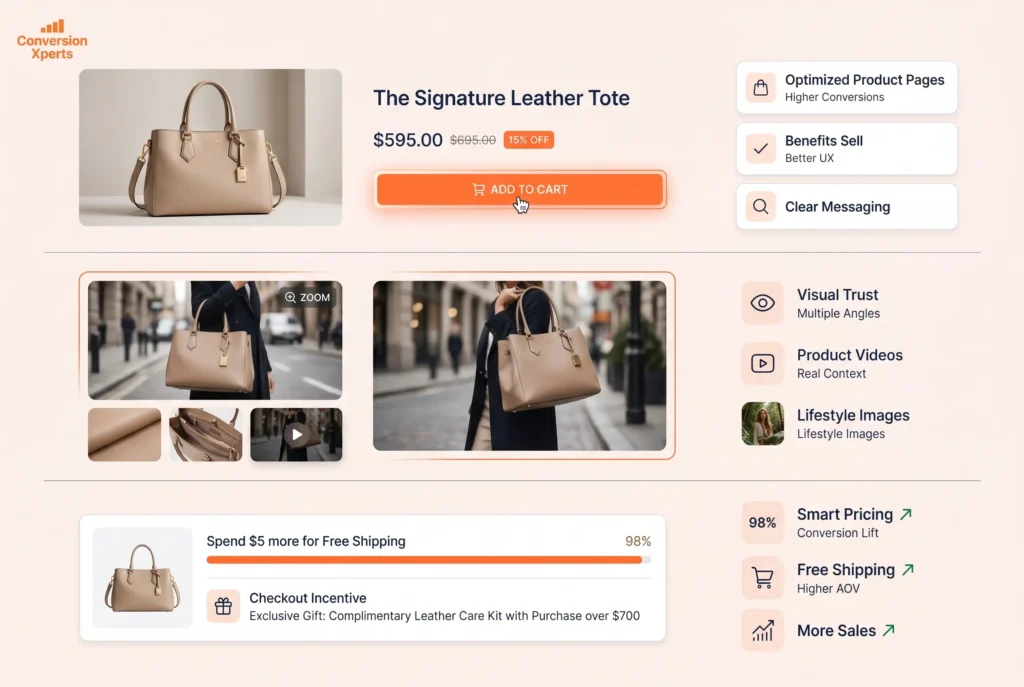
Your product page is the most important sales asset in your entire store. It is where the decision to buy or leave is made. Most online stores treat it as a simple information sheet, but the best e-commerce brands treat it as a dedicated sales page for every individual product.
Start with your product title. It should be clear, keyword-rich, and descriptive enough that a shopper immediately understands what they are looking at. Avoid clever but vague names. Instead lead with the product category followed by the key differentiating feature. For example, instead of writing “The Atlas,” write “Men’s Waterproof Hiking Boot with Ankle Support.”
Your product description should do more than list features. It should answer the question every shopper has in their head: what will this do for me? Focus on benefits over specifications. If you are selling a blender, do not just say it has a 1000W motor. Say it can make a smoothie in 30 seconds, saving your customer 10 minutes every morning. Make the outcome vivid and personal.
High Quality Images Are Non-Negotiable
Research consistently shows that images are the primary factor shoppers evaluate before making a purchase decision online. Your product photography needs to show the item from multiple angles, include lifestyle shots of the product being used in a real context, and ideally include a zoom feature or 360-degree view. If you sell apparel, show the product on multiple body types. If you sell home goods, show the item in a styled room rather than against a plain white background alone.
Video is even more powerful. A 15 to 30 second product video on your page can increase conversion rates by as much as 80% for the right product categories. It does not need to be a professional production. A clear, well-lit walkthrough with narration explaining the key features and benefits is more than enough to move the needle.
Pricing Psychology That Works
The way you present price matters enormously. Show the original price alongside the sale price so the discount is immediately visible. Use charm pricing where appropriate, such as $47 instead of $50. If you offer free shipping above a certain threshold, show the customer exactly how much more they need to spend to qualify right on the product page.
Strategy 2: Simplify the Checkout Experience
Cart abandonment is one of the biggest revenue leaks in e-commerce. Nearly 70% of shoppers who add items to their cart never complete the purchase. The single biggest reason is a complicated, slow, or trust-lacking checkout process. Fixing your checkout is often the fastest way to increase revenue without spending a single dollar more on traffic.
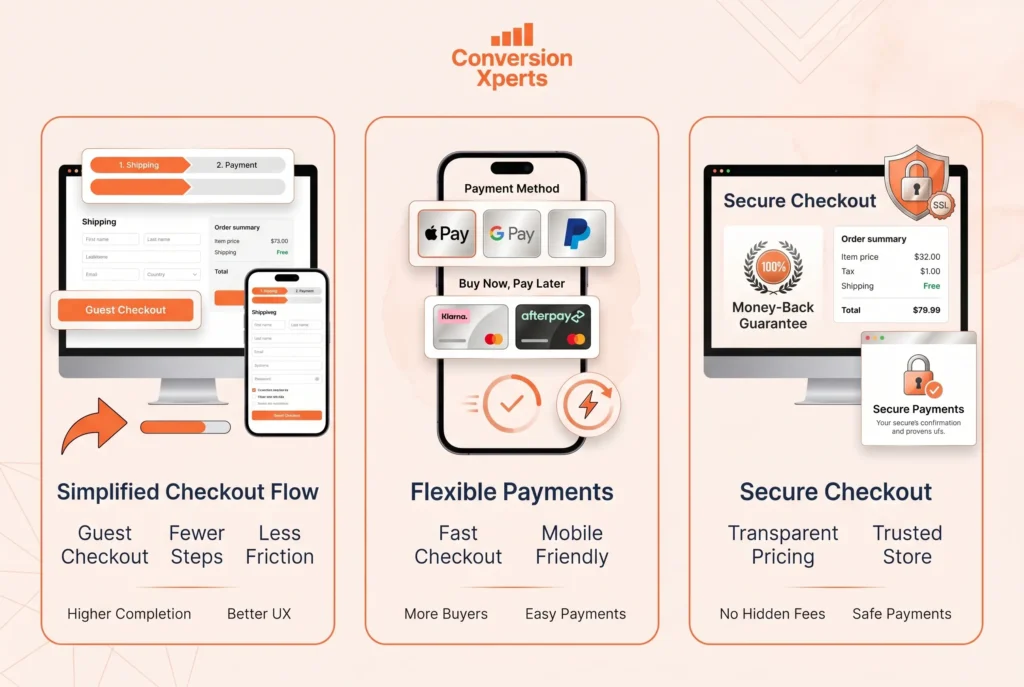
Always enable guest checkout. Forcing account creation before purchase is one of the most common reasons customers abandon. Let customers create an account after completing their purchase, not before. Reduce the number of steps in your checkout process as well. A two or three step checkout outperforms a five-page process every time. Combine shipping and billing information on one screen wherever possible.
Offer multiple payment methods. Credit cards alone are not enough. Integrate Apple Pay, Google Pay, PayPal, and buy now pay later options. Shoppers who prefer a specific method will leave if they do not see it available.
Be completely transparent about all costs. Surprise shipping fees or taxes added at the final step cause more abandonment than almost any other factor. Show the full cost as early as possible, ideally right on the cart page before checkout even begins.
Display trust badges at the point of purchase. Show security seals, SSL indicators, and money back guarantee icons near the checkout button. Anxiety about payment security is a major conversion killer, especially for first-time customers visiting your store.
Strategy 3: Build an SEO Strategy That Drives Organic Traffic
Search engine optimization is the single most cost-effective long-term channel for growing e-commerce sales. Unlike paid ads that stop the moment your budget runs out, a well-executed SEO strategy compounds over time and delivers traffic for years. The key is to approach it with both technical discipline and genuine helpfulness to your target audience.
Keyword Research for E-Commerce
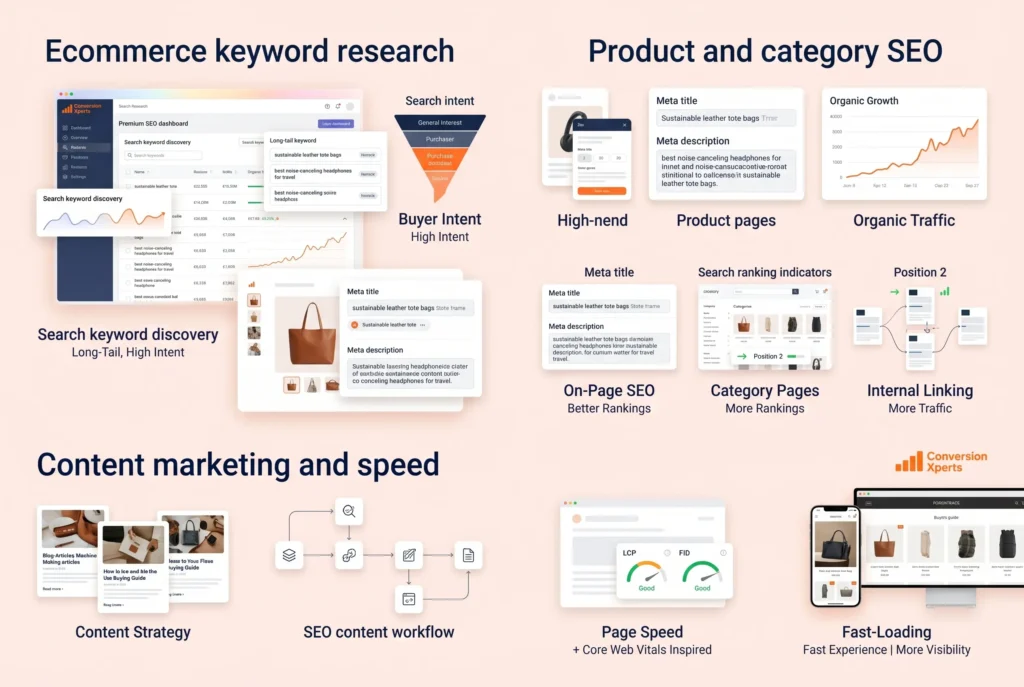
Start by identifying the commercial intent keywords that your ideal customers are searching for right before they make a purchase decision. These include terms like “best product category,” “buy product name online,” “product for specific use case,” and “brand vs competitor.” Do not ignore long-tail keywords. A phrase like “waterproof hiking boots for wide feet under $100” might only get searched 200 times a month, but the person searching it is ready to buy and you face far less competition for it.
On-Page SEO for Product and Category Pages
Every product page should have a unique title tag that includes the primary keyword and ideally your brand name. Your meta description should read like a human-written advertisement that gives the searcher a compelling reason to click. Use your primary keyword naturally in the first 100 words of your product description.
Category pages are often the most powerful SEO asset in e-commerce and yet most stores treat them as simple grids of products with no supporting text. Adding a well-written introductory paragraph to each category page gives search engines much more context and helps these pages rank for competitive head terms.
Content Marketing That Attracts Buyers
A blog or knowledge center is not just for brand awareness. When done correctly it brings in shoppers who are actively researching before purchasing. Write buying guides, comparison articles, care and maintenance posts, and how-to content that targets keywords your ideal customers search before landing on your product pages. Internal linking from these articles to the relevant product or category pages passes authority and accelerates sales.
Page speed is a confirmed Google ranking factor. Run your store through Google PageSpeed Insights and fix the issues flagged. Compress images, enable browser caching, reduce unused JavaScript, and consider a content delivery network if you serve customers across multiple regions.
Strategy 4: Use Email Marketing to Recover and Retain
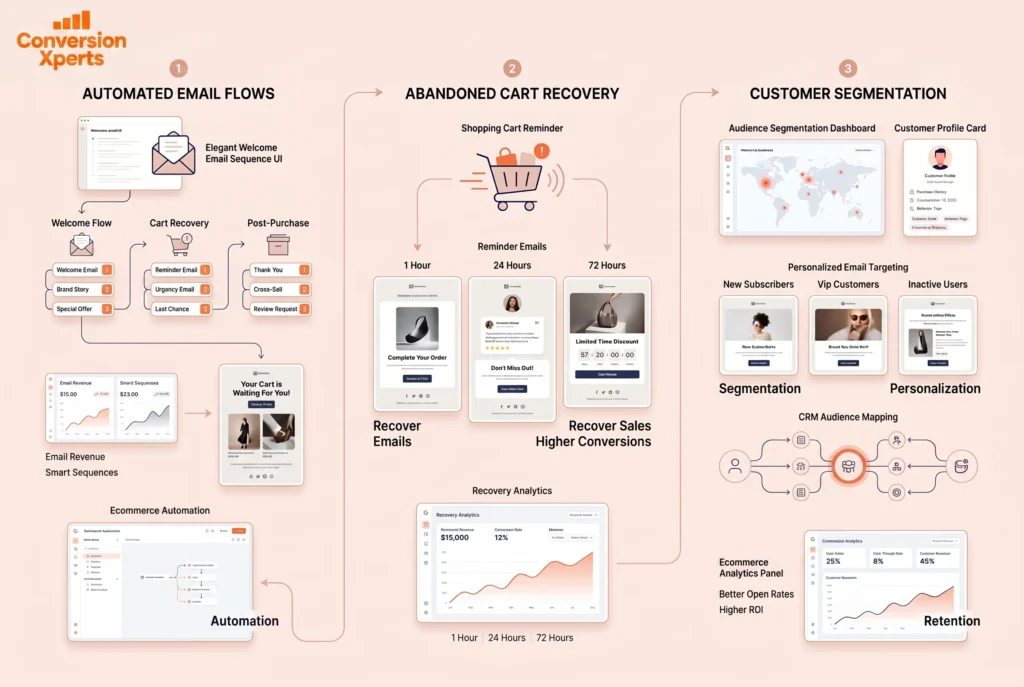
Email remains the highest return on investment marketing channel in e-commerce, delivering an average return of $36 to $42 for every dollar spent. The reason is simple. The people on your email list have already expressed interest in your brand. They are warm, they know you, and they are far easier to convert than cold traffic.
Automated Email Flows That Work While You Sleep
Your welcome series should go out over the first three to five days after someone subscribes. Use it to introduce your brand story, highlight your bestsellers, share your unique value proposition, and give new subscribers a reason to make their first purchase.
Your abandoned cart sequence is pure revenue recovery. Send the first email within one hour of abandonment, reminding the shopper of exactly what they left behind. Send a second email 24 hours later with social proof about the product. Send a third 72 hours later with a small incentive if appropriate. This three-email sequence consistently recovers between 5% and 15% of abandoned carts for stores that implement it properly.
Segmentation Is the Secret Weapon
Sending the same email to every person on your list is leaving money on the table. Segment your subscribers by purchase history, product categories browsed, geographic location, and engagement level. A customer who has bought from you three times should receive different messaging than someone who signed up last week and has never ordered. The more relevant your emails feel to the individual reader, the higher your open rates, click rates, and conversion rates will be.
Strategy 5: Leverage Social Proof and Trust Signals
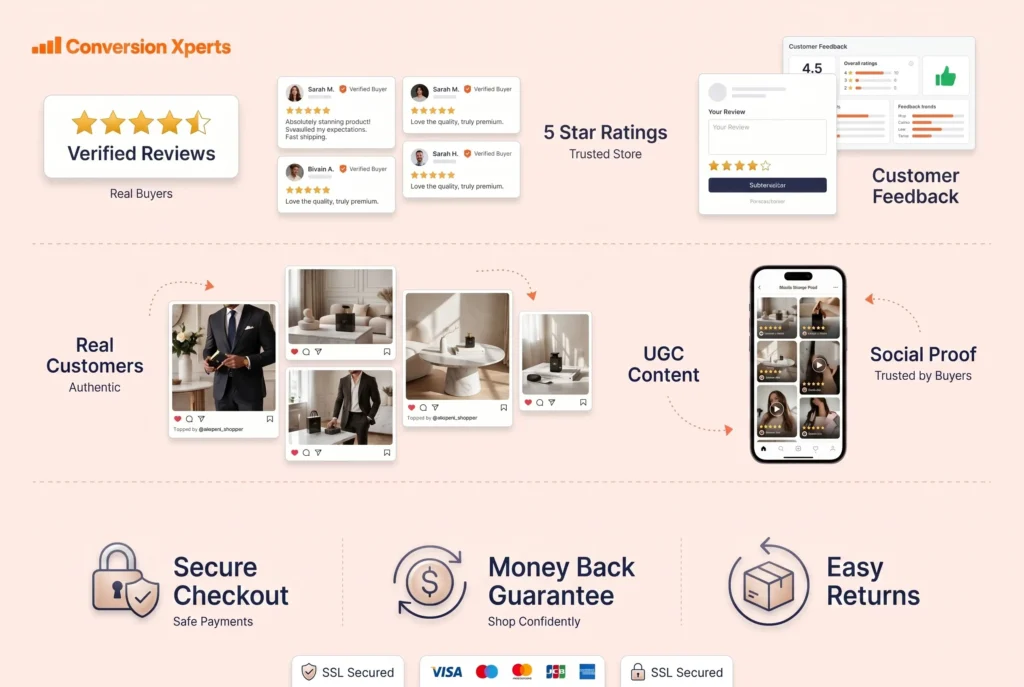
People are wired to follow the actions of others. When a potential customer sees that hundreds of people have already purchased and loved your product, their hesitation dissolves. Social proof is one of the most powerful conversion tools available and it costs very little to implement correctly.
Collect reviews aggressively. Send a post-purchase email asking for a review seven to fourteen days after delivery. Make it easy by linking directly to the review form. Respond to every review, positive and negative, to show future shoppers that you genuinely care about their experience.
Display reviews prominently. Put star ratings directly under your product title. Feature two or three detailed reviews near the add-to-cart button. Consider using user-generated content, meaning real photos and videos from customers using your products, as these consistently outperform professional photography in building trust with new shoppers.
Include an explicit money back guarantee or easy return policy statement directly on your product page, near the purchase button. Customers weigh the risk of buying something they cannot touch or try in person. A clear, hassle-free return policy removes that fear and increases conversion rates measurably.
Strategy 6: Upsell and Cross-Sell the Smart Way
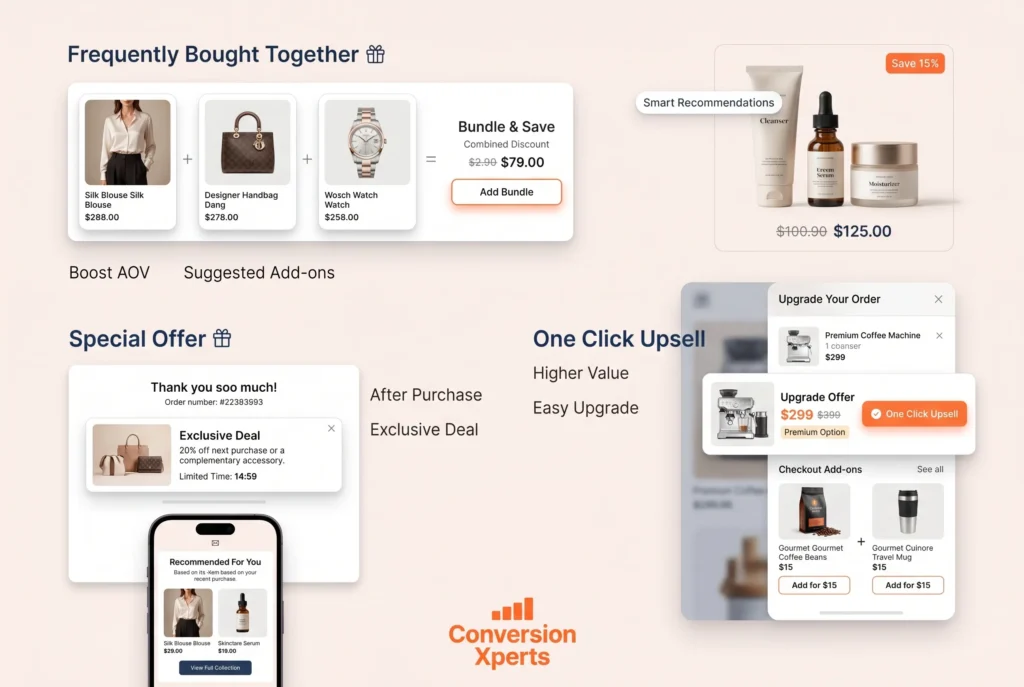
Increasing your average order value is one of the fastest ways to grow revenue without needing more traffic. Upselling means encouraging the customer to buy a higher-tier version of what they are already considering. Cross-selling means recommending complementary products that go well with their current selection. Both strategies, when done thoughtfully, feel helpful rather than pushy.
On the product page, show a frequently bought together section that recommends two or three complementary items. In the cart, offer a relevant upgrade at a small price difference. On the order confirmation page and in your post-purchase emails, present a one-time offer for a related product at a special price. At this point the customer has just made a positive buying decision and their purchasing mindset is still active. This is one of the highest-converting moments in the entire customer journey.
Strategy 7: Win on Mobile Commerce
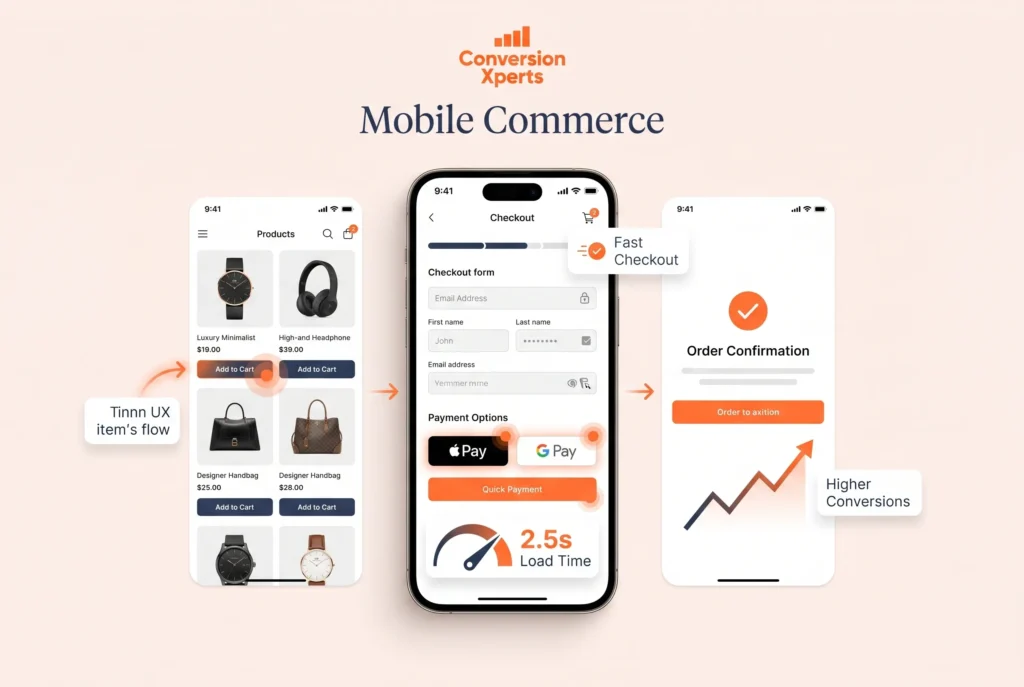
More than 60% of e-commerce traffic now comes from mobile devices. Yet mobile conversion rates consistently lag behind desktop by a significant margin. The gap exists not because people do not want to buy on their phones, but because most e-commerce experiences are still built with desktop as the primary focus and mobile as an afterthought.
Every element of your store needs to be tested and optimized on a real mobile device. Check that your product images load quickly, that text is readable without zooming, that buttons are large enough to tap comfortably, and that the checkout process flows smoothly on a small screen. Payment options like Apple Pay and Google Pay are especially important on mobile because they eliminate the friction of typing card details on a small keyboard.
Aim for a page load time of under 2.5 seconds on mobile. Compress and lazy load images, remove unnecessary scripts, and test your Core Web Vitals scores regularly through Google Search Console.
Strategy 8: Run Profitable Paid Advertising Campaigns
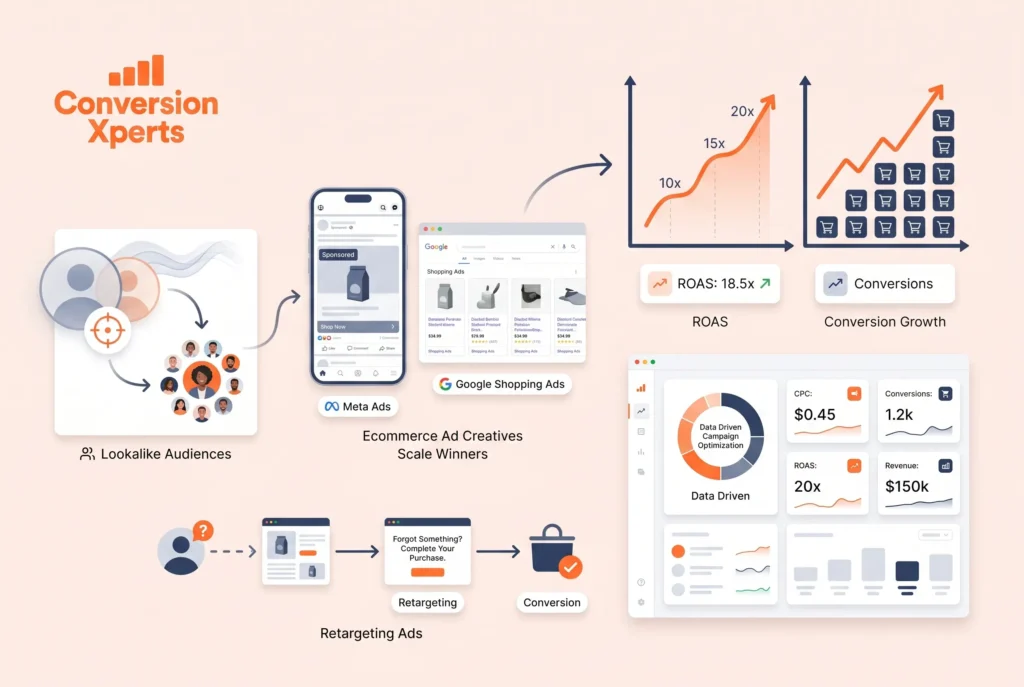
Paid advertising done correctly can accelerate your e-commerce growth significantly. Before spending aggressively on top of funnel prospecting, make sure your retargeting is set up and performing. Retargeting campaigns reach people who have already visited your store or engaged with your brand. They have the highest return on ad spend because you are marketing to a warm audience who already knows you. Start with dynamic product ads on Meta and Google Shopping that show visitors the exact products they viewed on your site.
For prospecting, use lookalike audiences built from your existing customers. These are people who share characteristics with those who have already bought from you, making them far more likely to convert than a broad interest-based audience. Test your creative aggressively. A single strong ad creative can outperform a dozen mediocre ones. Invest in video, lifestyle imagery, and social proof-based ads that communicate your value proposition within the first three seconds.
Track everything with precision. Know your cost per click, cost per purchase, and your return on ad spend for every campaign. Make decisions based on data, not gut feeling. Pause what is not working and scale what is.
Strategy 9: Focus on Customer Retention
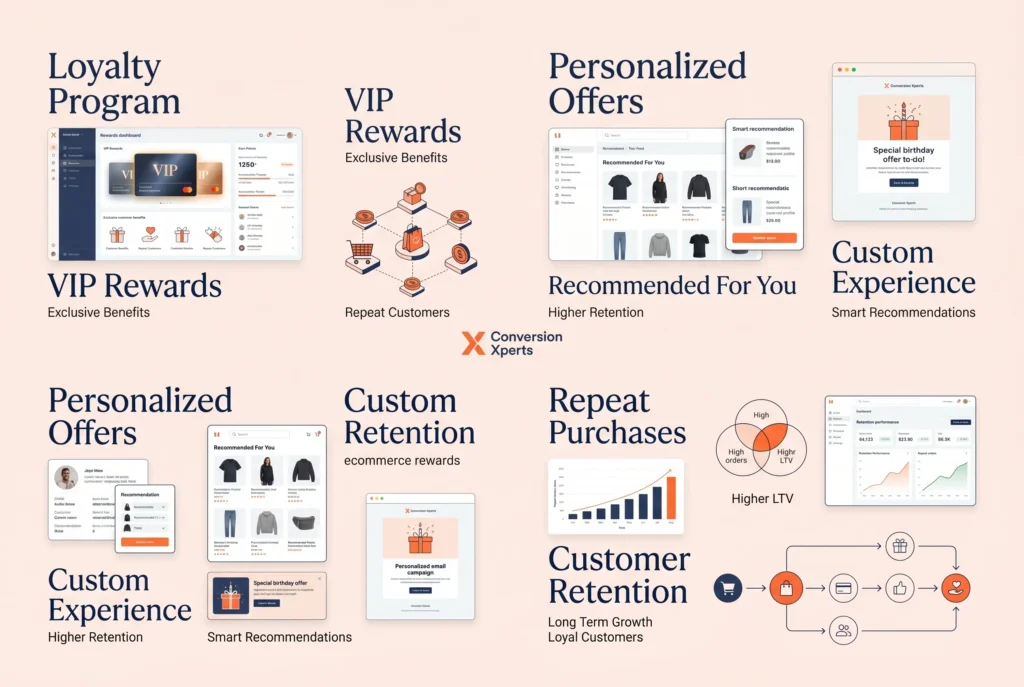
Acquiring a new customer costs five times more than retaining an existing one. Yet most e-commerce businesses spend the overwhelming majority of their marketing budget on acquisition and very little on keeping the customers they already have. Shifting even a portion of that focus toward retention can dramatically improve profitability.
A loyalty or rewards program is one of the most effective retention tools. When customers earn points for purchases that can be redeemed for discounts, they have a tangible reason to return to your store rather than shopping with a competitor. Structure your program with tiered levels so that your highest-spending customers receive exclusive benefits. This creates a sense of status and belonging that builds long-term loyalty.
Personalization is the other major driver of retention. When a returning customer visits your store and sees product recommendations based on their purchase history, when their birthday gets them a special offer, when they receive emails that speak directly to their interests, they feel valued rather than like one of a million names in a database. That feeling translates directly into repeat purchases and higher lifetime customer value.
Strategy 10: Use Data and Analytics to Guide Every Decision
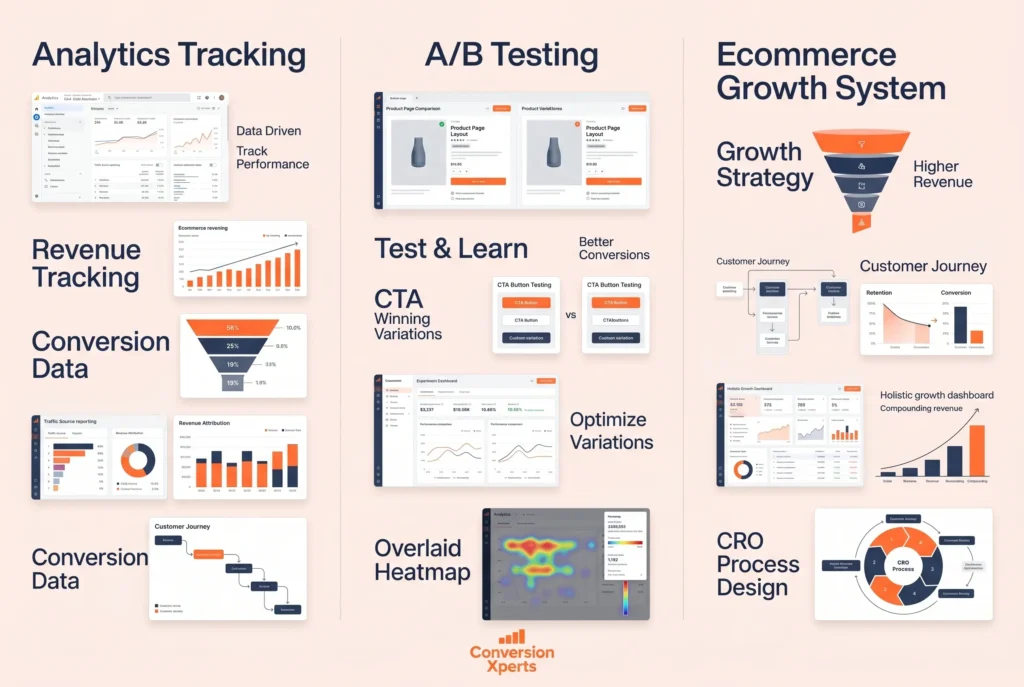
Every strategy in this guide becomes dramatically more effective when you are measuring the right things and using that data to make informed decisions. Without analytics you are guessing. With analytics you are learning and compounding your results over time.
Set up Google Analytics 4 and make sure e-commerce tracking is fully configured so you can see exactly where revenue is coming from, which products are driving the most conversions, where in your funnel shoppers are dropping off, and which traffic sources deliver the highest quality buyers.
Run A/B tests regularly. Test your product page headlines, your images, your call to action button copy, your pricing display, and your checkout flow. Never assume you know what will perform best. Let your shoppers tell you through their behavior. Even a 5% improvement in conversion rate on a high-traffic page can mean thousands of dollars in additional monthly revenue.
Putting It All Together
Increasing e-commerce sales is not about finding one magic tactic. It is about systematically improving every part of your customer’s journey from the moment they discover your brand to the moment they become a loyal repeat buyer. Each strategy in this guide addresses a different part of that journey, and the compounding effect of improving multiple touchpoints simultaneously is where the real growth happens.
Start with the areas that represent your biggest current gaps. If your checkout abandonment rate is high, fix that first. If your product pages are thin on content and imagery, build those out. If you have no email automation in place, implement your first flows before investing more in traffic.
The stores that win in e-commerce are not necessarily the ones with the biggest budgets. They are the ones that understand their customers most deeply and remove every possible barrier between intention and purchase.
About ConversionXperts
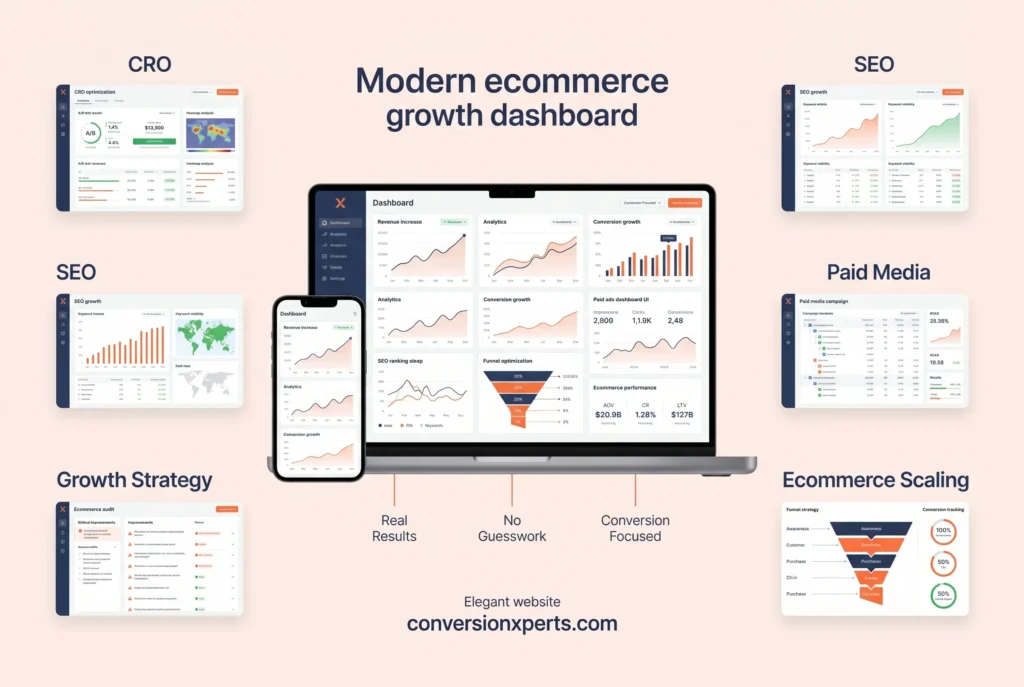
ConversionXperts is a dedicated e-commerce growth consultancy built for online store owners who are serious about results. The team specializes in conversion rate optimization, full-funnel strategy, SEO for e-commerce, and paid media management. Whether you need a complete store audit, a traffic strategy, or hands-on support scaling your revenue, ConversionXperts brings the expertise and frameworks to move your business forward.
If you are ready to stop guessing and start growing, visit conversionxperts.com to learn more about how the team can help you turn more of your traffic into loyal, paying customers. Real strategies. Real results. No guesswork.