How to Increase Ecommerce Sales: Simple Methods to Boost Your Revenue Fast
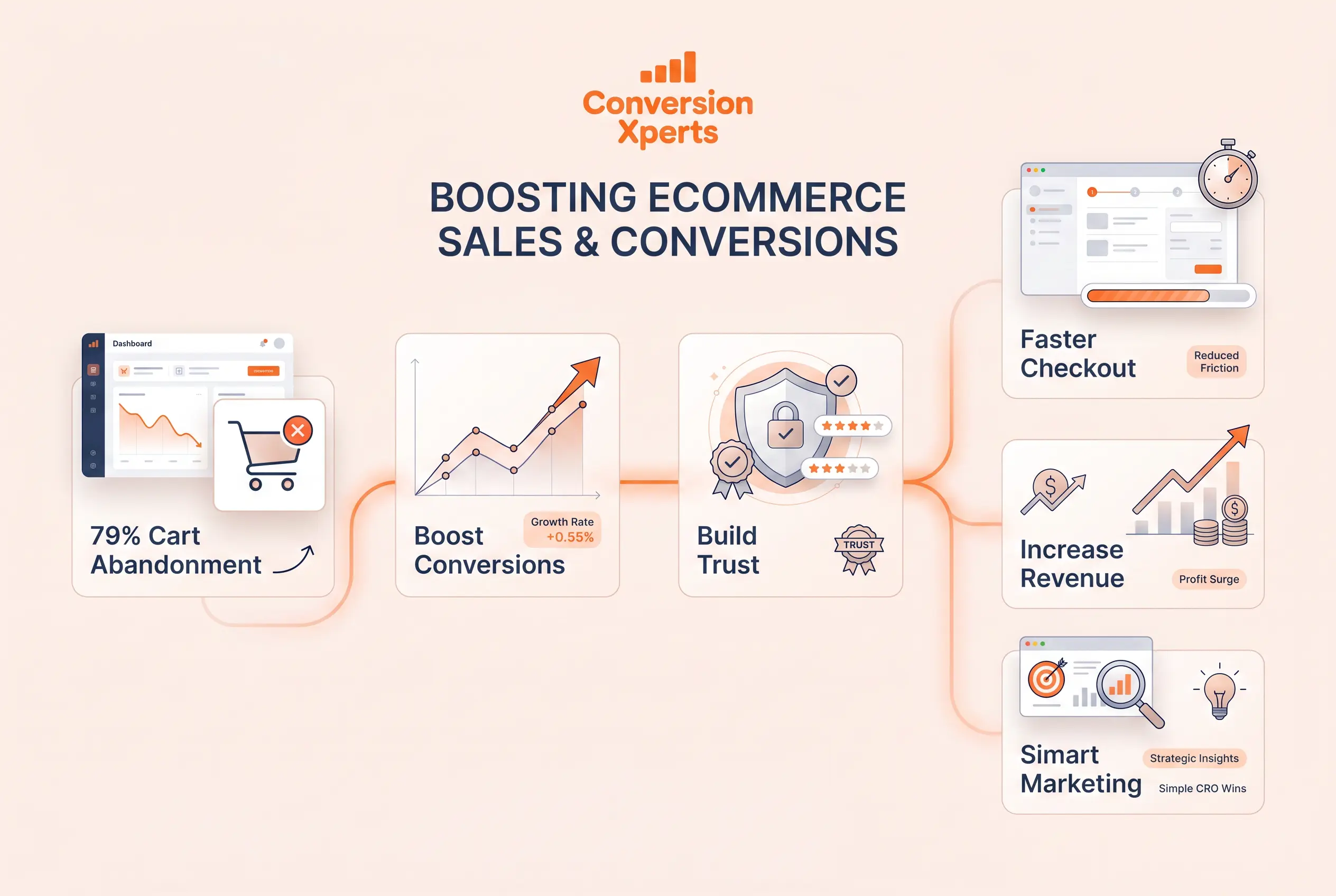
Learning how to increase ecommerce sales becomes critical when you consider that 79% of shopping carts are abandoned. That’s a massive revenue leak for your online store.
The good news? You can boost ecommerce sales without complicated tactics or huge advertising budgets. Simple changes to your website, smart marketing moves, and proven ecommerce sales strategy tweaks can dramatically increase online sales.
This guide walks you through practical methods to improve conversions, build customer trust, and grow your revenue. Whether you’re just starting out or looking to scale, these strategies will help you increase sales online effectively.
Key Takeaways
These proven strategies can help you boost ecommerce revenue without massive advertising budgets or complex tactics:
• Optimize website speed and mobile experience – Pages loading over 2 seconds lose 50% of mobile shoppers, while mobile optimization can boost conversions by 27%
• Implement cart abandonment recovery emails – With 70% cart abandonment rates, a 3-email sequence can recover 10-20% of lost sales and generate millions in additional revenue
• Display customer reviews and social proof – Products with just 10 reviews see 53% higher conversions, as 78% of consumers read reviews before purchasing
• Use personalized product recommendations – Browsing-based suggestions can drive 20-30% of total ecommerce revenue and generate 40% higher returns than generic recommendations
• Set free shipping thresholds strategically – 58% of shoppers add extra items to reach free shipping minimums when thresholds are set 15-30% above average order value
The key is starting with your biggest revenue leaks first – whether that’s slow page speeds, cart abandonment, or lack of social proof – then systematically implementing these tactics to create a complete conversion optimization system.
Optimize Your Ecommerce Website for Better Conversions
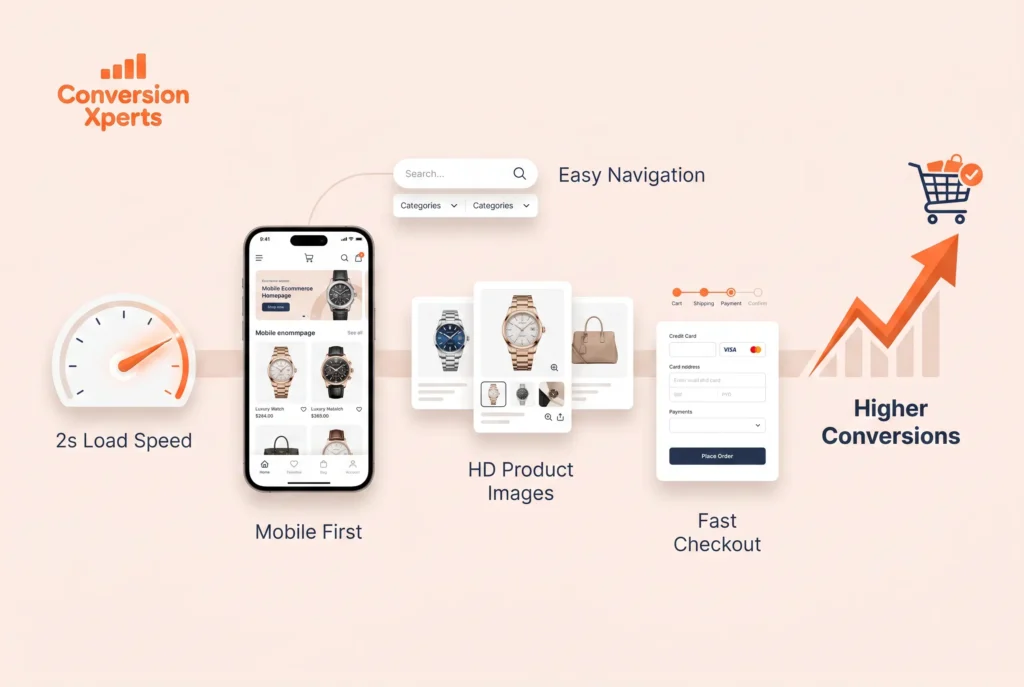
Your website performance determines whether visitors convert into customers or click away. Better user experience naturally leads to more conversions, making website optimization one of the most effective ecommerce sales strategies.
Improve Site Speed and Mobile Responsiveness
Page load speed directly impacts your revenue. More than half of mobile shoppers abandon pages that take longer than 2 seconds to load. On desktop, each second of delay can reduce conversions by 7%. These numbers show why speed optimization must be your starting point when figuring out how to increase ecommerce sales.
Mobile responsiveness matters equally. With most web traffic now coming from mobile devices, your site needs to adapt seamlessly across all screen sizes. Mobile-optimized designs with fluid layouts, touch-friendly buttons (at least 44×44 pixels), and simplified navigation menus can boost conversion rates by up to 27%. Compress images, enable browser caching, minimize HTTP requests, and use a content delivery network to deliver faster load times. Focus on mobile-first testing, as mobile scores typically lag behind desktop performance.
Simplify Your Navigation and Search Functionality
Navigation problems plague most ecommerce sites. Research shows 58% of desktop sites and 67% of mobile sites deliver mediocre to poor navigation experiences. Users expect a logical website structure that helps them find products with minimal clicks. Streamline your menu by organizing categories intuitively, dividing options into manageable chunks when you reach around 10 subcategories.
Your search bar needs prominent placement at the top of the page, sized large enough for longer queries. Add autocomplete functionality with product images to help users find items faster. Sites that improved their search experience saw conversion increases up to 4 times, with 87% of searchers finding what they wanted within the first five results. Similarly, highlighting the current scope in main navigation and implementing hover delays prevents user confusion.
Enhance Product Pages with High-Quality Images
Visual quality separates converting products from abandoned ones. During usability testing, 56% of users immediately began exploring product images after arriving on product pages. Quality matters significantly: high-quality product photos deliver a 94% higher conversion rate compared to low-quality images.
Sharp, well-lit photographs showcase products properly and build trust. Provide multiple angles, zoom capabilities, and closeup shots of textures and details. For apparel, show the product on models from different angles. For electronics, display items in real-life settings to help customers understand size and scale. Images that accurately represent products also reduce return rates and complaints.
Create a Frictionless Checkout Process
Checkout friction destroys conversions. Nearly half of customers abandon carts when extra costs appear too high, while 18% leave specifically because the checkout process is too long or complicated. Cart abandonment reached 70.19% in 2024, with mobile experiencing the highest rate at 75.5%.
Reduce form fields to essentials. The average checkout displays 11.8 form fields when only 8 are needed. Overwhelming users with promotional fields caused 66% of users to abandon payment forms in one study. Enable guest checkout, implement auto-fill functionality, and offer multiple payment methods including digital wallets. Be transparent about shipping costs and taxes upfront to avoid surprises. Progress indicators help customers see how close they are to completion, reducing cognitive load and making the process feel faster.
Use Smart Marketing Tactics to Drive More Sales
“One key benefit of personalizing messages is that it recognizes the customers as individuals. By marketing one way to prospects, another way to those that have already purchased a product, and another way to long-term, high-value customers you can make your marketing messages far more compelling and effective. Customers will also appreciate the personal touch, and you’ll stop driving them away by bombarding them with messages which aren’t relevant to them.” — Dave Chaffey, Author of business books on Digital Marketing, CEO of Smart Insights
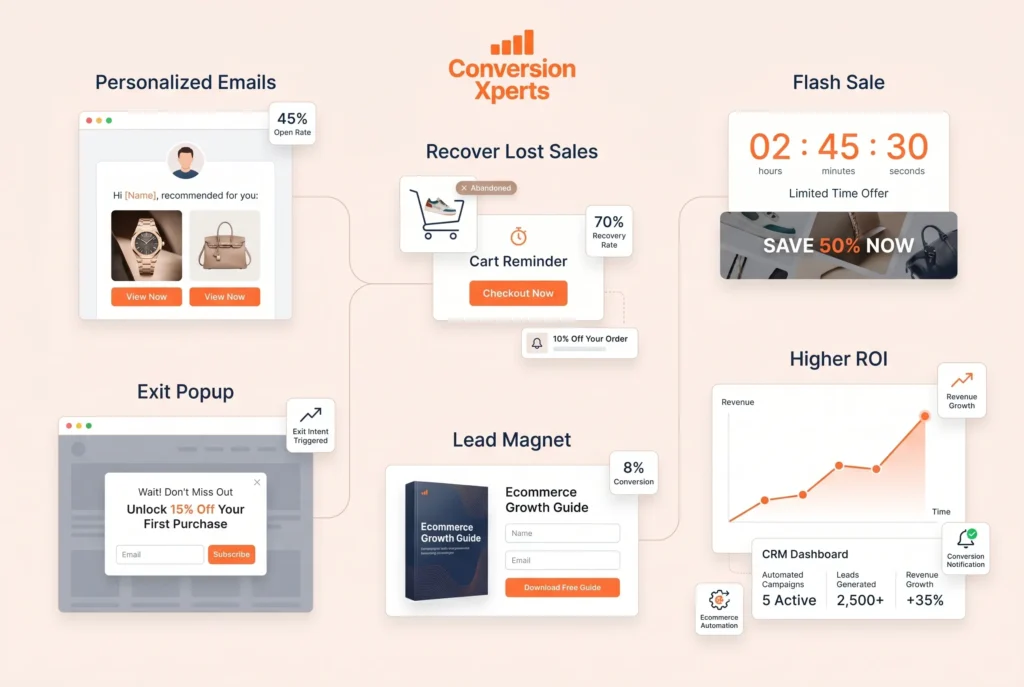
Marketing automation and strategic outreach convert browsers into buyers when your website optimization alone falls short. Smart marketing tactics recover lost sales and bring hesitant shoppers back to complete their purchases.
Implement Personalized Email Campaigns
Personalized emails deliver a median ROI of 122% and produce 6 times higher transaction rates compared to generic messages. Email marketing generates $36 for every $1 spent, making it one of your most profitable channels. Personalization extends beyond adding a first name to the subject line. Segment your audience based on browsing behavior, purchase history, and preferences to send relevant product recommendations.
Welcome emails achieve a 91.43% average open rate, making them 4 times more likely to be opened than standard promotional emails. Abandoned cart emails show open rates of 40% with 20% click-through rates when sent three hours after abandonment. Businesses that collect advanced data to personalize messaging timing and content see click rates increase by 158%. Dynamic content blocks allow different recipients to see customized products within the same email campaign, matching their individual interests and previous interactions with your brand.
Leverage Cart Abandonment Recovery Strategies
Cart abandonment costs online retailers $3 billion annually. With 70% of carts abandoned across all devices, recovery emails become essential. Sending three abandoned cart emails generates substantially more revenue ($24.90 million) compared to sending just one ($3.80 million). These campaigns can recover 10-20% of lost sales.
Send your first reminder email within three hours of abandonment. Include product images, names, and prices from the abandoned cart along with complementary recommendations. Implement a 2-3 email sequence over 3-7 days, gradually increasing incentives with each message.
Skip the immediate discount in your first email; customers have already shown purchase intent. Instead, send a personalized follow-up that feels like it comes from a real person rather than automated marketing.
Run Limited-Time Offers and Flash Sales
Flash sales create urgency by offering steep discounts for short periods, sometimes just hours. These time-sensitive promotions tap into fear of missing out, reducing customer hesitation and encouraging impulse purchases. Limited-time offers delivered through email notifications can re-engage dormant subscribers. Nearly 88% of Americans rely on discount codes when shopping, while 64% delay purchases until deals become available.
Promote flash sales across multiple channels using email, social media, and website banners. Countdown timers amplify urgency, making shoppers feel they must act immediately. Test your website performance before launching to handle traffic surges. Flash sales work particularly well during high-traffic periods and help clear slow-moving inventory while bringing in revenue.
Add Exit-Intent Popups with Special Discounts
Exit-intent popups convert an additional 2-4% of site visitors and can boost revenue up to 30%. These popups trigger when users move their cursor toward the browser’s close button, giving you a final chance to retain them. Free shipping popups recover 44% of shoppers who intended to exit. Adding images to popups increases click-through rates by 29%.
Offer contextually relevant incentives when users prepare to leave. Display discount codes on checkout pages where customers abandon carts searching for better deals. Alternatively, highlight sale items, live chat options for complex products, or new features that address user needs.
Build Your Email List with Lead Magnets
Lead magnets capture visitor contact information in exchange for valuable resources. Offering a 10-15% discount or free shipping on first orders incentivizes signups. Interactive quizzes, calculators, step-by-step guides, and exclusive bundles work effectively as lead magnets. Companies using relevance-driven personalization generate 40% more revenue than those that don’t.
Exit-intent popups prove particularly effective for first-time visitors, capturing both email addresses and conversions through discount offers. Personalized messaging resonates with 72% of consumers who only engage with brands that tailor communications. Make opt-in forms easy with minimal required fields to reduce drop-off rates.
Build Trust and Social Proof to Increase Ecommerce Sales
“If you do build a great experience, customers tell each other about that. Word of mouth is very powerful.” — Jeff Bezos, Founder and Executive Chairman of Amazon
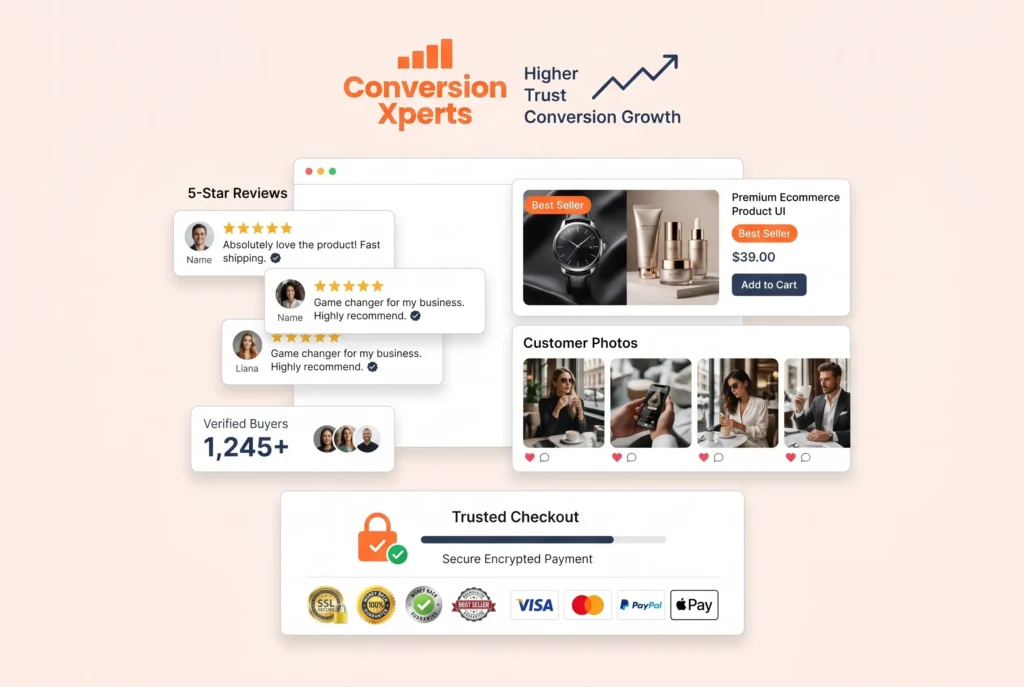
Trust determines whether shoppers buy from you or move to competitors. Building credibility through authentic social proof addresses the concerns that prevent conversions.
Display Customer Reviews and Ratings
Reviews influence purchasing behavior more powerfully than any marketing message. Research shows 78% of consumers read ratings and reviews before buying, while 49% trust reviews as much as personal recommendations. The impact on conversions proves substantial. Shoppers who engage with user-generated content convert at a 161% higher rate than those who don’t. Accumulating just 10 reviews on a product can lead to a 53% uplift in conversion.
Display star ratings prominently on product pages, category grids, and at checkout. A mix of ratings appears more trustworthy than pages with only perfect 5-star reviews. Accordingly, showing both positive and negative feedback demonstrates transparency. Implement verified buyer badges to distinguish authentic customer feedback. Encourage detailed reviews that discuss specific product features and real-world usage experiences, as these provide the insights shoppers seek.
Showcase User-Generated Content
Customer photos and videos bridge the gap between product descriptions and reality. Data reveals 56% of shoppers look at images submitted from customers who have received the item. When consumers see how products fit into the lives of real people, purchasing confidence increases. In fact, 79% of people say user-generated content highly impacts their purchasing decisions.
Create visual galleries on product pages featuring customer photos alongside professional imagery. This authentic content builds trust because 92% of customers trust peer recommendations. Share positive reviews and customer content across social media platforms to extend your reach. User-generated content performs exceptionally well, with Instagram posts featuring customer content receiving 70% more engagement compared to brand-created posts.
Add Trust Badges and Security Signals
Security concerns stop purchases before they start. Trust badges address these anxieties directly. Forms displaying trust badges see 42% more conversions compared to those without.
Different badge types serve specific purposes:
- Security badges: SSL certificates, Norton Secured, McAfee Secure signal encrypted connections
- Payment badges: Visa, Mastercard, PayPal, Apple Pay logos from trusted financial institutions
- Review platform badges: Trustpilot, Google Reviews scores demonstrate verified customer satisfaction
- Guarantee badges: Money-back guarantees and return policy assurances reduce purchase risk
Place security and payment badges near checkout buttons and form fields. Position review badges and ratings on product pages where shoppers make buying decisions.
Highlight Best-Sellers and Popular Products
Social validation drives purchases when shoppers see what others choose. Highlighting trending products with badges like “Most Popular” or “Customer Favorite” creates immediate credibility. Showcase items with enthusiastic testimonials and high star ratings to guide uncertain buyers toward proven choices. Display “Back in Stock” notifications to create urgency around popular items.
Increase Average Order Value with Upselling Techniques
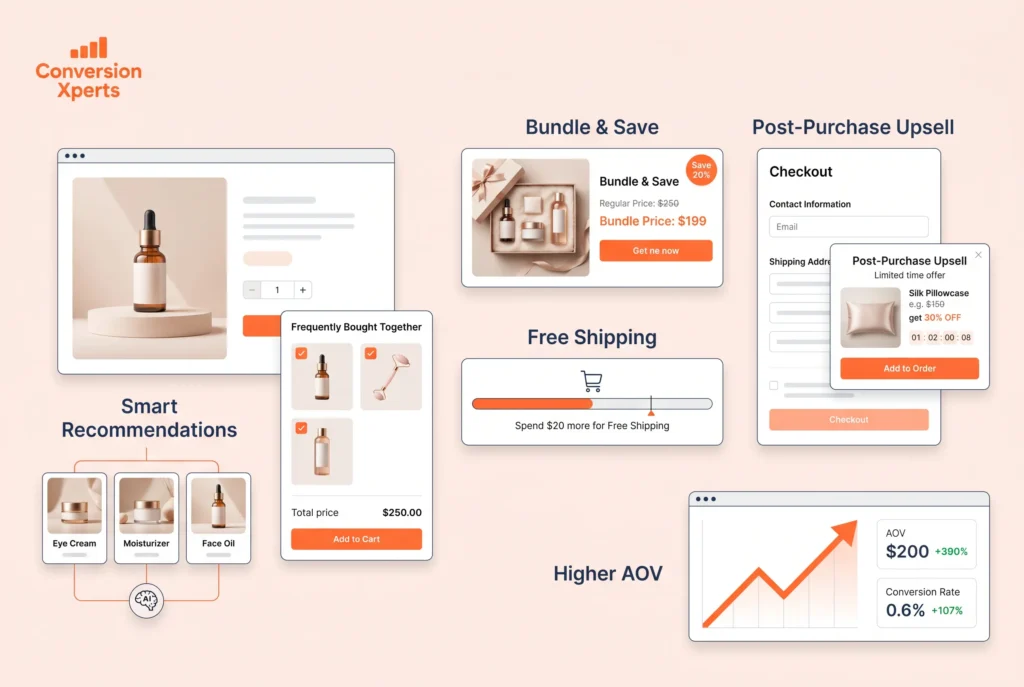
Getting customers to spend more per transaction multiplies your revenue without increasing traffic costs. Upselling techniques boost average order value by presenting relevant additions at strategic moments.
Show Product Recommendations Based on Browsing History
Browsing behavior reveals purchase intent before checkout. Product views, category explorations, search queries, and cart additions signal what shoppers want. Personalization leaders capture these signals and feed them into recommendation engines that surface relevant products across your site, in emails, and through ads. This approach generates 40% higher revenue compared to generic suggestions. Recommendations can drive 20-30% of total ecommerce revenue, with some platforms seeing product recommendations account for up to 31% of revenues.
Offer Bundle Deals and Package Discounts
Bundle pricing increases perceived value while boosting sales. Businesses employing product bundling experience an average 30% increase in revenue. Bundles deliver a 55% lift in average order value and an 86% increase in revenue per user. Pure bundling sells products only as sets, mixed bundling offers individual or package options, and leader bundling pairs popular items with lesser-known products.
Display ‘Frequently Bought Together’ Items
Complementary product suggestions rely on collaborative filtering to show items other customers purchased together. Amazon generates 35% of revenue through these AI-powered recommendations. Effective frequently bought together features balance popular pairings with compatibility-focused matches.
Use Post-Purchase Upsells
Post-purchase offers capitalize on peak buying intent immediately after checkout on order confirmation pages. One-click upsells that skip re-entering payment details convert at higher rates. Selling to existing customers has a 60-70% success rate versus just 5-20% for new customers.
Set Minimum Order Thresholds for Free Shipping
Free shipping thresholds incentivize larger purchases. Approximately 58% of shoppers add extra items to reach free shipping minimums. Set thresholds 15-30% above your current average order value to encourage cart top-ups.
Expand Your Reach Through Multiple Channels
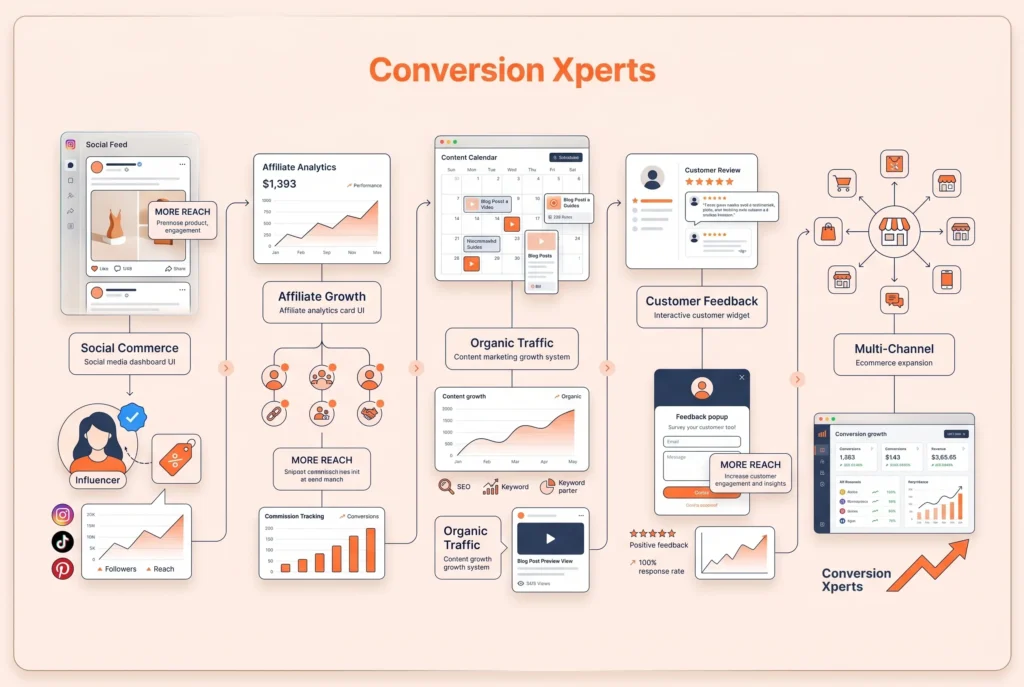
Relying on a single sales channel limits your growth potential. Diversifying where customers discover and interact with your brand opens new revenue streams.
Grow Your Presence on Social Media Platforms
Social media drives 17.11% of total online sales. Facebook leads product discovery, with nearly 40% of social users finding new products there. Younger shoppers show stronger social commerce adoption, with 90% of Gen Z and 84% of Millennials making social-influenced purchases. Partnering with influencers amplifies this effect, as 64% of users are more willing to buy from brands collaborating with influencers they like.
Start an Affiliate Marketing Program
Affiliate programs operate on performance-based payment, reducing upfront marketing costs. You pay commissions only when affiliates generate sales or leads. Standard commission rates range between 5% and 20% depending on your profit margins. Affiliates create content with long-term search engine value, extending your reach beyond immediate campaigns.
Create Valuable Content to Attract Organic Traffic
Research shows 59% of shoppers use Google to research purchases. This approach proves 1,000 times more effective than organic social media. Companies publishing over 16 blog posts monthly receive 3.5 times more traffic than those posting 1-4 articles.
Collect Customer Feedback to Improve Your Store
Customer feedback reveals improvement opportunities and emerging needs. Diversify collection across email, chat, and text channels to gather broader insights. Solicit feedback immediately after purchases when satisfaction peaks.
Conclusion
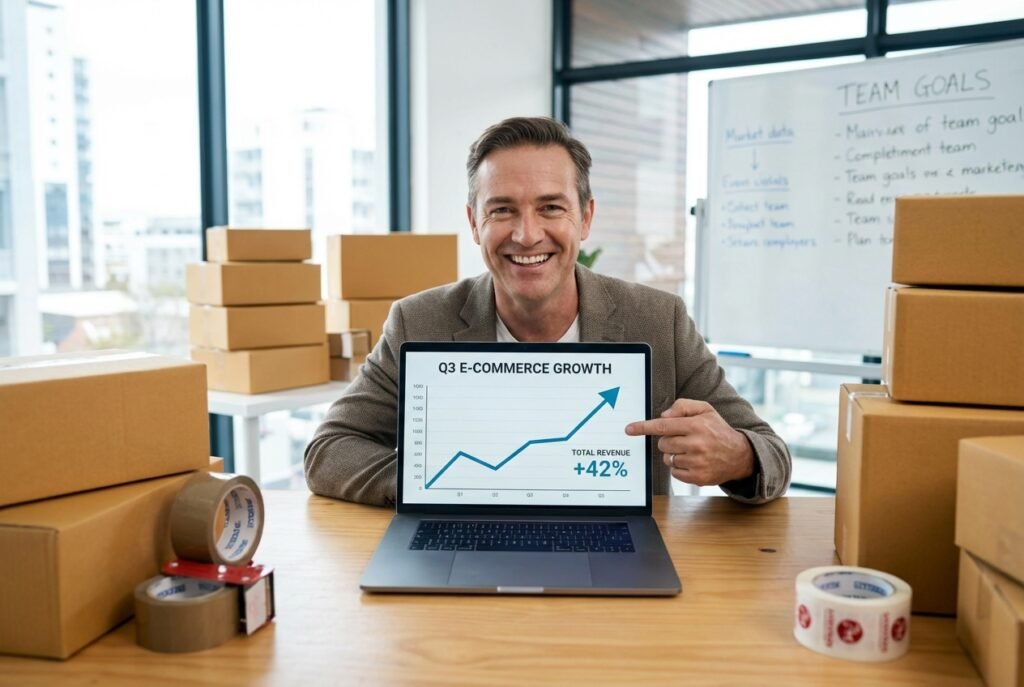
You now have everything you need to increase ecommerce sales and grow your revenue. These strategies work together to create a complete system: optimize your website for conversions, implement smart marketing tactics to recover lost sales, build customer trust through social proof, and boost order values with strategic upselling.
Chiefly, remember that you don’t need to implement everything at once. Start with the tactics that address your biggest revenue leaks, such as cart abandonment or slow page speeds. Monitor your results, test different approaches, and keep refining your strategy.
Take action on these methods consistently, and your ecommerce sales will grow steadily over time.