Conversion Rate Optimization Strategies: A Complete Guide to Turning Visitors Into Customers
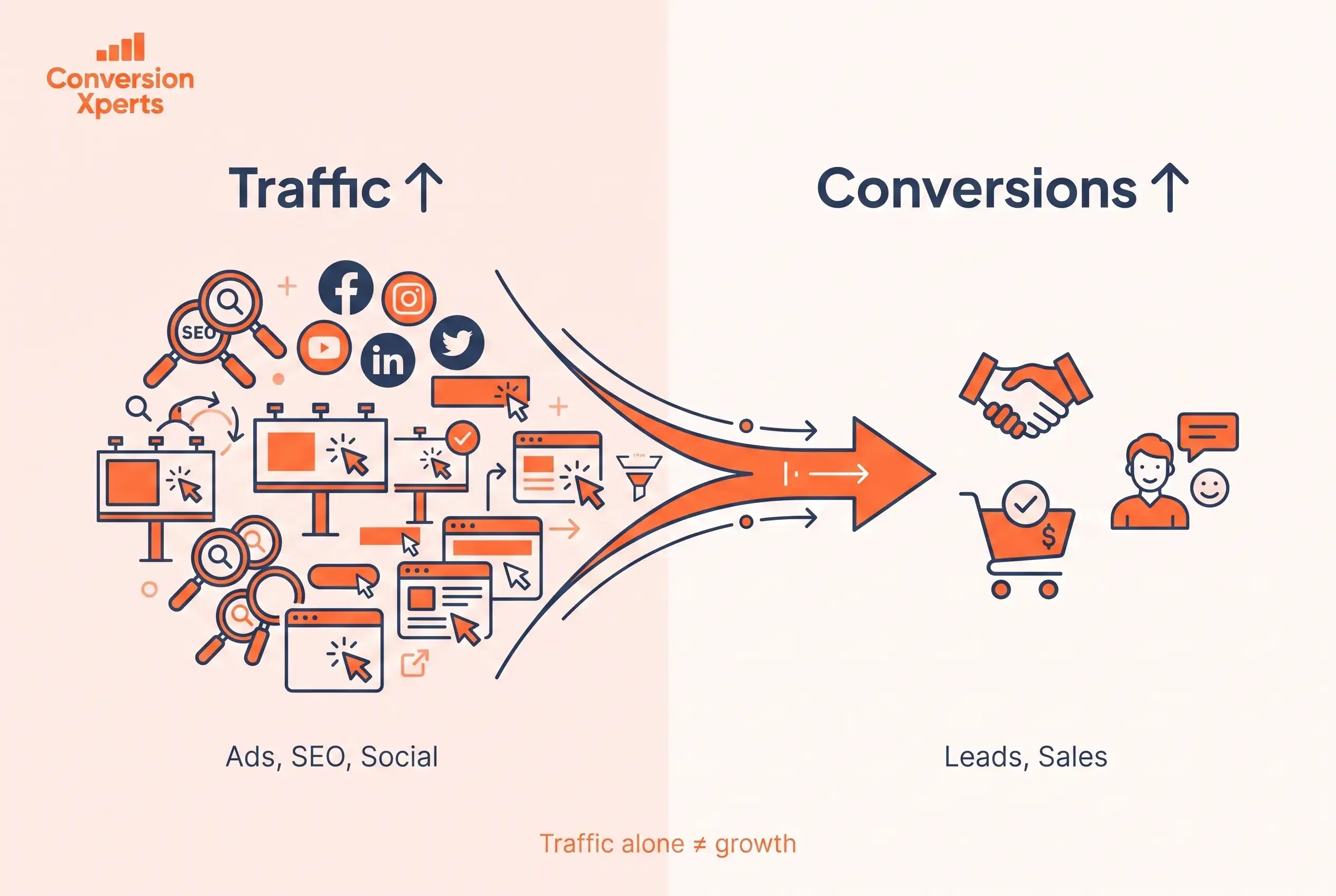
Conversion rate optimization, often called CRO, is one of the most valuable disciplines in digital marketing today. While many businesses pour enormous budgets into driving traffic through paid ads, search engine optimization, and social media campaigns, far fewer put equal effort into what happens once visitors actually arrive on their website. This is a costly oversight. Traffic without conversions is simply wasted opportunity. In this comprehensive guide, we will explore what conversion rate optimization really means, why it matters so much for sustainable business growth, and the specific strategies that top performing companies use to squeeze more value from every visitor. We will also take a close look at how leading brands and competitors approach CRO, so you can benchmark your own efforts and identify gaps you might be missing.
What Is Conversion Rate Optimization
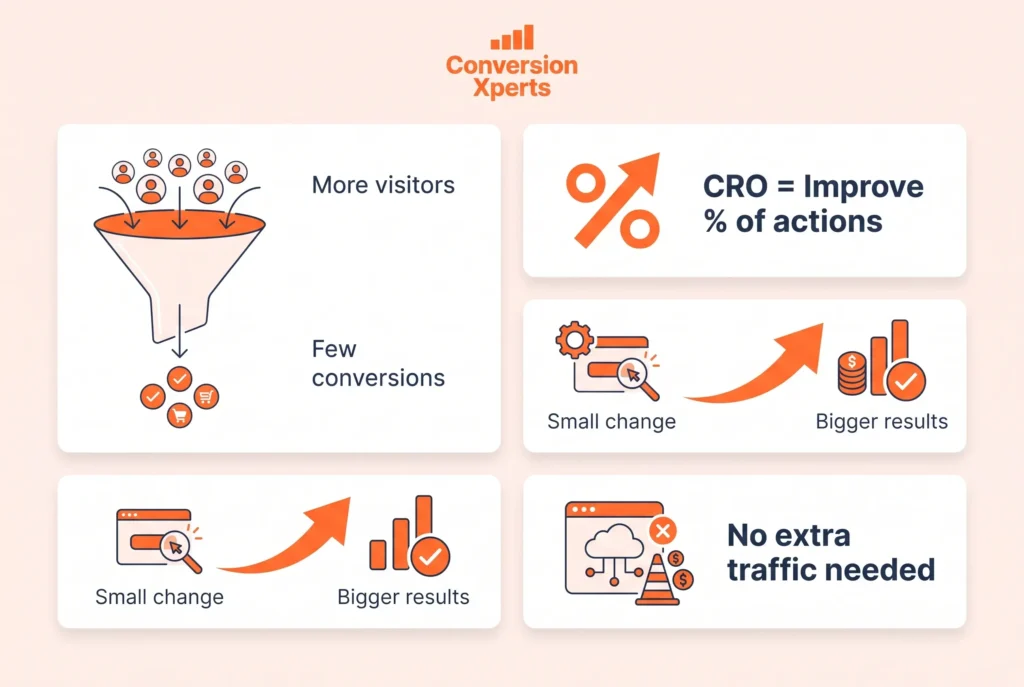
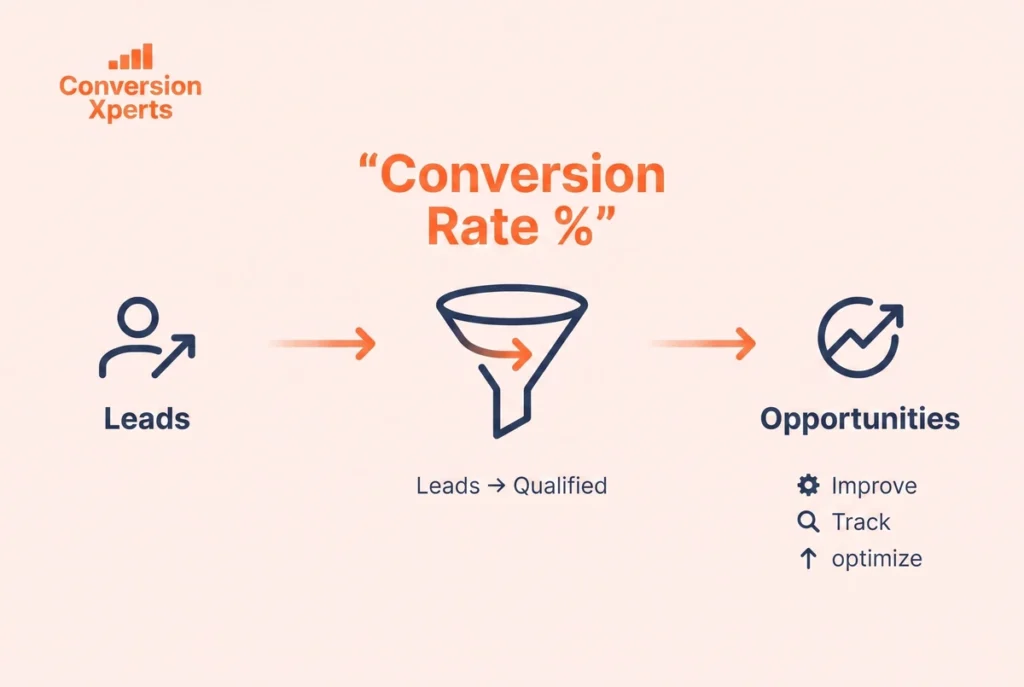
Conversion rate optimization is the systematic process of increasing the percentage of website visitors who complete a desired action. That action could be making a purchase, filling out a lead form, signing up for a newsletter, downloading a resource, or any other goal that matters to your business. The formula itself is simple. You take the number of conversions and divide it by the total number of visitors, then multiply by one hundred to get a percentage. But the process of actually improving that number is anything but simple. It requires a blend of psychology, data analysis, design thinking, copywriting, and technical execution.
Most websites convert at rates far lower than business owners realize. Industry averages typically hover between one and four percent depending on the sector, meaning that somewhere between ninety six and ninety nine percent of visitors leave without taking the action a business wants them to take. This is why CRO has become such a critical focus area. Even small improvements in conversion rate can translate into massive revenue gains without spending a single additional dollar on acquiring new traffic.
Why Conversion Rate Optimization Matters More Than Ever
The digital advertising landscape has become increasingly expensive and competitive. Cost per click on platforms like Google Ads and Meta Ads has risen steadily over the past several years, and privacy changes across browsers and operating systems have made targeting less precise. In this environment, businesses cannot simply rely on throwing more money at traffic acquisition. They need to extract maximum value from the visitors they already have.
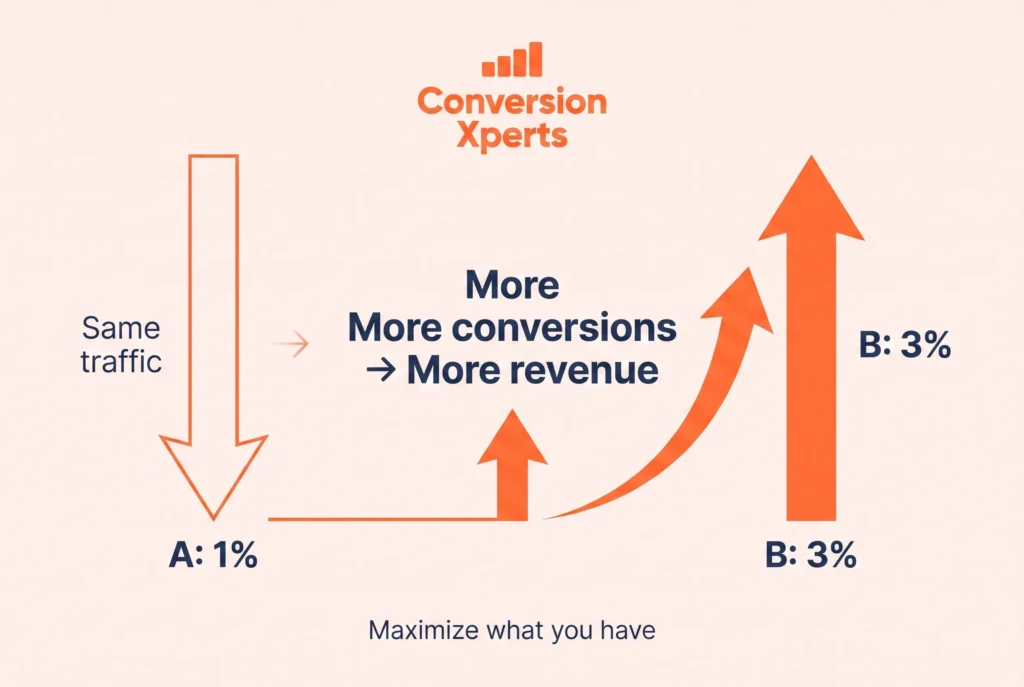
Consider two businesses spending the exact same amount on traffic. Business A converts at one percent while Business B converts at three percent. Business B is generating three times the revenue from the identical marketing spend. That difference compounds over time and gives Business B far more room to reinvest in growth, outbid competitors for ad placements, and build a sustainable advantage. This is the core reason CRO deserves a permanent seat at the table alongside traffic generation efforts, not an afterthought squeezed in once a quarter.
Another reason CRO matters is that it deepens your understanding of your own customers. The process of testing headlines, offers, layouts, and messaging forces you to think critically about what your audience actually wants and needs. This insight often bleeds into other areas of the business, improving product development, customer service, and even sales conversations.
Understanding Your Current Conversion Funnel
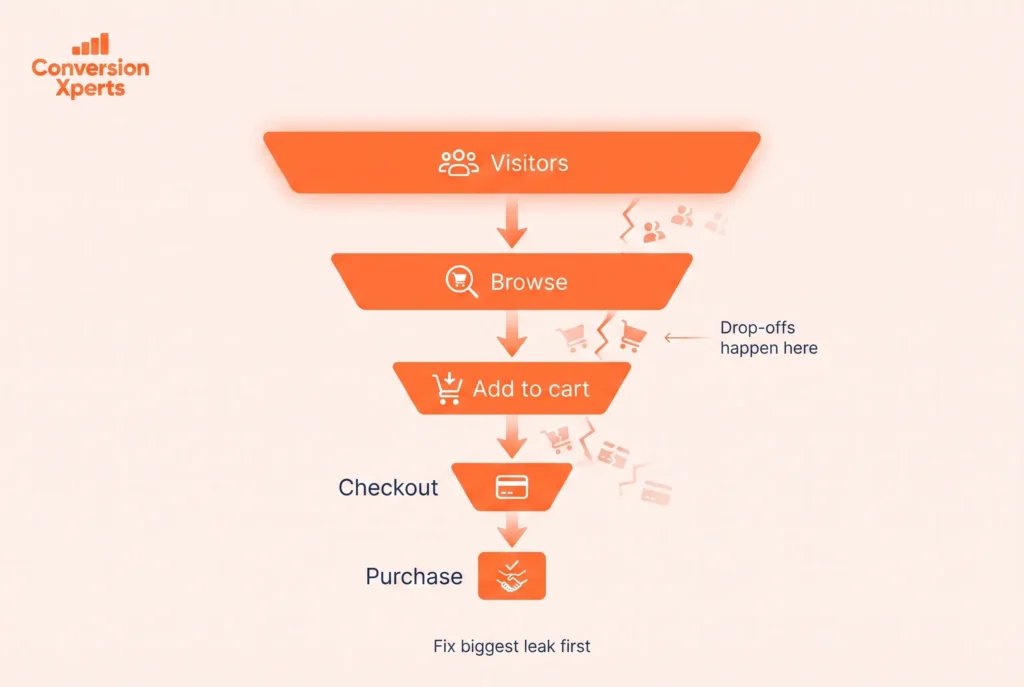
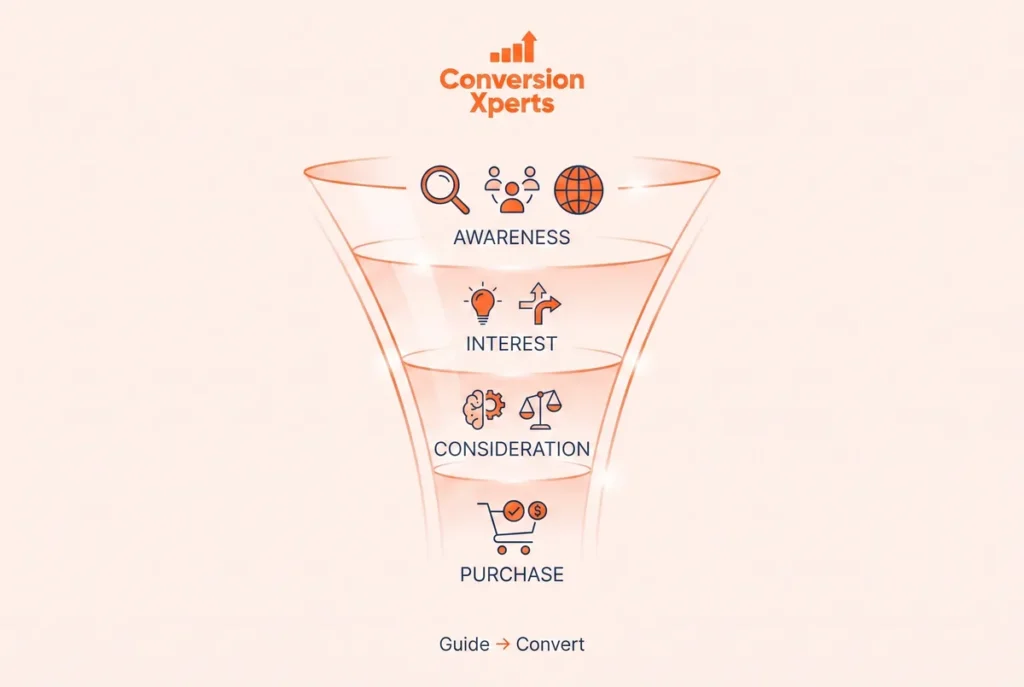
Before diving into tactics, it is essential to map out your conversion funnel and understand where visitors are dropping off. A typical ecommerce funnel might look like this. A visitor lands on a homepage or product page, browses several products, adds an item to their cart, begins the checkout process, and finally completes the purchase. At each stage, a percentage of visitors abandon the journey. Identifying which stage has the highest drop off rate tells you exactly where to focus your optimization energy first.
Tools like Google Analytics, Hotjar, Microsoft Clarity, and Mixpanel allow you to visualize this funnel and pinpoint weak spots. Heatmaps show you where visitors click, how far they scroll, and where their attention lingers. Session recordings let you watch real users navigate your site, revealing points of confusion or frustration that raw numbers alone cannot capture. Form analytics tools show exactly which fields cause people to abandon a signup or checkout process.
Once you know where the biggest leaks are in your funnel, you can prioritize your optimization efforts for maximum impact rather than making random changes based on guesswork.
Core Conversion Rate Optimization Strategies
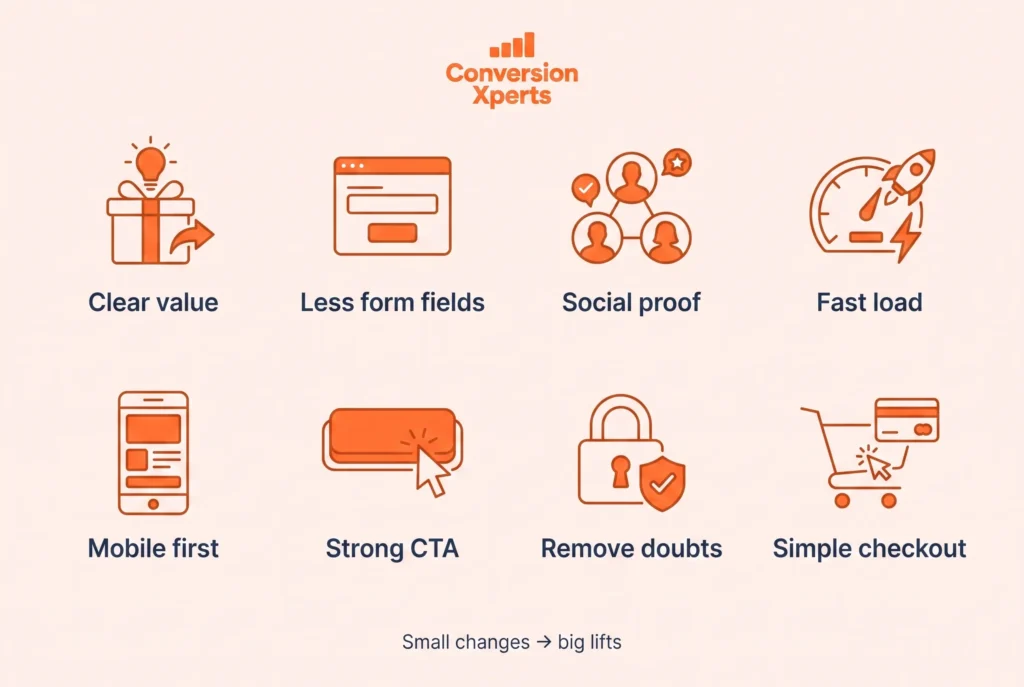
1. Simplify Your Value Proposition
Visitors typically decide within seconds whether a website is worth their continued attention. Your value proposition, meaning the clear statement of what you offer and why it matters, needs to be immediately obvious the moment someone lands on your page. Vague, clever, or overly creative headlines often confuse rather than convert. Instead, aim for clarity above cleverness. State plainly what problem you solve, who you solve it for, and what makes your solution different from alternatives.
A strong value proposition typically answers three questions almost instantly. What is this product or service. Who is it for. Why should I choose it over other options. When these answers are buried beneath vague marketing language, visitors leave rather than dig for clarity.
2. Reduce Friction in Forms
Every additional field in a form reduces the likelihood that a visitor will complete it. Study after study confirms that shorter forms convert at meaningfully higher rates than longer ones. Before adding any field to a signup or checkout form, ask whether that information is truly necessary at this stage. Can it be collected later. Is it required for the transaction to proceed.
Beyond simply reducing field count, consider using smart defaults, autofill compatibility, and inline validation that tells users immediately if something is wrong rather than after they submit the entire form. Progress indicators on multi step forms also help by showing users how much work remains, which reduces the psychological burden of starting something with an unclear endpoint.
3. Leverage Social Proof
Humans are inherently social creatures who look to others for cues about what decisions to make, especially when facing uncertainty. This is why testimonials, reviews, case studies, user counts, and trust badges are so effective at improving conversion rates. When a visitor sees that thousands of other people have purchased a product or that respected companies use a service, their perceived risk drops significantly.
The placement and specificity of social proof matters as much as its presence. Generic five star ratings carry less weight than detailed testimonials that mention specific results, use real names and photos when possible, and address common objections a prospective customer might have. Video testimonials tend to outperform written ones because they feel more authentic and harder to fabricate.
4. Create Urgency and Scarcity Ethically
Limited time offers, countdown timers, and low stock notifications can meaningfully boost conversions by encouraging visitors to act now rather than postpone a decision indefinitely. However, these tactics only work long term when they are genuine. Fake countdown timers that reset every time a visitor returns, or scarcity claims that are not actually true, erode trust quickly once customers catch on. Used honestly, urgency and scarcity tap into a real psychological driver called loss aversion, where the fear of missing out on something motivates action more powerfully than the prospect of gaining something equivalent.
5. Optimize Page Load Speed
Page speed is a silent conversion killer that many businesses underestimate. Research consistently shows that even a one second delay in load time can reduce conversions noticeably, and the effect compounds as load times increase further. Visitors today have little patience for slow websites, particularly on mobile devices where connection speeds can vary widely.
Compressing images, minimizing unnecessary scripts, using a content delivery network, and choosing quality hosting infrastructure are all foundational steps toward a fast loading experience. Google’s Core Web Vitals, including metrics like largest contentful paint and cumulative layout shift, provide a useful framework for diagnosing and fixing speed related issues.
6. Improve Mobile Experience
A majority of web traffic today comes from mobile devices, yet many websites still treat mobile as a secondary consideration behind desktop design. This is backwards thinking. Mobile experience should be treated as equally important, if not more important, than desktop. Buttons need to be large enough to tap easily. Text needs to be readable without zooming. Forms need to be optimized for mobile keyboards, using appropriate input types for email addresses, phone numbers, and numeric fields.
Testing your site thoroughly on actual mobile devices, not just browser simulators, often reveals frustrating issues that would otherwise go unnoticed until they have already cost you conversions.
7. Use Clear and Compelling Calls to Action
The call to action button is often the single most scrutinized element in conversion rate optimization, and for good reason. This is the moment where a visitor either commits to the next step or hesitates and leaves. Effective calls to action use action oriented language, create a sense of value, and stand out visually from surrounding content through color contrast and sizing.
Generic phrases like submit or click here tend to underperform compared to specific, benefit driven language such as get my free quote or start my trial today. Testing different wording, colors, and placements can reveal surprising insights about what resonates with your specific audience.
8. Address Objections Proactively
Every visitor arrives with unspoken questions and concerns. Will this actually work for me. Is this a good value. What if I am not satisfied. What happens if something goes wrong. The businesses that convert best are the ones who anticipate these objections and address them directly on the page rather than hoping visitors will simply trust them.
Frequently asked questions sections, money back guarantees, free trial periods, and transparent pricing all serve to reduce the anxiety that prevents visitors from converting. The goal is to remove every possible reason for hesitation before it even forms in the visitor’s mind.
9. Implement A/B Testing Systematically
None of the strategies above should be treated as universal truths to apply blindly. What works for one audience may not work for another, which is why systematic testing remains the backbone of effective conversion rate optimization. A/B testing involves showing two variations of a page or element to different segments of traffic and measuring which version performs better against a defined goal.
Effective testing requires discipline. Test one variable at a time when possible so you can attribute results with confidence. Ensure your sample size is large enough to reach statistical significance before drawing conclusions. Run tests for a full business cycle, typically at least one to two weeks, to account for variations in traffic patterns across different days.
10. Personalize the Experience
Generic, one size fits all experiences increasingly underperform compared to personalized ones. Using data such as geographic location, referral source, past browsing behavior, or purchase history, businesses can tailor messaging, offers, and content to feel more relevant to each individual visitor. A visitor arriving from a specific ad campaign about a particular product should ideally land on a page that speaks directly to that product, rather than a generic homepage that requires additional navigation to find what they were originally looking for.
11. Optimize for Trust Signals
Beyond social proof, other trust signals play a quiet but significant role in conversion decisions. Security badges near payment fields, clear privacy policies, professional design quality, accurate contact information, and consistent branding all contribute to a visitor’s subconscious assessment of whether a business is legitimate and trustworthy. Poor design or inconsistent messaging, even if unintentional, can trigger skepticism that quietly kills conversions without ever being consciously articulated by the visitor.
12. Streamline the Checkout Process
For ecommerce businesses specifically, checkout abandonment represents one of the largest sources of lost revenue. Offering guest checkout options rather than forcing account creation, displaying all costs upfront including shipping and taxes, providing multiple payment methods, and minimizing the number of steps required to complete a purchase all contribute to higher checkout completion rates. Cart abandonment emails, sent shortly after a visitor leaves without completing their purchase, can also recover a meaningful percentage of lost sales when crafted thoughtfully.
Analyzing Competitor Conversion Strategies
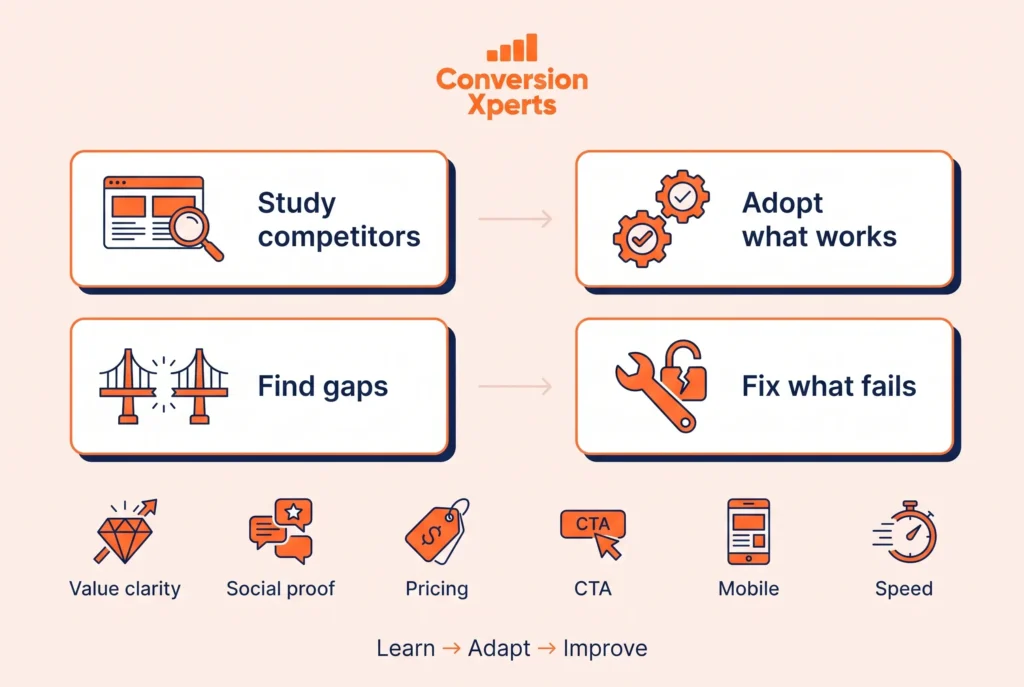
Understanding what your competitors are doing well, and where they fall short, provides invaluable insight for shaping your own conversion rate optimization strategy. Rather than operating in isolation, smart businesses regularly study the landscape around them to identify proven tactics worth adopting and gaps worth exploiting.
How to Conduct a Competitor CRO Analysis
Start by identifying your primary competitors, ideally a mix of direct competitors offering similar products or services and indirect competitors who target a similar audience with a different solution. For each competitor, walk through their entire conversion funnel as if you were a genuine prospective customer. Note how they structure their homepage, what their value proposition emphasizes, how they handle objections, what their pricing page looks like, and how their checkout or signup process flows.
Pay close attention to the following elements when analyzing competitors.
Their headline and value proposition clarity. Does it communicate benefit quickly, or does it rely on vague industry jargon.
Their use of social proof. What types of testimonials, reviews, or trust indicators do they display, and how prominently are they featured.
Their pricing presentation. Do they use tiered pricing, anchor pricing with a higher priced option to make others look more reasonable, or transparent flat rate pricing.
Their calls to action. What language do they use, how many calls to action appear on a given page, and where are they positioned.
Their mobile experience. Is their mobile site as polished and functional as their desktop experience.
Their page speed. Tools like Google PageSpeed Insights or GTmetrix can be used to benchmark competitor site speed against your own.
Their content strategy around objection handling, including FAQ sections, guarantee language, and comparison pages against other competitors.
Tools for Competitor Analysis
Several tools make competitor research more efficient and data driven rather than purely observational. SimilarWeb and SEMrush provide traffic estimates and channel breakdowns, helping you understand where competitor traffic originates and how much volume they are working with. BuiltWith reveals what technology stack, including specific CRO and analytics tools, a competitor site is running. Wayback Machine allows you to see how a competitor’s site has evolved over time, which pages they have tested and iterated on repeatedly often signal areas they have found valuable enough to keep refining. Ahrefs and SEMrush can also reveal which landing pages a competitor is actively promoting through paid campaigns, since businesses typically invest more heavily in optimizing pages that receive significant ad spend.
Learning From Industry Leaders
Looking beyond direct competitors to broader industry leaders known for exceptional conversion optimization can also yield valuable lessons. Companies like Amazon, Booking.com, and Airbnb are widely regarded as some of the most sophisticated conversion optimizers in the world, running thousands of tests simultaneously across their platforms. While most businesses lack the resources to test at that scale, studying the patterns these companies have converged on after years of testing can shortcut your own learning process.
Booking.com, for example, is well known for its aggressive use of urgency indicators, such as showing how many other people are currently viewing a property or how many rooms remain at a given price. Amazon is renowned for its relentless focus on reducing friction, from one click purchasing to extensive personalized recommendations based on browsing and purchase history. Airbnb invests heavily in high quality imagery and detailed social proof through reviews, recognizing that trust is the primary barrier to booking a stay with a stranger.
The lesson from these examples is not necessarily to copy specific tactics verbatim, since context and audience differ significantly across businesses. Rather, the lesson is to understand the underlying psychological principles these companies are leveraging, whether that is urgency, trust, personalization, or friction reduction, and to thoughtfully adapt those principles to your own specific context and audience.
Common Mistakes to Avoid in Conversion Rate Optimization
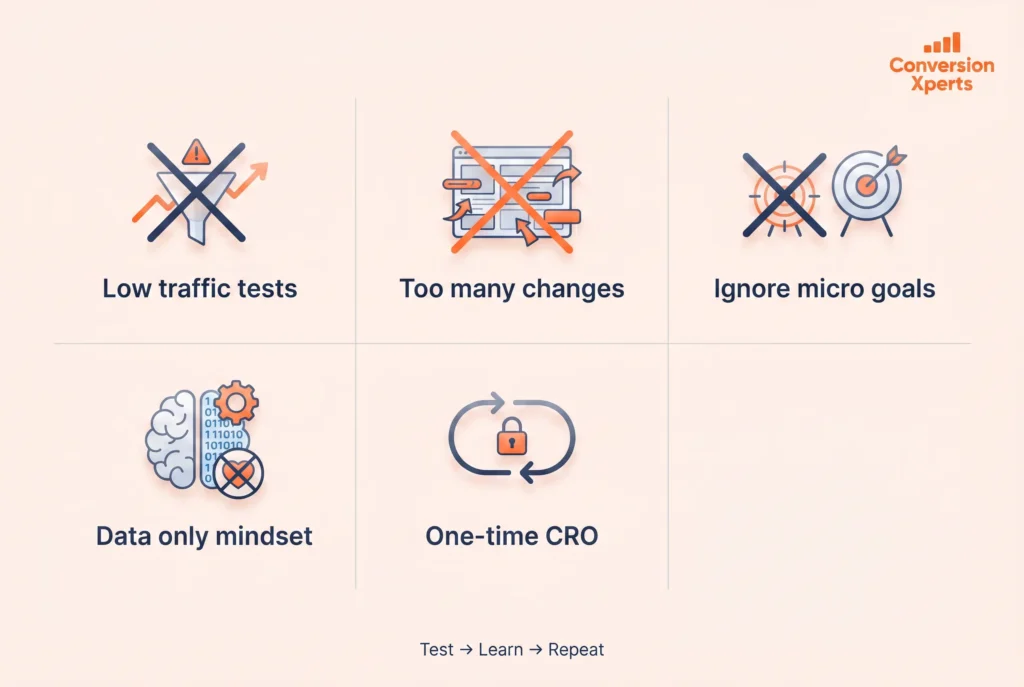
Even well intentioned CRO efforts can go wrong when certain common mistakes are made. Being aware of these pitfalls can save significant time and resources.
Testing without sufficient traffic volume is a frequent mistake. Running an A/B test on a page that receives only a handful of visitors per day will take an impractically long time to reach statistically significant results, and premature conclusions drawn from insufficient data can lead you astray.
Changing multiple variables simultaneously without isolating them makes it impossible to know which specific change drove any observed improvement or decline in performance. While multivariate testing exists as a more advanced technique, most businesses benefit from simpler, more isolated testing early in their CRO journey.
Focusing exclusively on macro conversions while ignoring micro conversions is another common oversight. Not every visitor is ready to make a purchase on their first visit, so tracking smaller commitment steps like email signups, content downloads, or account creation provides useful signal about engagement even when a final purchase has not yet occurred.
Ignoring qualitative data in favor of pure quantitative metrics can also limit your understanding. Numbers tell you what is happening, but they rarely tell you why. Combining analytics data with user surveys, session recordings, and direct customer feedback rounds out your understanding and often reveals insights that numbers alone would never surface.
Finally, treating CRO as a one time project rather than an ongoing process is perhaps the most damaging mistake of all. Visitor behavior, competitive landscapes, and market conditions shift continuously. A conversion strategy that worked exceptionally well two years ago may be significantly underperforming today simply because the surrounding context has changed. Sustainable conversion improvement requires a continuous cycle of testing, learning, and refining rather than a single optimization sprint followed by years of neglect.
Building a Sustainable CRO Process
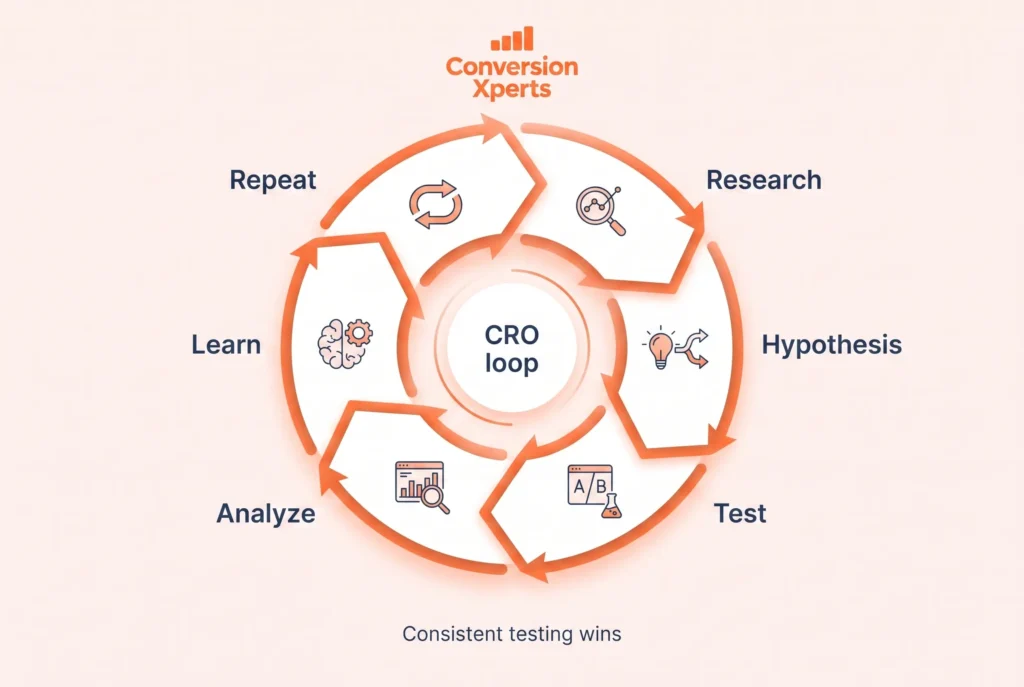
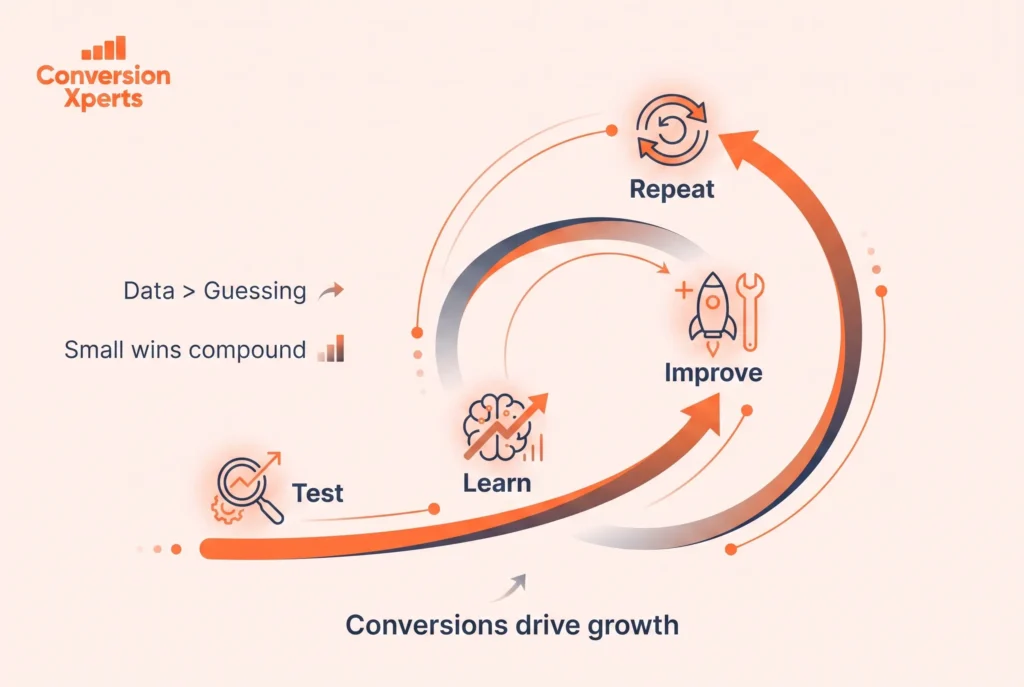
To make conversion rate optimization a lasting part of your business rather than a sporadic initiative, it helps to establish a repeatable process. Begin each cycle by researching and gathering data through analytics, heatmaps, session recordings, and customer feedback. Use this research to form specific, testable hypotheses about what changes might improve conversion rates and why. Prioritize these hypotheses based on potential impact and ease of implementation, since not every idea deserves equal resources. Run tests methodically, allowing sufficient time and traffic to reach meaningful conclusions. Analyze results carefully, documenting both successes and failures since failed tests still provide valuable learning about your audience. Finally, implement winning variations permanently and begin the cycle again with new hypotheses informed by everything learned along the way.
This continuous loop, sometimes called the CRO flywheel, compounds in value over time. Each cycle builds upon insights from previous cycles, gradually developing a deep and nuanced understanding of exactly what motivates your specific audience to convert.
Measuring Success Beyond Conversion Rate Alone
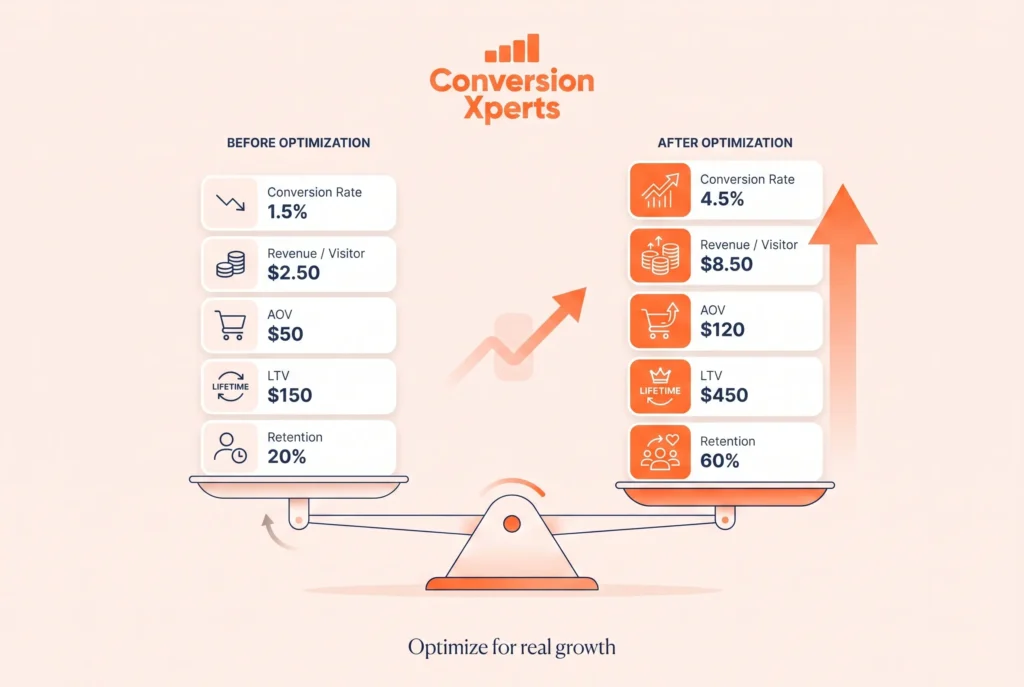
While conversion rate itself is the headline metric in this discipline, focusing exclusively on that single number can sometimes lead to misleading conclusions. A change that increases conversion rate but simultaneously decreases average order value or attracts lower quality customers who churn quickly may not represent genuine business improvement. This is why experienced CRO practitioners track a broader set of metrics alongside conversion rate, including revenue per visitor, customer lifetime value, and post conversion retention rates.
Revenue per visitor in particular offers a more holistic view since it accounts for both conversion rate and order value simultaneously. A test that slightly lowers conversion rate but significantly increases average order value might still represent a net positive outcome for the business, something that tracking conversion rate in isolation would fail to capture.
How ConversionXperts Can Help Your Business Grow
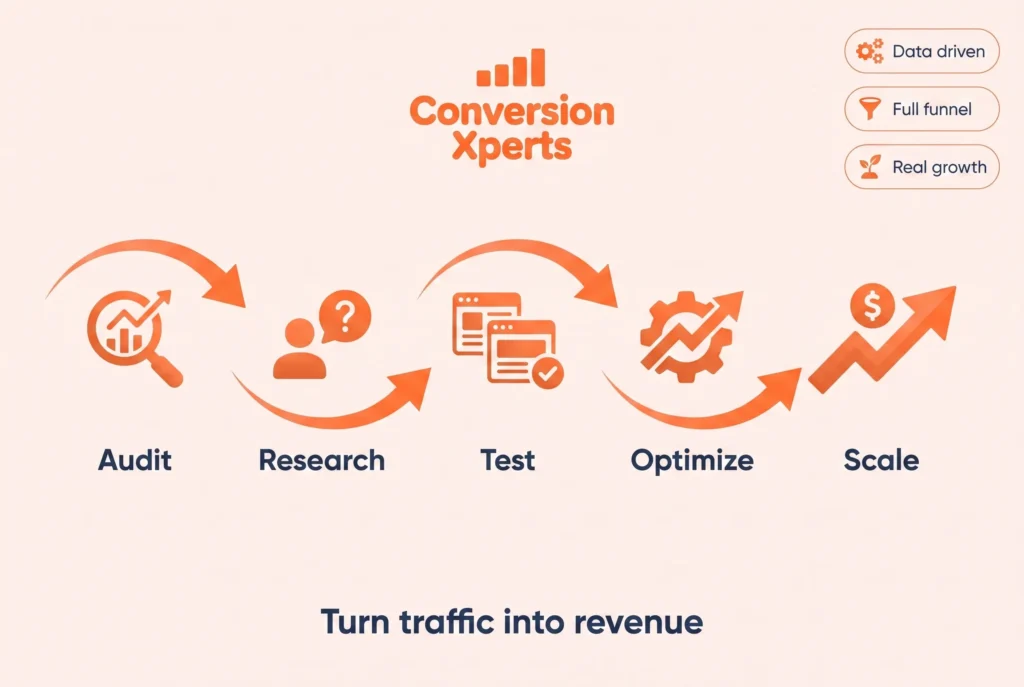
At ConversionXperts, we specialize exclusively in helping businesses turn their existing website traffic into real, measurable revenue. Rather than treating conversion rate optimization as a side service bundled into broader marketing packages, we have built our entire practice around this single discipline, which means our team brings a depth of expertise that generalist agencies simply cannot match.
Our process begins with a thorough audit of your website, funnel, and analytics setup. We look closely at where visitors are dropping off, what friction points exist in your forms and checkout flow, and how your messaging compares to what your audience actually responds to. This audit is not a generic checklist. Every recommendation we make is grounded in real data pulled from your specific site, combined with heatmaps, session recordings, and behavioral analytics that reveal exactly how real visitors interact with your pages.
From there, we design and run structured A/B and multivariate tests across your most important pages, including homepages, landing pages, product pages, and checkout flows. We do not guess at what might work. Every test is built around a clear hypothesis, monitored until it reaches statistical significance, and documented so your team understands not just what changed but why it worked or did not work. This transparency means you walk away from every engagement with a growing library of insights about your own audience, not just a handful of isolated wins.
Beyond testing, our team also works on the strategic layer of conversion optimization. This includes refining value propositions so they communicate benefit instantly, rewriting calls to action to be more compelling and specific, restructuring pricing pages to reduce hesitation, and improving mobile experience where a large share of modern traffic originates. We also help businesses build stronger trust signals throughout their site, from social proof placement to guarantee language, since trust remains one of the biggest silent barriers preventing visitors from converting.
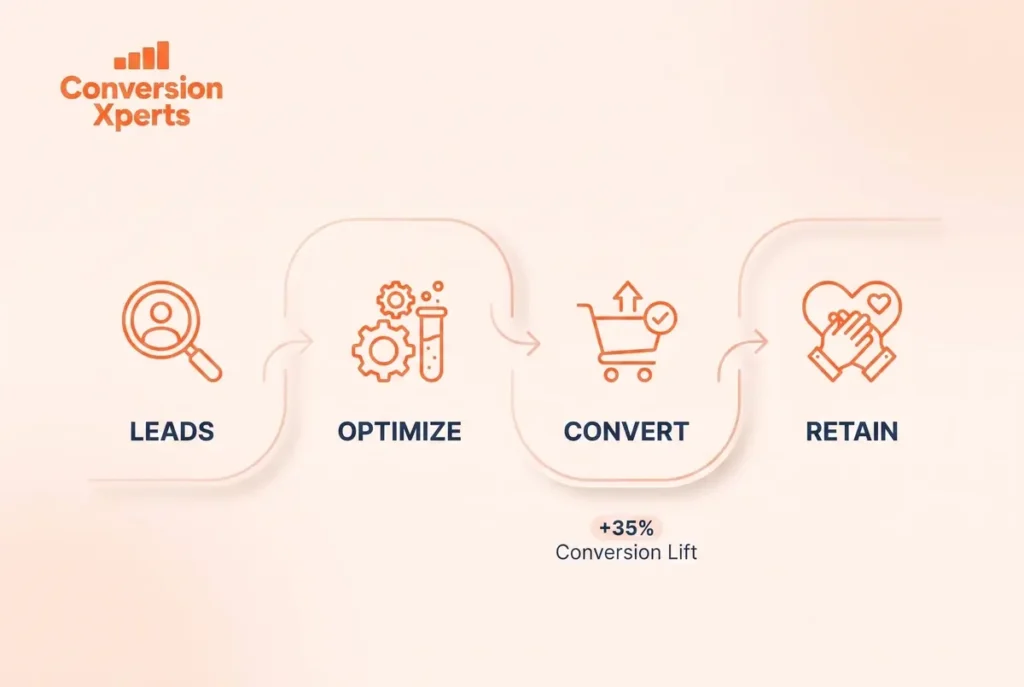
What sets ConversionXperts apart is our commitment to full funnel thinking. Many agencies focus narrowly on a single page or a single metric, but we look at the entire customer journey, from the first click through post purchase retention. This broader view means the improvements we deliver do not just boost a single conversion rate in isolation, they contribute to sustainable revenue growth across your entire business.
Our services include comprehensive conversion audits, ongoing A/B and multivariate testing programs, landing page design and optimization, checkout and form optimization, mobile experience audits, competitor and industry benchmarking, personalization strategy, and continuous reporting that ties every test back to real business outcomes like revenue per visitor and customer lifetime value. Whether you are a growing ecommerce brand, a SaaS company optimizing your signup flow, or a service business trying to generate more qualified leads, our team tailors every strategy to your specific audience and goals rather than applying a one size fits all playbook.
If your website is generating traffic but not converting that traffic into the results your business needs, ConversionXperts is built to close that gap. We combine data, psychology, and disciplined testing to help you get more value from every single visitor who lands on your site.
Final Thoughts
Conversion rate optimization is not a single tactic or quick fix but rather an ongoing discipline that touches nearly every aspect of digital marketing and user experience. From simplifying your value proposition and reducing friction in forms to leveraging social proof and studying what competitors are doing well, the strategies outlined throughout this guide provide a comprehensive foundation for improving how effectively your website turns visitors into customers.
The businesses that consistently outperform their competitors over the long run are rarely the ones with the biggest marketing budgets. More often, they are the ones who have committed to genuinely understanding their audience and continuously refining their experience based on real evidence rather than assumptions. By adopting a systematic, data informed approach to conversion rate optimization and regularly benchmarking against competitors and industry leaders, you position your business to extract far more value from the traffic you already have, building a more efficient and profitable operation without needing to constantly chase more expensive traffic sources.
Start small if you must. Pick one area of your funnel with the highest drop off rate, form a clear hypothesis about why visitors are leaving at that point, and test a thoughtful change. Over time, as these small wins accumulate, you will find that conversion rate optimization becomes one of the highest leverage activities available to grow your business sustainably. And if you would rather have a dedicated team handle this process for you, ConversionXperts is ready to help you turn more of your existing traffic into loyal, paying customers.