What Is CRO in Digital Marketing? A Complete Guide
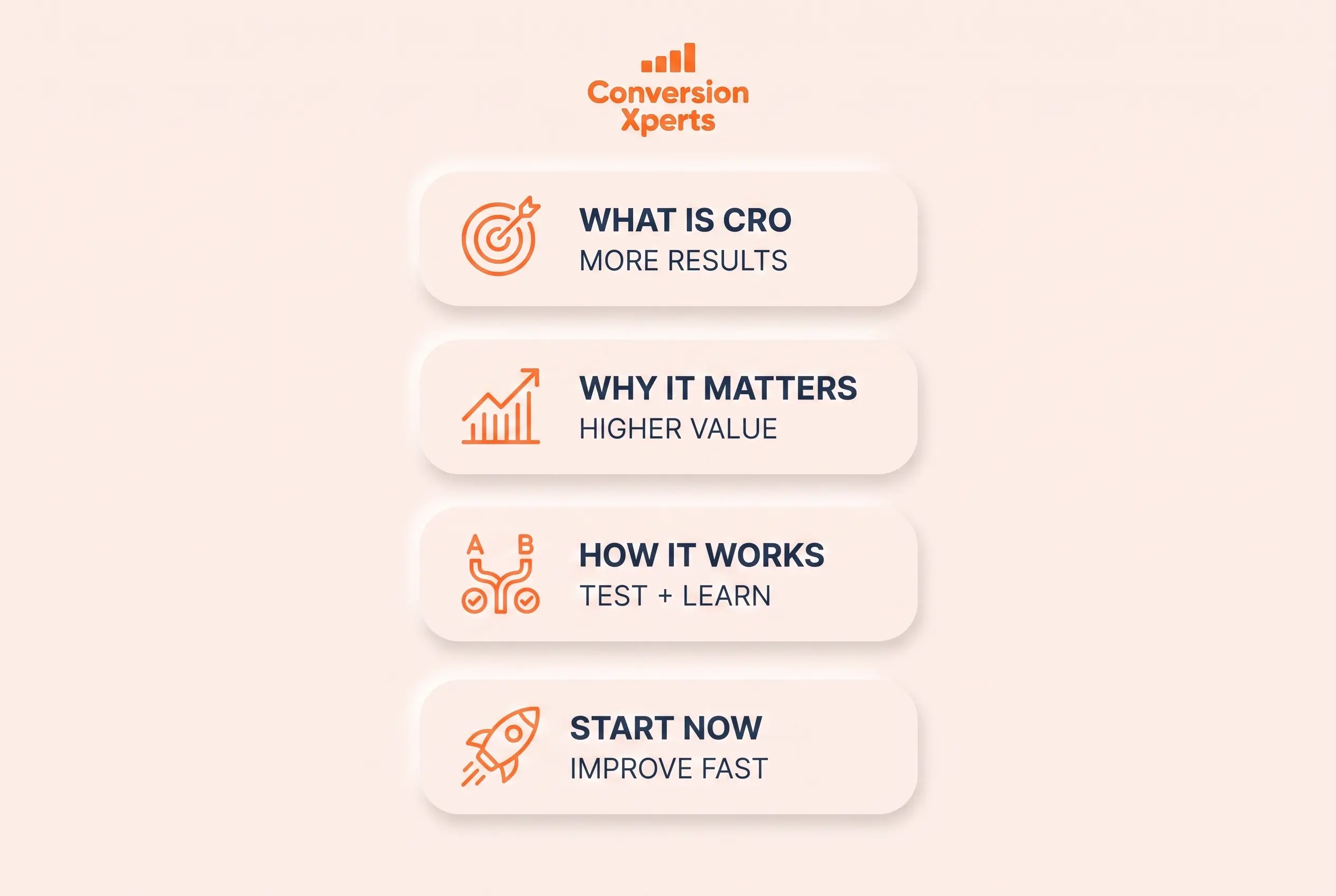
If you have spent any amount of time researching digital marketing, you have probably come across the term CRO. It gets mentioned alongside SEO, PPC, and content marketing, yet a lot of business owners and even some marketers still struggle to explain exactly what it means and why it matters so much. This article will walk you through everything you need to know about CRO in digital marketing, including what it stands for, how it works, why it is important, and the practical steps you can take to start improving your own results today.
By the end of this guide you will have a clear and complete understanding of conversion rate optimization, often shortened to CRO, and you will know how to apply it to your own website, landing pages, and marketing campaigns.
Understanding the Meaning of CRO
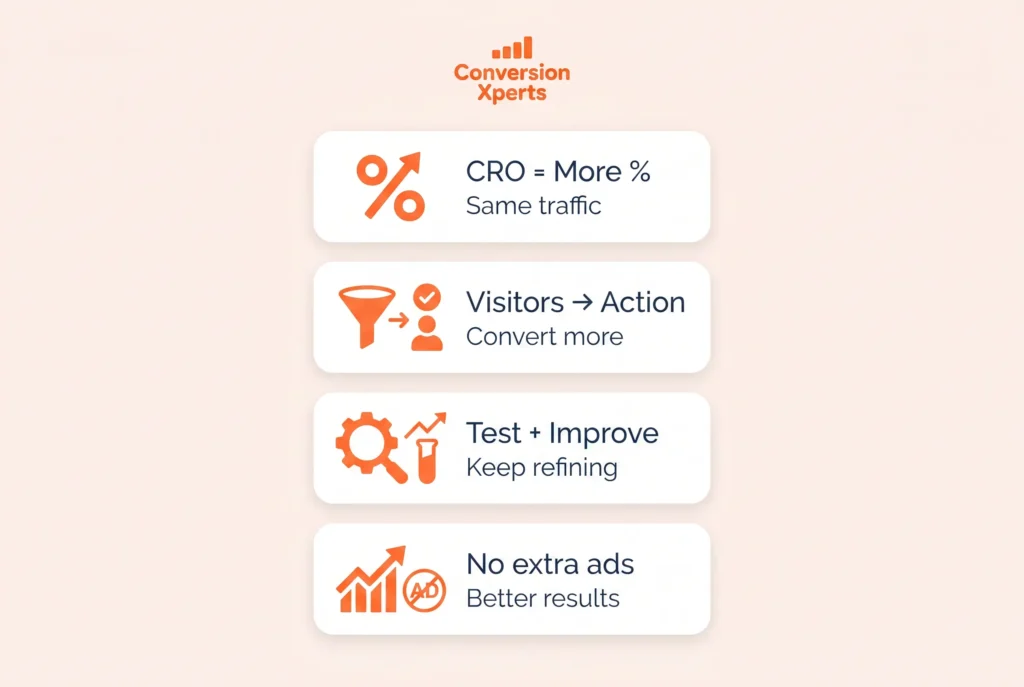
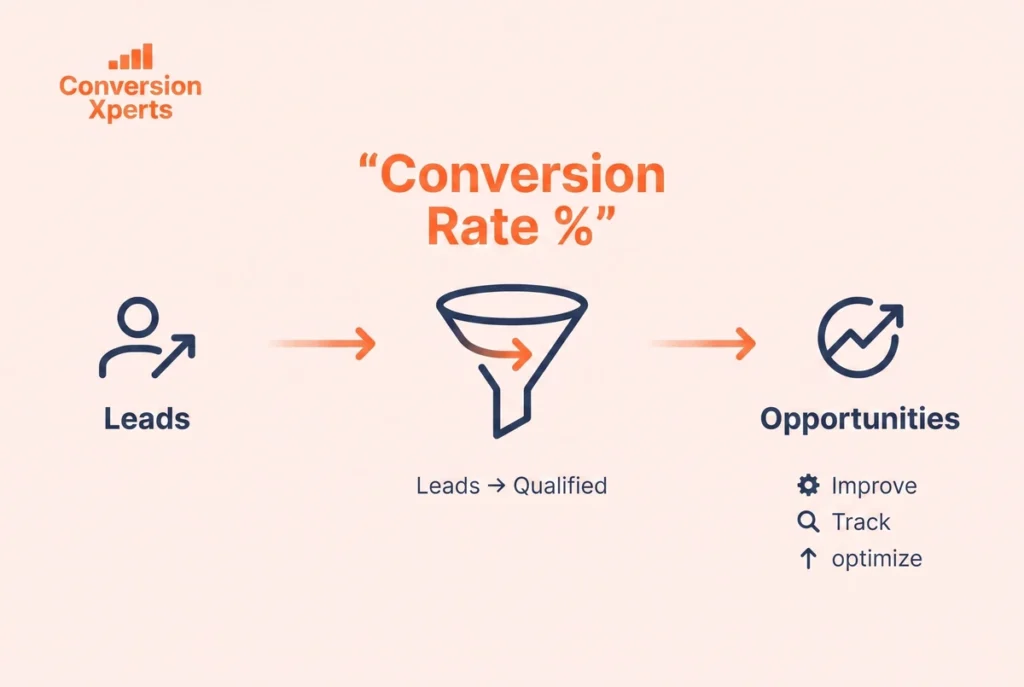
CRO stands for Conversion Rate Optimization. In simple terms, it is the process of improving your website or app so that a higher percentage of visitors take a desired action. That action could be buying a product, filling out a form, signing up for a newsletter, booking a call, downloading an app, or anything else that counts as a meaningful outcome for your business.
Think of it this way. If your website gets one thousand visitors a month and twenty of them make a purchase, your conversion rate is two percent. CRO is the discipline of testing, analyzing, and refining your site so that instead of twenty purchases you might get thirty, forty, or even fifty from that same group of one thousand visitors, without spending a single extra dollar on advertising or traffic generation.
This is why so many marketers consider CRO to be one of the most cost effective strategies in the entire digital marketing toolkit. You already have the visitors. CRO simply helps you make better use of them.
Why CRO Matters So Much in Digital Marketing
Most businesses spend a huge portion of their marketing budget trying to attract new visitors through SEO, paid ads, social media, and email campaigns. All of that effort and money is wasted if those visitors land on a page that confuses them, loads slowly, or fails to clearly explain what action they should take next.
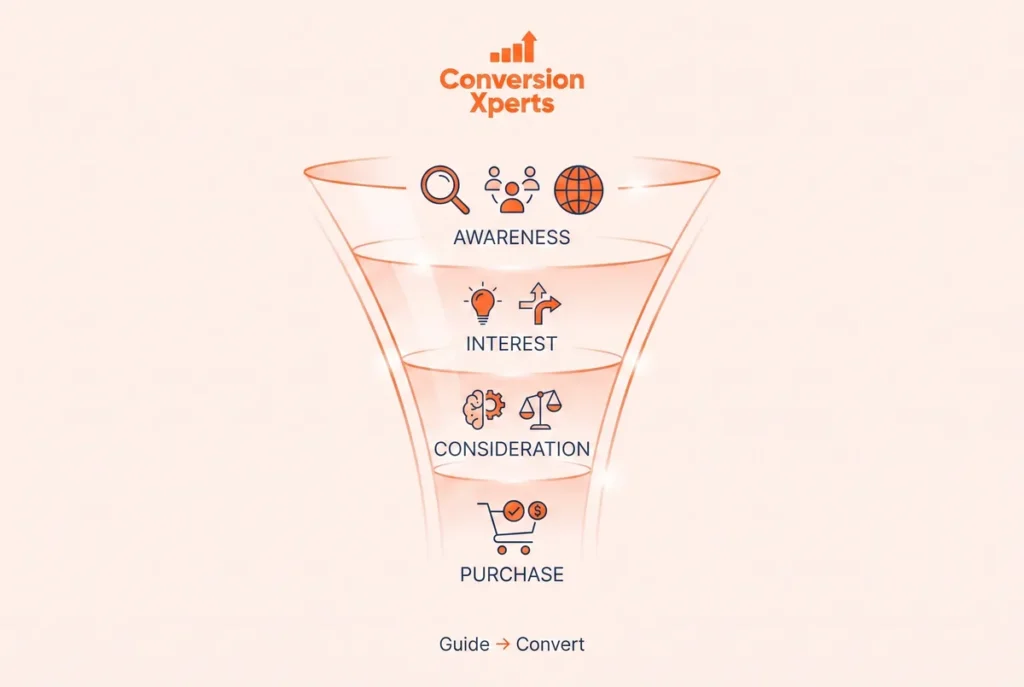
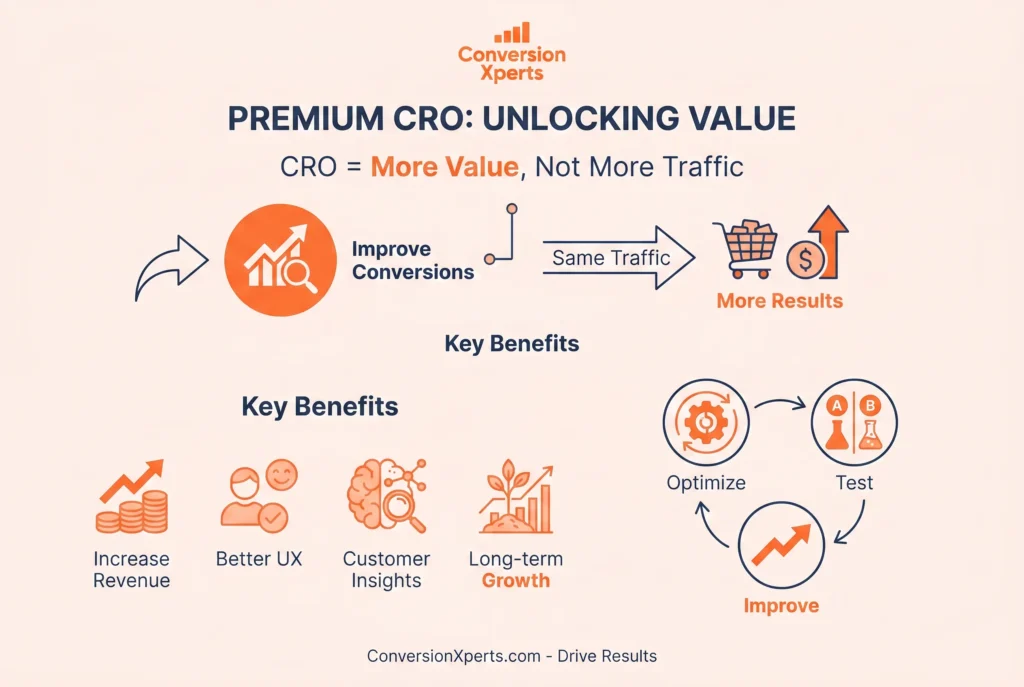
CRO matters because it focuses on the other half of the equation. Instead of asking how do we get more people to our site, it asks how do we get more value out of the people who are already there. This shift in thinking can completely transform the return on investment of every other marketing channel you use.
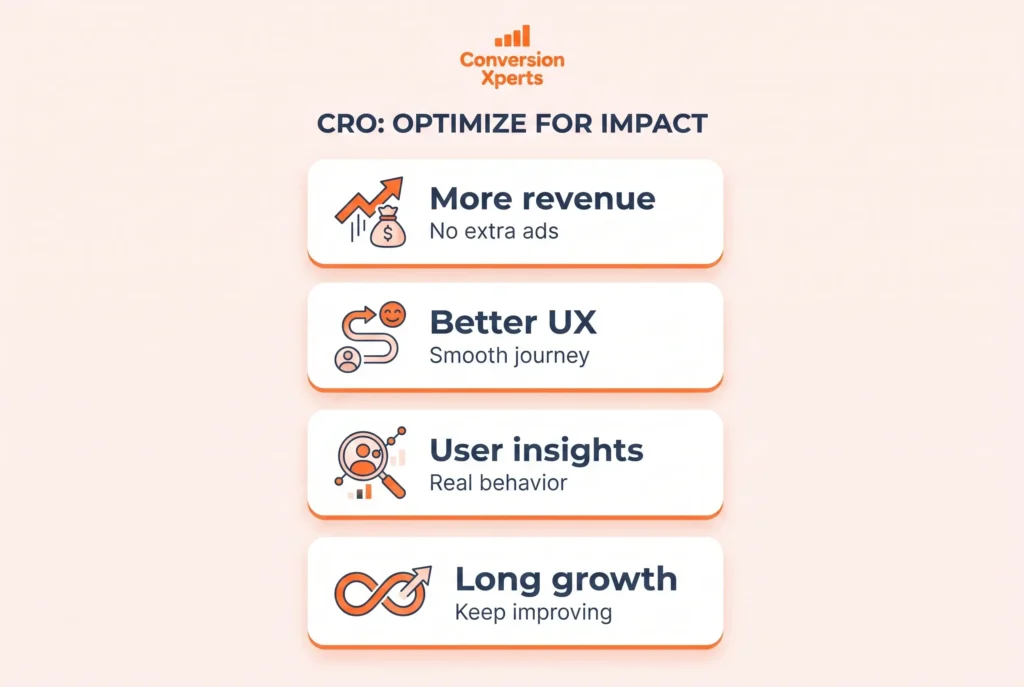
Here are some of the core reasons CRO has become such an essential part of modern digital marketing strategy.
It Increases Revenue Without Increasing Ad Spend
When you improve your conversion rate, you are essentially getting more customers from the same amount of traffic. This means your existing marketing budget stretches further and your cost per acquisition drops significantly.
It Improves the Overall User Experience
A lot of CRO work involves cleaning up confusing navigation, speeding up load times, simplifying forms, and making calls to action clearer. All of these changes naturally lead to a better experience for everyone who visits your site, not just the people who convert.
It Provides Deep Insights Into Customer Behavior
Through tools like heatmaps, session recordings, and A or B testing, CRO gives you a window into how real people interact with your website. You start to understand what confuses them, what excites them, and what makes them leave.
It Builds a Long Term Competitive Advantage
Companies that consistently test and optimize their websites tend to outperform competitors who simply set up a page once and leave it untouched for years. Continuous improvement compounds over time.
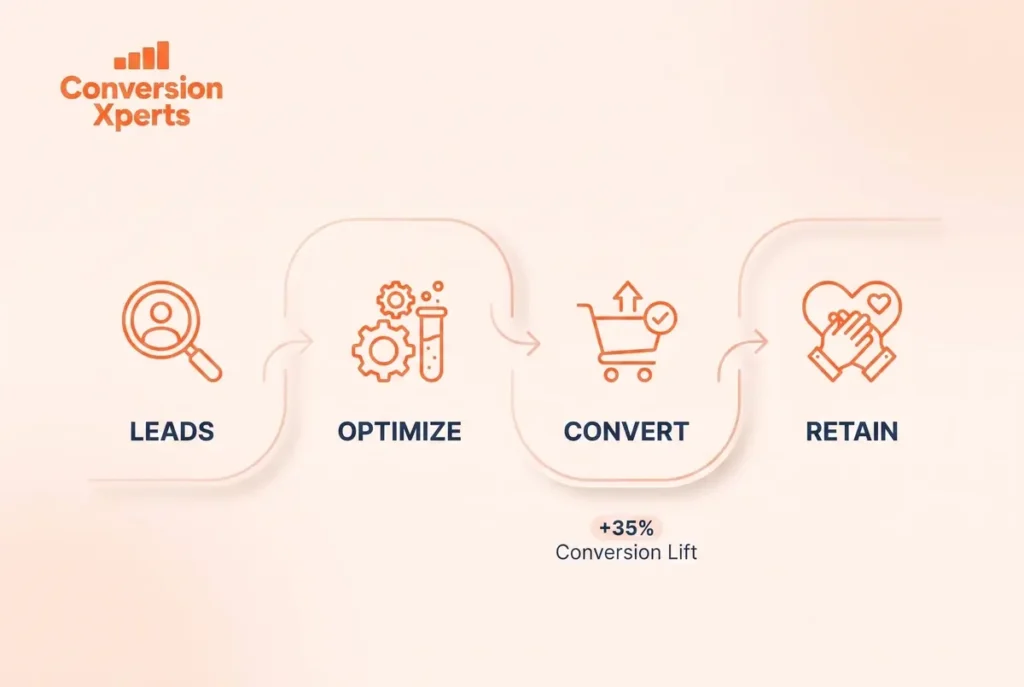
How CRO Actually Works
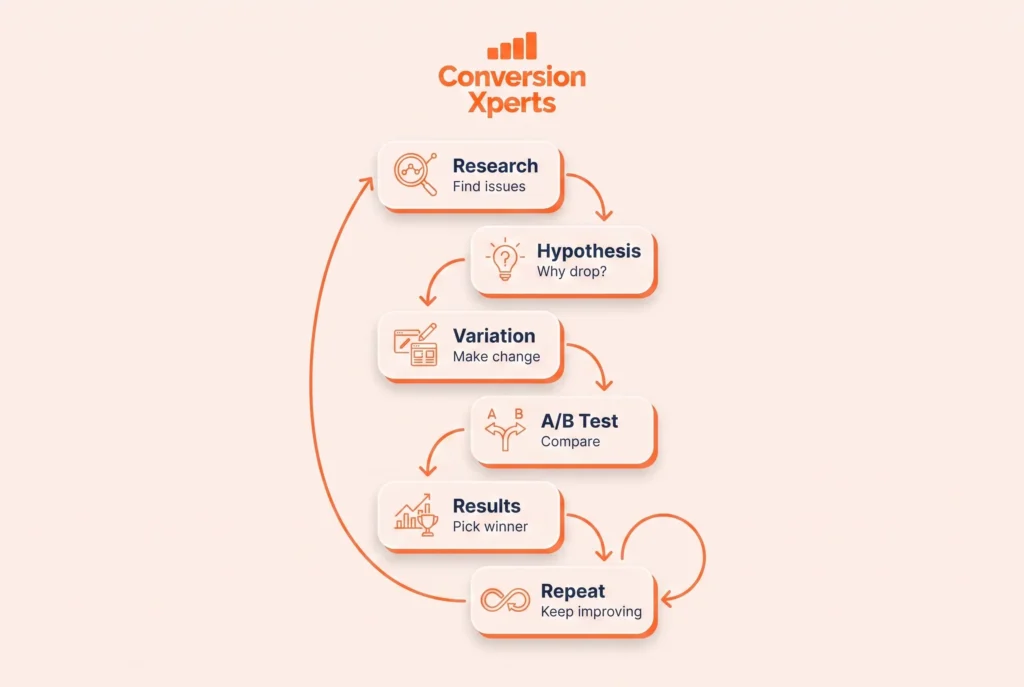
CRO is not about guessing or randomly changing button colors. It follows a structured and repeatable process. Below is a breakdown of how the process typically unfolds.
Step One: Research and Data Collection
Before making any changes, marketers gather data using analytics tools such as Google Analytics, heatmap software, and on site surveys. This stage answers questions like where visitors are dropping off, which pages have the highest bounce rates, and what objections customers commonly raise.
Step Two: Forming a Hypothesis
Once the data is collected, the team forms an educated guess about why a problem is happening and how it might be fixed. For example, if a checkout page has a high abandonment rate, a hypothesis might be that the form is too long and is causing friction.
Step Three: Creating Variations
Based on the hypothesis, the team creates a new version of the page or element being tested. This might involve shortening a form, rewriting headline copy, changing the layout, or adjusting the design of a call to action button.
Step Four: Running A or B Tests
The original version and the new version are shown to different segments of visitors at the same time. This is known as A or B testing or split testing. The goal is to see which version performs better in terms of conversions.
Step Five: Analyzing Results
After enough data has been collected, the results are analyzed to determine which version produced statistically significant improvements. If the new version wins, it becomes the new standard. If not, the team learns from the result and forms a new hypothesis.
Step Six: Continuous Iteration
CRO is never truly finished. The best performing companies treat optimization as an ongoing cycle rather than a one time project. They are constantly testing new ideas and refining their pages based on what they learn.
Key Elements That CRO Focuses On
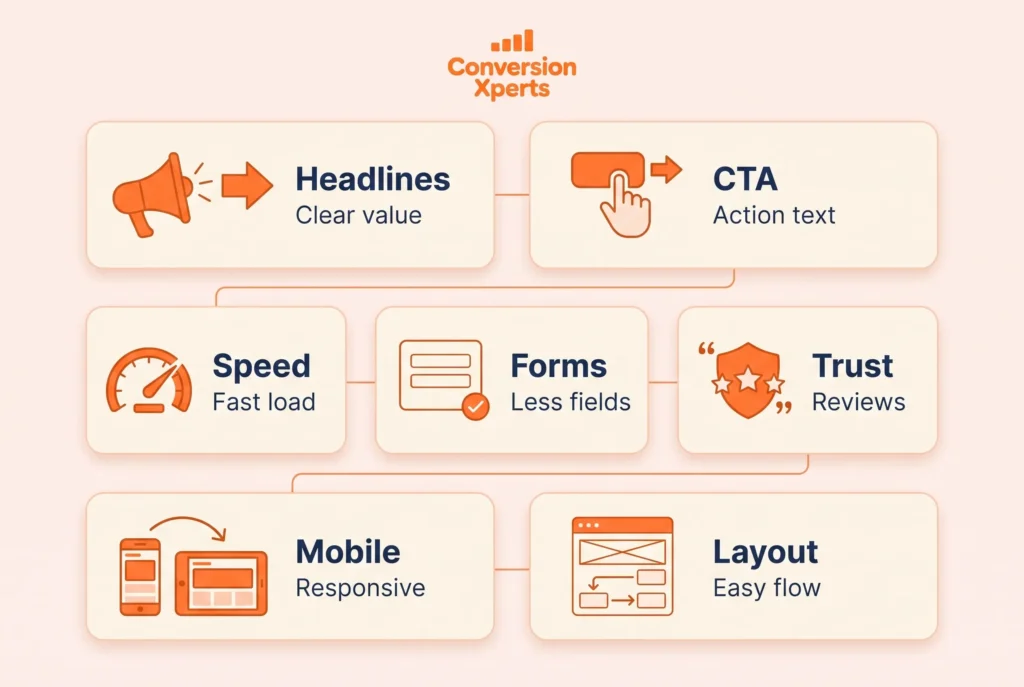
CRO touches nearly every part of a website or app, but certain elements tend to have the biggest impact on conversion rates.
Headlines and Copywriting
The words on your page matter enormously. A headline that clearly communicates value can dramatically increase the chances that a visitor keeps reading instead of leaving immediately.
Call to Action Buttons
The wording, color, size, and placement of your call to action buttons can have a surprisingly large effect on conversions. Something as simple as changing the text from Submit to Get My Free Quote can lead to a noticeable lift.
Page Load Speed
Visitors are impatient. Research consistently shows that even a one second delay in load time can lead to a meaningful drop in conversions. Optimizing images, reducing code bloat, and using fast hosting are all part of CRO.
Forms
Long, confusing, or intimidating forms are one of the biggest conversion killers. CRO experts often test shorter forms, smarter field validation, and progress indicators to reduce friction.
Trust Signals
Reviews, testimonials, security badges, and clear contact information all help build trust. Visitors are far more likely to convert when they feel confident that a business is legitimate and reliable.
Mobile Experience
With most web traffic now coming from mobile devices, a site that is not properly optimized for smaller screens will lose a significant number of potential conversions.
Navigation and Layout
If visitors cannot easily find what they are looking for, they will leave. Clean, intuitive navigation keeps people engaged and moving toward conversion.
Common CRO Tools Used by Marketers
There are many tools available that help marketers carry out conversion rate optimization effectively. Some of the most widely used include heatmap and session recording tools that visually show where users click and how far they scroll, A or B testing platforms that allow marketers to run controlled experiments, analytics platforms that track user behavior across the entire customer journey, and on site survey tools that collect direct feedback from visitors about their experience.
Using a combination of these tools gives marketers both quantitative data, such as click rates and conversion percentages, and qualitative data, such as direct feedback explaining why a visitor did or did not convert.
CRO and SEO Working Together
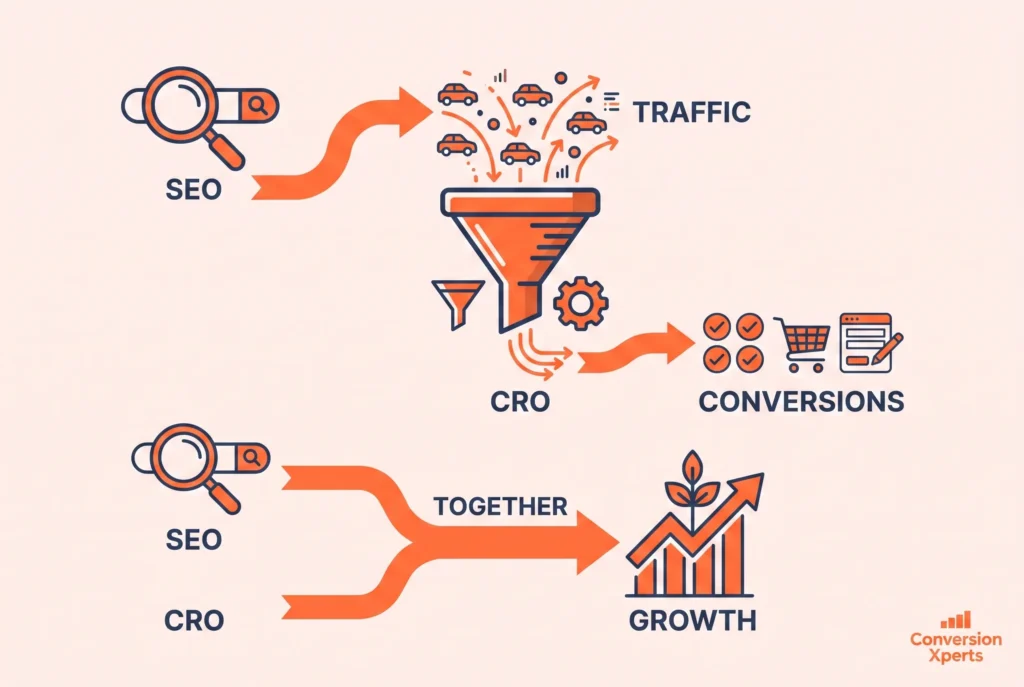
A lot of people assume SEO and CRO are separate disciplines, but in reality they work best when combined. SEO brings the right kind of visitor to your website. CRO ensures that once those visitors arrive, they actually take action.
Think about it this way. If your SEO strategy successfully brings in ten thousand visitors searching for a specific product, but your conversion rate is poor, you are leaving a massive amount of potential revenue on the table. On the other hand, if your conversion rate is excellent but your SEO is weak and you only attract one hundred visitors, you still will not generate much revenue.
The most successful digital marketing strategies treat SEO and CRO as partners rather than separate departments. They use SEO to drive qualified traffic and CRO to ensure that traffic converts at the highest possible rate.
CRO and Generative Engine Optimization
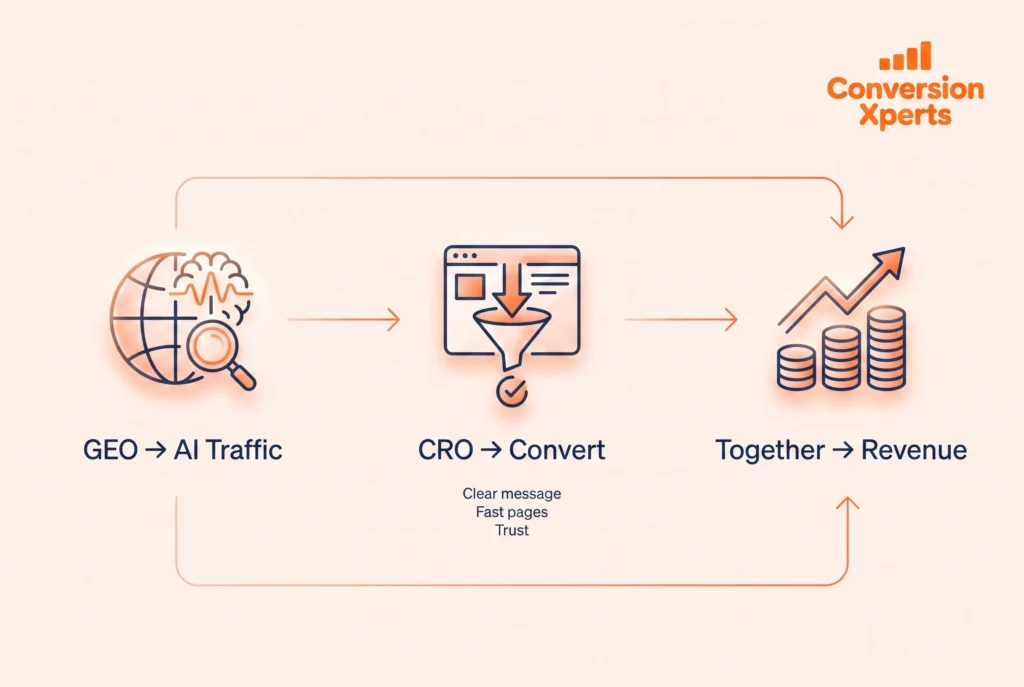
As search behavior continues to evolve with the rise of AI powered search tools and generative answer engines, marketers are now also thinking about Generative Engine Optimization, often referred to as GEO. This involves structuring content so that it can be easily understood, summarized, and surfaced by AI systems when users ask questions.
CRO and GEO intersect in an important way. When AI tools recommend or summarize a business based on its content, the traffic that results from that recommendation still needs to convert once it reaches the website. This means the same CRO principles, clear messaging, strong trust signals, simple navigation, and fast load times, remain just as important even as the way people discover content continues to change.
CRO and Answer Engine Optimization
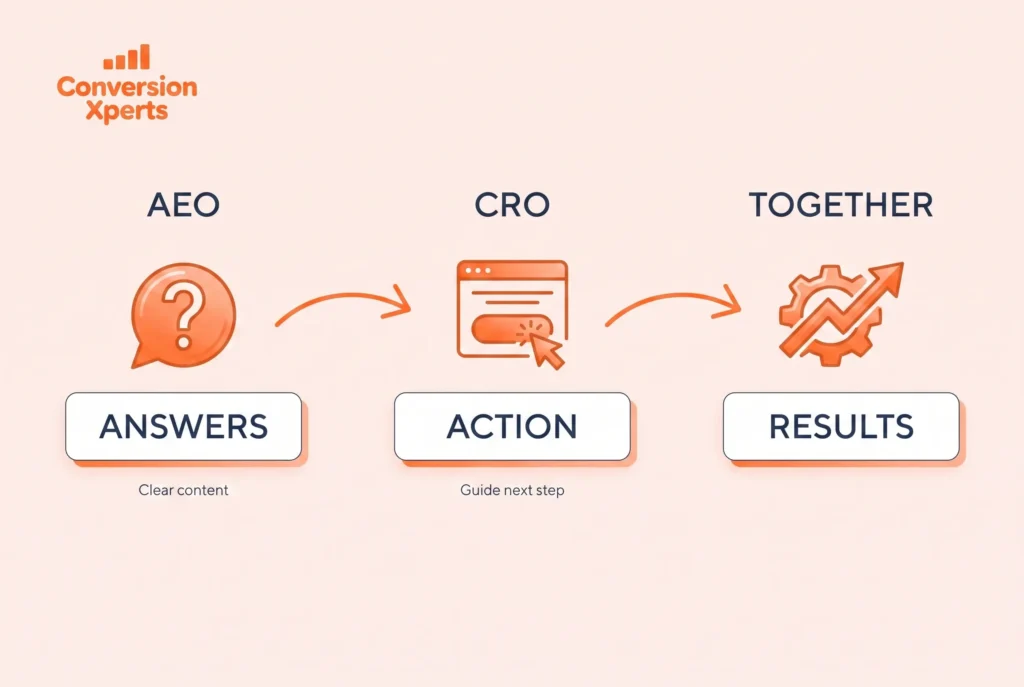
Similarly, Answer Engine Optimization, known as AEO, focuses on structuring content so it can directly answer specific questions users ask through voice assistants, chat based search tools, and featured snippet results. AEO is about being the source that gets quoted or referenced when someone asks a direct question.
For CRO professionals, this means content needs to be written clearly enough to satisfy an answer engine while still guiding the human reader toward a meaningful next step. A well written article that earns a featured answer placement is only valuable if the resulting traffic eventually converts into leads, subscribers, or customers.
Real World Examples of CRO in Action
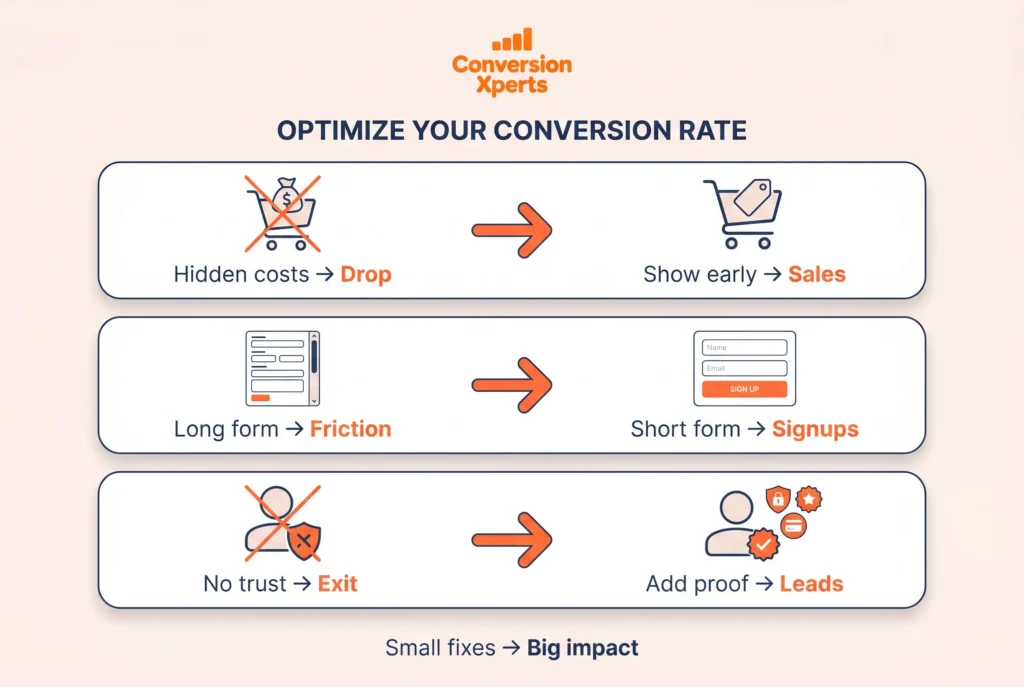
To better understand how CRO works in practice, consider a few simplified examples.
An online clothing retailer notices that a large number of visitors add items to their cart but never complete checkout. After investigating with session recordings, the team discovers that unexpected shipping costs revealed at the final step are causing shoppers to abandon their purchase. By displaying shipping costs earlier in the process, the retailer reduces cart abandonment and increases completed purchases.
A software company offering a free trial notices that very few visitors who land on the homepage actually sign up. After running an A or B test, they discover that simplifying the signup form from seven fields down to just three fields, asking only for name, email, and password, leads to a substantial increase in completed signups.
A local service business finds that visitors are leaving their contact page without filling out the inquiry form. After adding customer testimonials and a clear photo of the team near the form, trust increases and more visitors complete the form.
These examples show that CRO is rarely about one massive change. It is usually about identifying small but meaningful points of friction and systematically removing them.
Common Mistakes Businesses Make With CRO
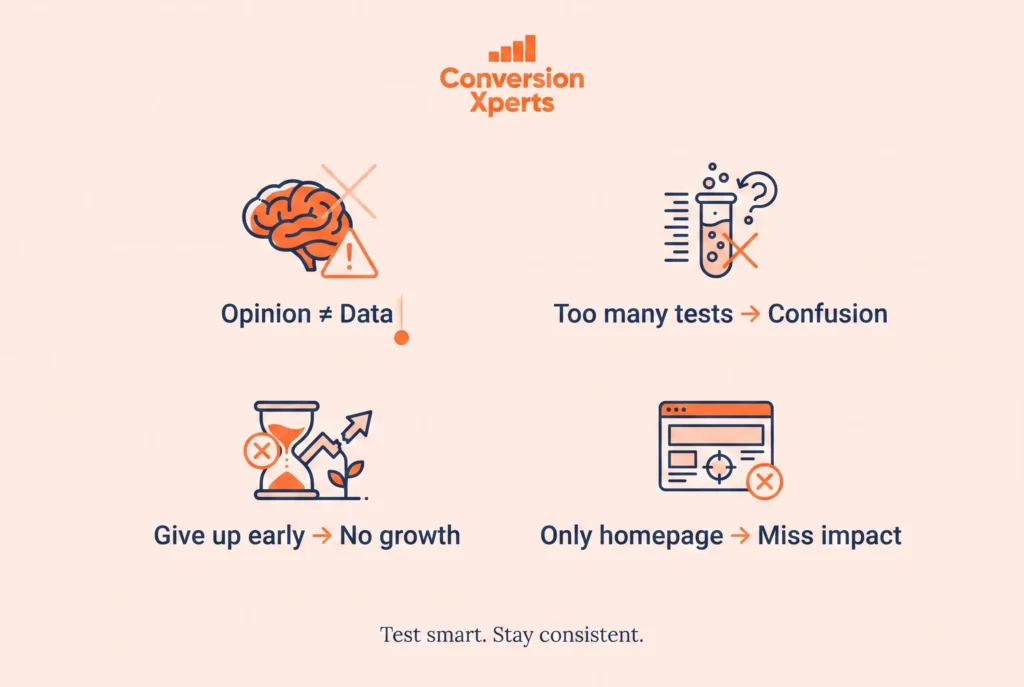
Many businesses approach CRO incorrectly, which limits the results they are able to achieve. One common mistake is making changes based on personal opinion rather than actual data. Just because a business owner personally prefers a certain design does not mean that design will perform better with real customers.
Another mistake is testing too many elements at once, which makes it impossible to know which specific change caused a result. A focused, methodical approach almost always outperforms a scattered one.
Some businesses also give up too quickly. Meaningful CRO results often take time, consistent testing, and patience. A single test rarely tells the whole story, and the businesses that see the biggest long term gains are the ones who treat optimization as an ongoing habit rather than a one time fix.
Finally, some businesses focus exclusively on the homepage while ignoring other important pages such as product pages, pricing pages, and checkout flows, all of which often have a far bigger impact on overall conversion rates.
How to Get Started With CRO Today
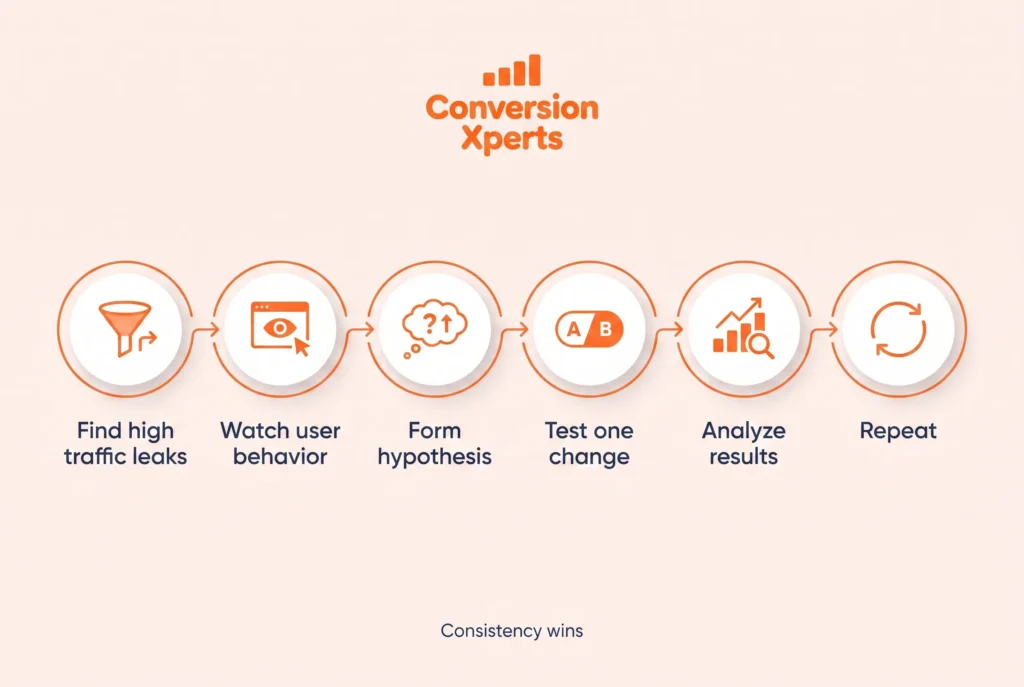
If you are ready to begin applying CRO principles to your own website, here is a simple framework you can follow.
Start by reviewing your analytics to identify which pages have the highest traffic but the lowest conversion rates. These pages represent your biggest opportunity.
Next, watch how real visitors interact with those pages using heatmaps or session recordings. Look for patterns such as visitors repeatedly clicking on something that is not clickable, or scrolling past your call to action without noticing it.
After gathering this information, form a clear hypothesis about what might be causing the problem and design a simple test to address it. Keep your first tests focused on a single variable so you can clearly measure the impact.
Run your test long enough to gather statistically meaningful data, then analyze the results and apply what you learned. Whether the test succeeds or fails, you will walk away with valuable insight into your audience.
Finally, repeat the process. CRO is most powerful when it becomes a continuous part of how your business operates rather than an occasional project.
Final Thoughts on CRO in Digital Marketing
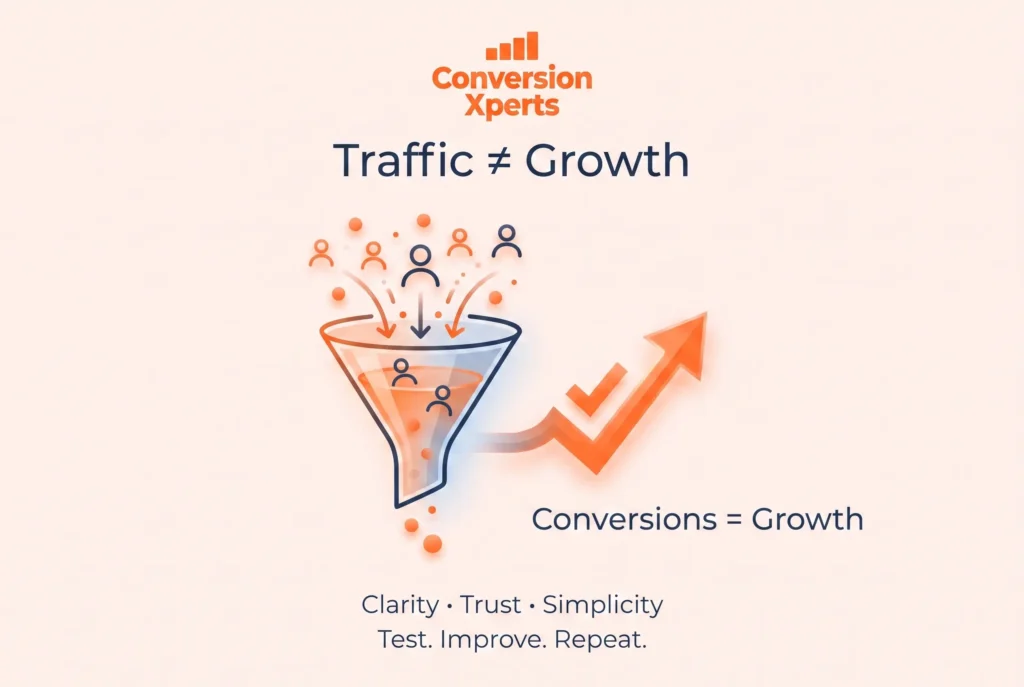
Conversion rate optimization is one of the most valuable yet often overlooked aspects of digital marketing. While many businesses focus the majority of their attention on driving traffic through SEO, paid advertising, and social media, those efforts only pay off if the resulting visitors actually convert into customers.
By understanding what CRO is, why it matters, and how to apply it through structured testing and data driven decision making, you can unlock significant growth without necessarily increasing your marketing budget. As digital search continues to evolve through generative and answer based engines, the core principles of CRO, clarity, trust, simplicity, and continuous improvement, remain just as relevant as ever.
If you take just one thing away from this guide, let it be this. Traffic alone does not grow a business. Conversions do. And conversion rate optimization is the discipline that helps you turn the visitors you already have into the customers you actually want.
Further Reading
If you would like to explore this topic in more depth, the following external resources offer additional insight into conversion rate optimization strategy and testing.