How to Boost Conversion Rates From AI Tools (Without Guesswork)
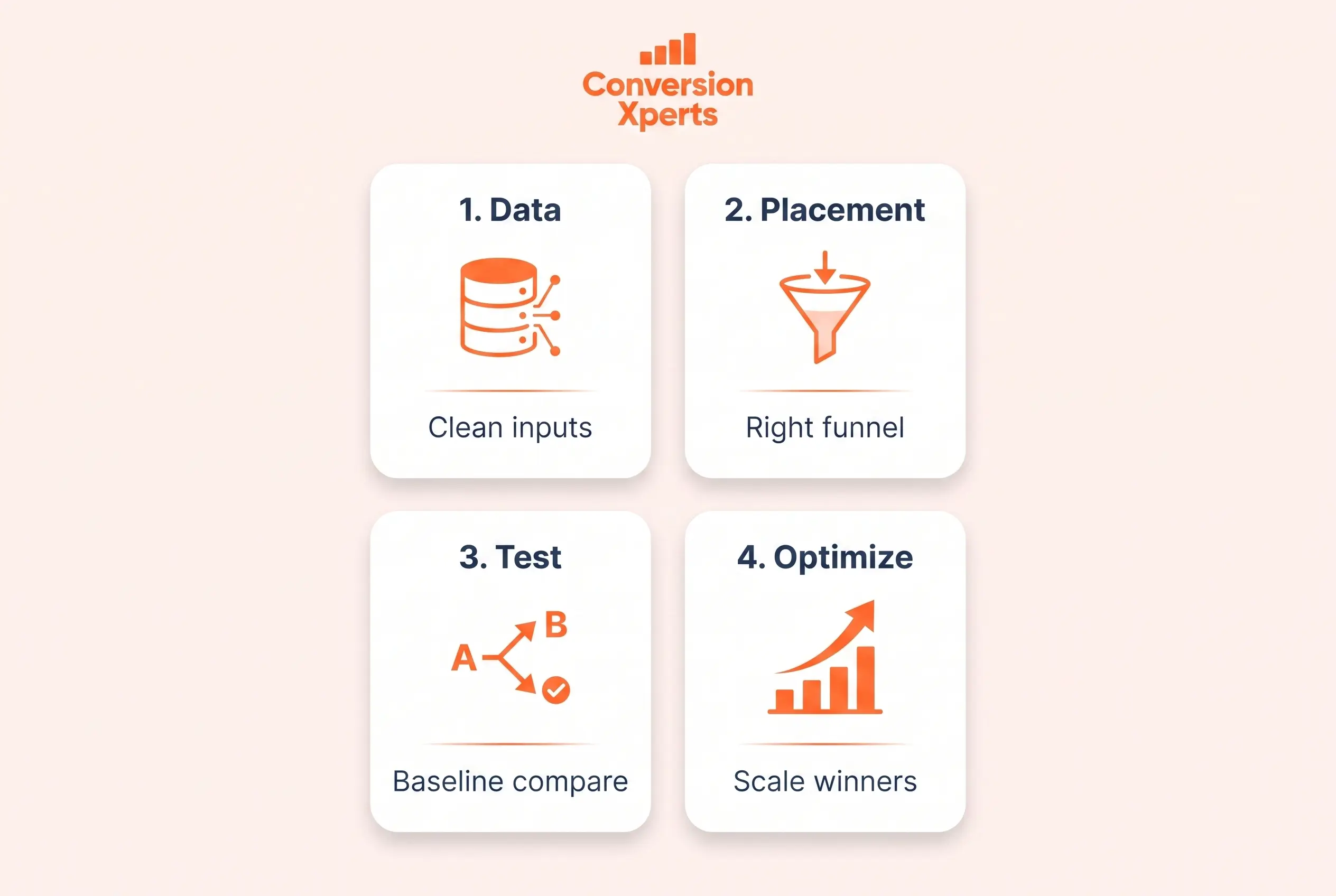
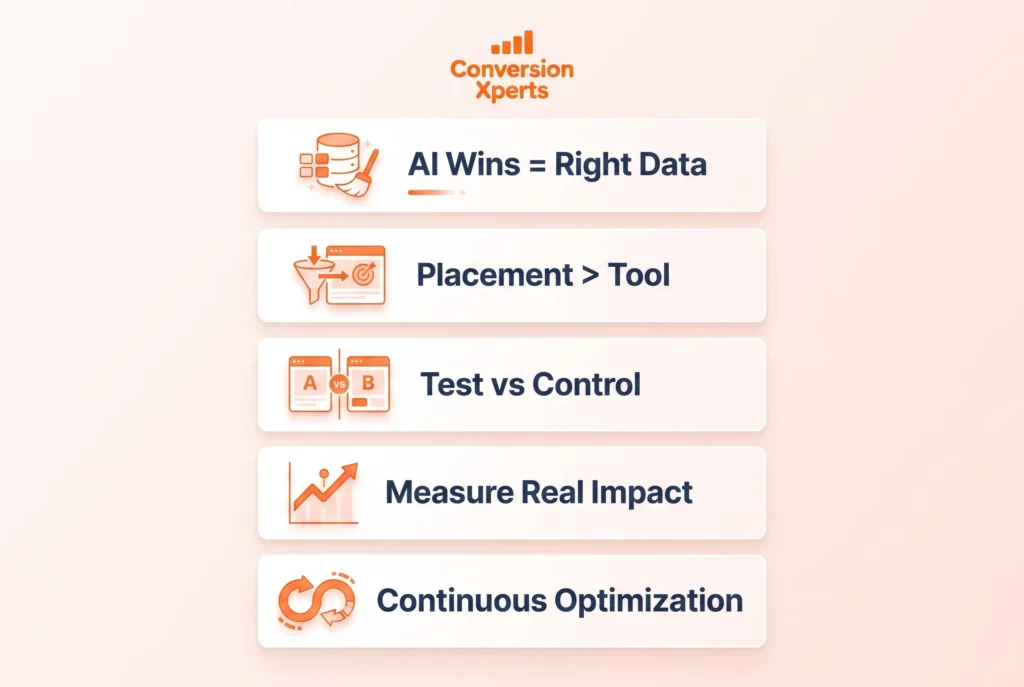
Most businesses adopt AI tools expecting an instant lift in conversions, then get disappointed when nothing changes. The truth is AI tools do not boost conversion rates on their own. They boost conversion rates when they are connected to the right data, placed at the right point in the funnel, and tested against a clear baseline. This guide breaks down exactly how to make that happen, with practical steps instead of vague promises. By the end of this article you will understand not just what to do, but why each tactic works, how to measure it properly, and how different industries apply these same principles with different results.
What Does It Mean to Boost Conversion Rates From AI Tools
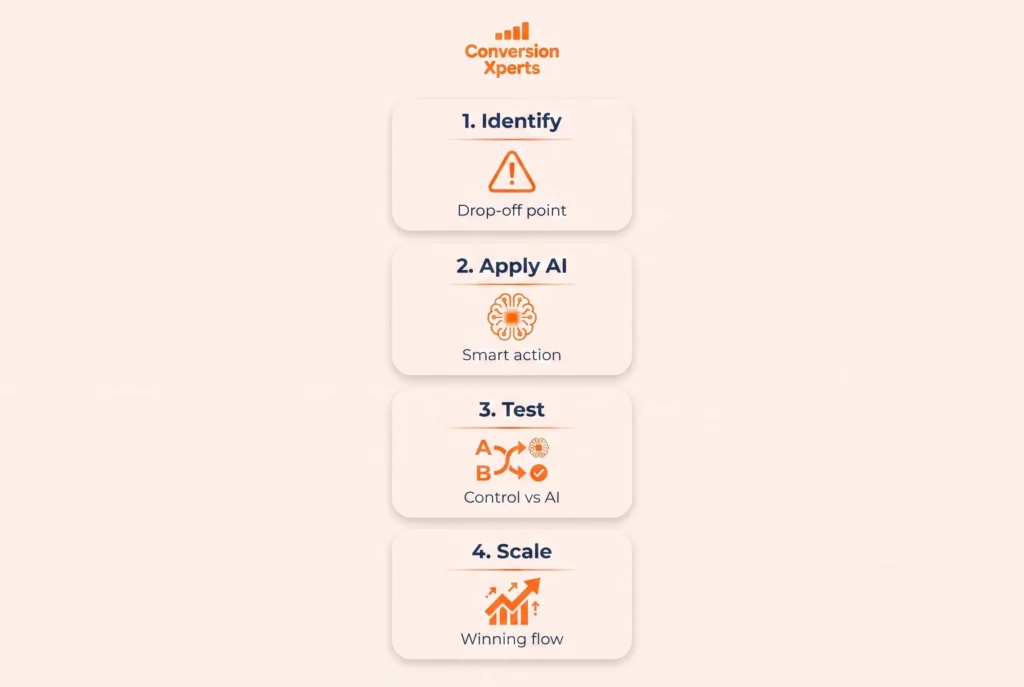
Boosting conversion rates from AI tools means using machine learning, predictive analytics, or generative AI to remove friction at specific points in the customer journey, such as personalizing offers, automating responses, or predicting buyer intent before the customer drops off. It is not about installing a chatbot and hoping for the best. It is about identifying where people leave and applying AI precisely there.
Quick answer for readers who want it fast: the fastest way to boost conversion rates from AI tools is to use AI for real time personalization, predictive lead scoring, and instant customer support, then measure each change against a control group for at least two weeks before scaling it.
It helps to separate two ideas that often get blended together. One is automation, which simply removes manual work, like an AI tool that sends a follow up email automatically. The other is intelligence, where the tool makes a judgment call based on patterns, such as deciding which offer to show a specific visitor. Automation saves time. Intelligence changes outcomes. Conversion rate improvements almost always come from the intelligence layer, not the automation layer, even though automation is what most companies install first because it is easier to set up.
Why Most AI Tools Fail to Improve Conversions
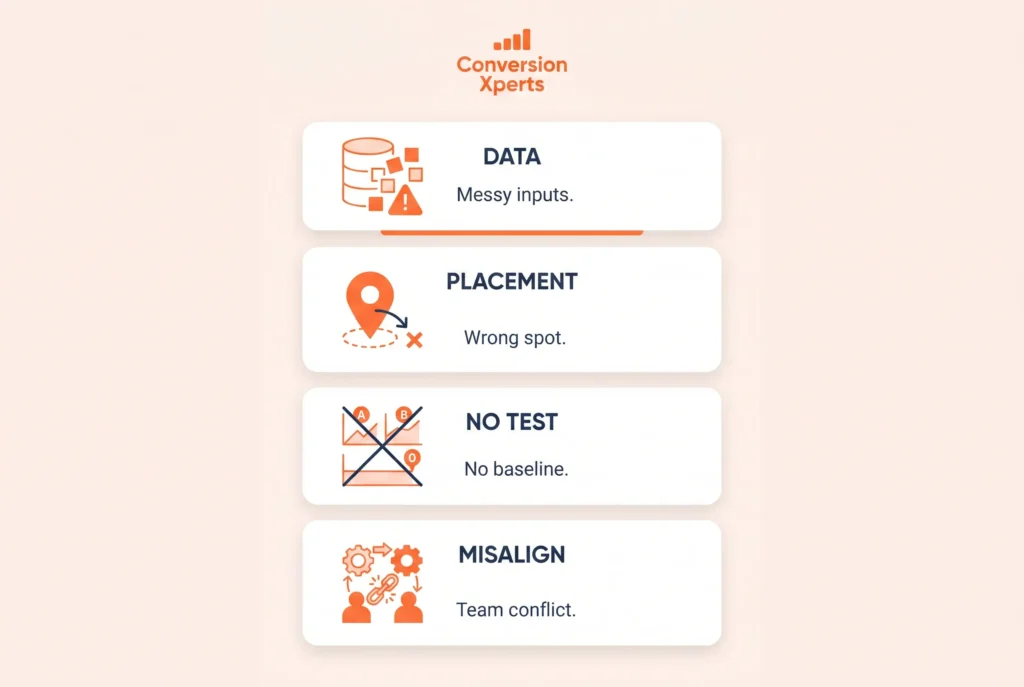
Before adding more tactics, it helps to understand why many AI rollouts underperform.
Lack of clean data feeding the model
AI tools are only as accurate as the data behind them. If your CRM has duplicate contacts, outdated tags, or incomplete purchase history, the AI will make wrong predictions confidently. A model trained on messy data does not fail loudly. It fails quietly, producing recommendations that look reasonable but are based on incomplete signals. This is one of the most common reasons teams report no measurable change after months of using an AI tool. The tool was never given enough accurate information to learn from in the first place.
Wrong placement in the funnel
A chatbot on a blog post rarely converts. The same chatbot on a pricing page, answering objections in real time, often does. Placement matters more than the tool itself. Many teams buy a tool because a competitor uses it, then drop it anywhere convenient on the website instead of mapping it to an actual friction point. The tool ends up answering questions nobody is asking, in a location nobody is hesitating.
No baseline for comparison
Without an A/B test or a pre AI conversion rate, you cannot prove the tool worked. Many teams assume improvement happened simply because revenue went up that month, ignoring seasonality or other campaigns running at the same time. This leads to two bad outcomes. Either a tool gets credit it does not deserve and gets scaled into areas where it actually hurts performance, or a genuinely useful tool gets cancelled because nobody can prove its value during a slow sales quarter.
Misaligned incentives between teams
Marketing wants more leads, sales wants higher quality leads, and AI lead scoring sits in the middle trying to satisfy both. If the scoring model is tuned only for volume, sales will complain about quality. If it is tuned only for quality, marketing will complain about pipeline size. Conversion improvements from AI often stall not because of the technology but because different departments never agreed on what success actually looks like before the tool was switched on.
Treating AI as a one time setup instead of an ongoing process
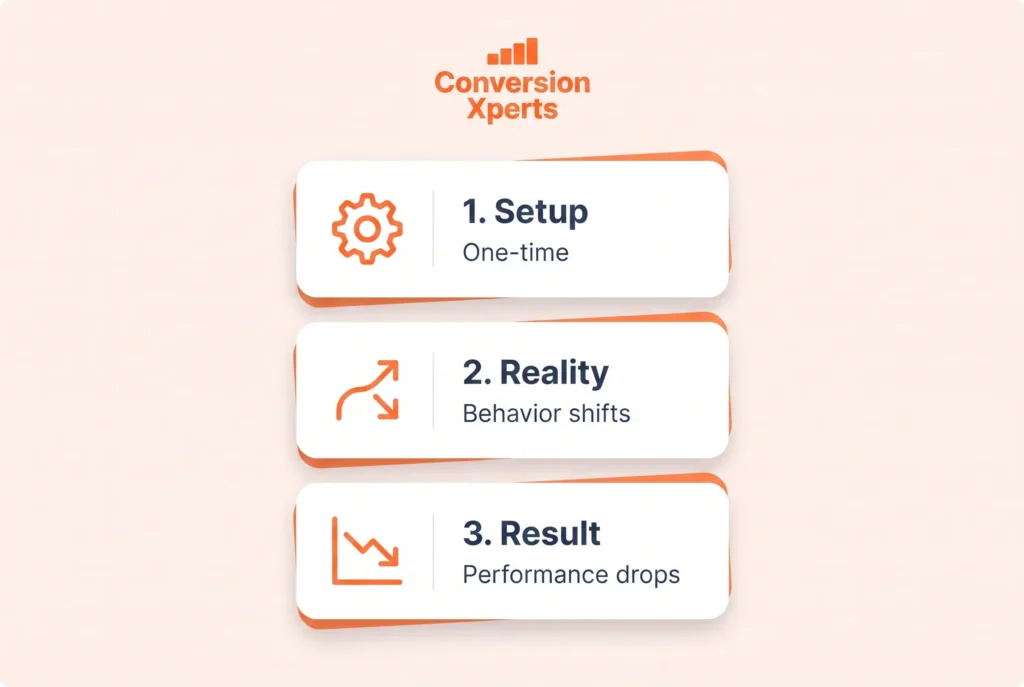
Customer behavior shifts with seasons, pricing changes, competitor moves, and even economic conditions. A model trained on last year’s buyer behavior may quietly become less accurate without anyone noticing, because the dashboard still shows numbers, just slightly worse ones each month. Teams that treat AI tools as something to configure once and forget tend to see gains fade over time.
High Impact AI Tactics That Actually Move Conversion Numbers
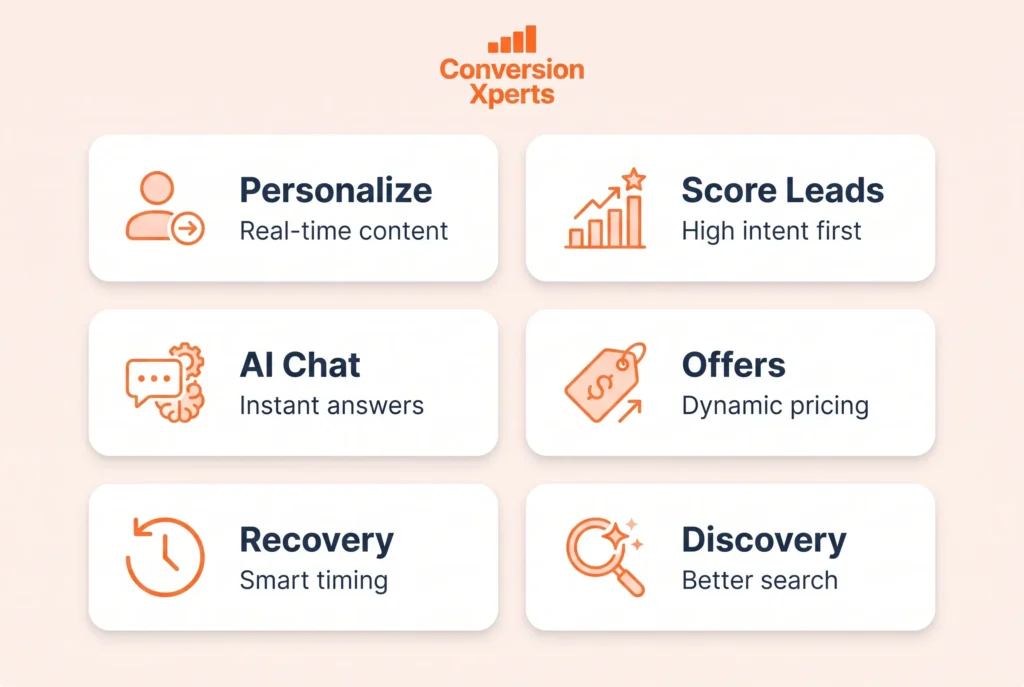
Real time personalization on landing pages
AI driven personalization engines can change headlines, images, or offers based on visitor behavior, referral source, or location. Pages using behavioral personalization typically see higher engagement because the content matches intent instead of showing the same message to everyone. For example, a visitor arriving from a comparison article searching for pricing information should see a page emphasizing value and pricing clarity, while a visitor arriving from a brand search should see a page emphasizing trust signals and product depth. The same landing page URL can serve different visual priorities to different segments without manual rebuilding, because the AI engine swaps elements based on real time signals.
Predictive lead scoring
Instead of sales teams calling every lead in order, AI models rank leads by likelihood to close based on past buyer patterns. This shortens sales cycles because reps spend time on prospects who are actually ready. A well tuned scoring model considers firmographic data, behavioral signals like page visits and email opens, and historical deal data from similar accounts. The output is not just a number but a reason, which helps sales reps prioritize their day with context instead of guessing why a lead scored high.
AI powered chat and instant query resolution
Visitors who get an answer within seconds are far less likely to abandon a purchase decision. AI chat tools trained on your product catalog and FAQs can resolve objections immediately instead of making the visitor wait for email support. The strongest implementations do not just answer generic questions. They are trained on actual objections that come up during sales calls, such as questions about refund policy, integration complexity, or contract terms, because these are usually the exact thoughts running through a visitor’s mind right before they decide to leave the page.
Dynamic pricing and offer optimization
Some AI tools test multiple price points or bundle offers automatically, learning which combination converts best for each segment, then applying that combination in real time. This works particularly well for subscription businesses and ecommerce stores with multiple product tiers, where small changes in framing, such as showing a yearly plan discount versus a monthly plan comparison, can shift conversion rates significantly without changing the underlying price at all.
Abandoned cart recovery powered by predictive timing
Generic cart recovery emails sent at a fixed time after abandonment underperform compared to AI models that predict the exact moment a specific customer is most likely to return and complete checkout. Some customers respond best to a reminder within thirty minutes, others respond better to a nudge the next morning, and a fixed schedule treats everyone the same even though buying behavior is highly individual.
AI generated content for search intent matching
Generative AI tools can help create landing page variations that match specific search intent more precisely than a single generic page trying to serve every visitor. Instead of one page trying to rank for ten different keyword variations with ten different intents, AI assisted content workflows allow teams to build intent specific pages faster, which often improves both search visibility and on page conversion because the message matches what the visitor was actually searching for.
Voice and tone matching in email follow up
Some AI tools analyze how a prospect communicates and adjust the tone of automated follow up emails to feel less robotic and more aligned with how a human salesperson would naturally respond to that specific lead. This reduces the disconnect that often happens when a friendly, casual lead receives a stiff, overly formal automated email sequence.
Visual search and product discovery for ecommerce
AI powered visual search lets shoppers upload an image or describe a product loosely, then receive accurate matches from the catalog. This reduces the number of dead end searches where a customer cannot find what they are looking for using exact keyword matching, which is one of the quiet conversion killers in ecommerce.
A Step by Step Framework to Apply AI for Conversion Growth
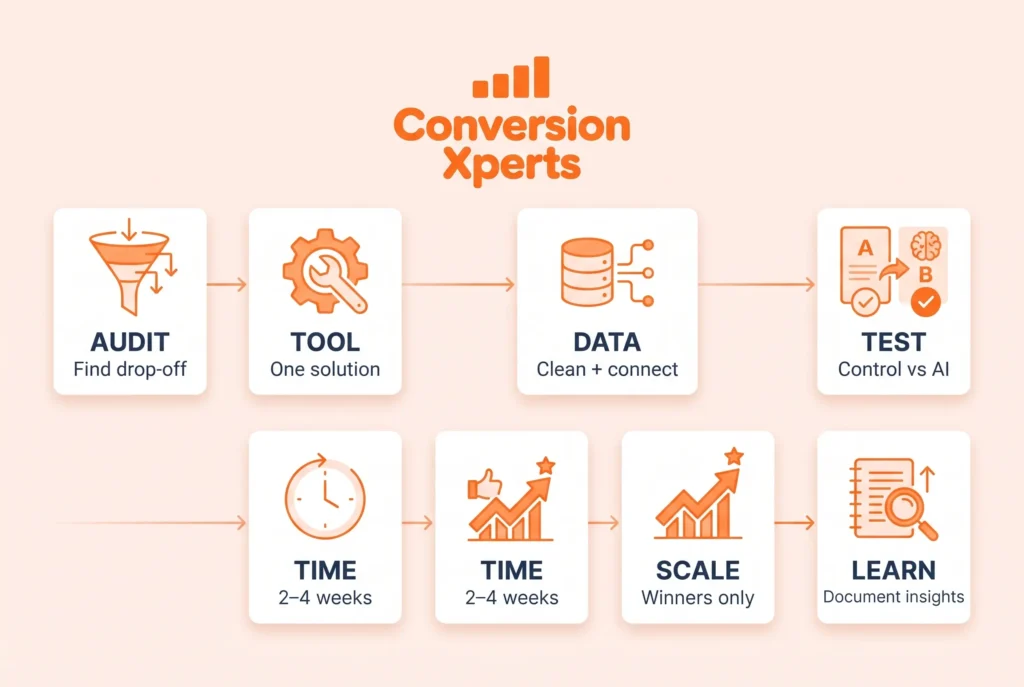
Step one, audit your funnel and mark the exact stage where drop off is highest. Pull your analytics data and look at every step from first visit to final purchase or signup. Identify the single stage with the steepest drop, not the stage that feels most important to your team internally.
Step two, choose one AI tool that solves that specific stage, not a tool that promises to fix everything. Tools that claim to improve every part of your funnel at once are usually shallow in every area rather than strong in one.
Step three, clean and connect your data sources before turning the tool on, since broken data produces broken predictions. This includes deduplicating customer records, standardizing how events are tracked across your website and CRM, and removing test or internal traffic from your training data.
Step four, run the AI feature against a control group so you can measure true lift, not assumed lift. Split your traffic so a portion experiences the AI driven version while another portion continues with the existing experience, ensuring both groups are exposed to similar traffic sources and timing.
Step five, give the test at least two to four weeks depending on your traffic volume, since AI models need data to learn patterns. Lower traffic sites may need closer to six to eight weeks to reach a meaningful sample size.
Step six, scale only the elements that show statistically meaningful improvement, and pause anything inconclusive. Resist the temptation to declare victory based on early numbers, since early results from any test tend to be noisy and can reverse direction as more data comes in.
Step seven, document what worked and why, so future tests build on previous learning instead of starting from zero each time. Many teams skip this step and end up re testing the same hypothesis a year later because nobody remembers the original result.
How to Measure Whether the AI Tool Actually Boosted Conversions
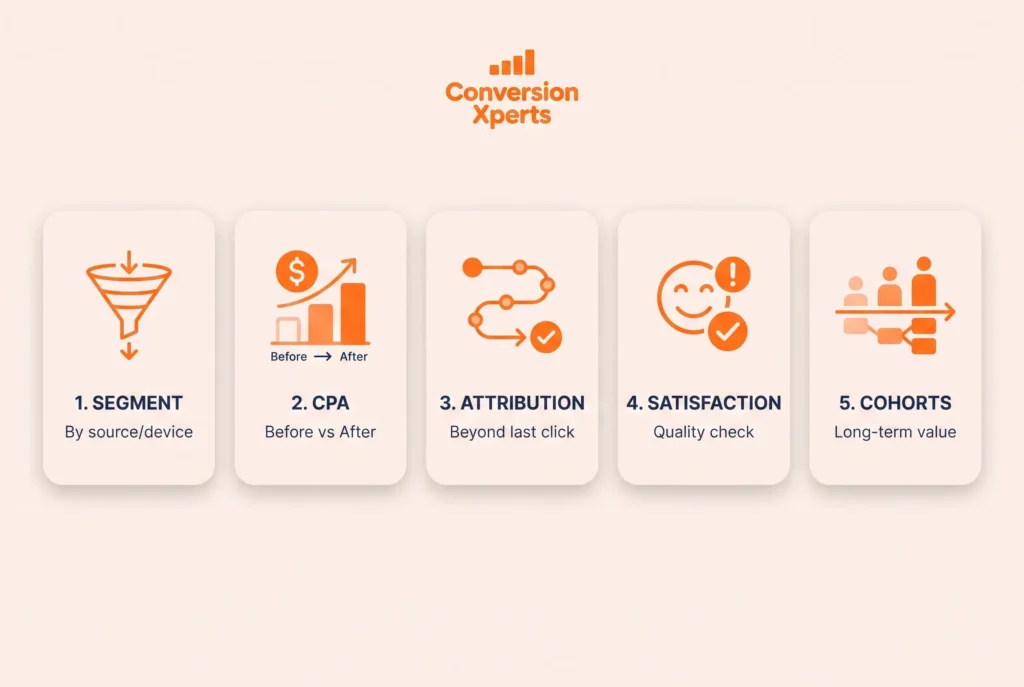
Track conversion rate by segment, not just overall site average
Overall averages hide what is really happening. Segment by traffic source, device, and new versus returning visitor so you can see exactly where the AI tool helped. A tool might be lifting conversions strongly among returning visitors while having almost no effect on new visitors, and averaging the two together would hide both insights.
Compare cost per acquisition before and after
A tool can technically raise conversions while quietly raising cost per acquisition if it relies on aggressive automation, such as offering excessive discounts to close deals faster. Always compare both numbers together rather than celebrating a conversion lift that came at the expense of profitability.
Watch for assisted conversions, not just last click
AI chat or personalization might not get the final click but could be the reason the customer trusted the brand enough to convert later. Multi touch attribution gives a more honest picture of which touchpoints actually contributed to the decision, rather than crediting only the final interaction before purchase.
Monitor customer satisfaction alongside conversion numbers
A tool that boosts short term conversions but increases return rates, support tickets, or refund requests is not actually improving the business. Pulling in satisfaction metrics or post purchase survey data alongside conversion data helps confirm the improvement is genuine rather than borrowed from future revenue.
Run cohort analysis over time
Looking at how a single cohort of customers behaves over several months, rather than just the immediate conversion event, reveals whether AI driven changes attract better long term customers or simply pull forward purchases that would have happened anyway.
Industry Specific Applications Worth Knowing
Ecommerce
Product recommendation engines remain one of the most mature AI applications in ecommerce, often increasing average order value by surfacing relevant add ons at checkout. Visual search and AI assisted size or fit recommendations also reduce return rates, which indirectly protects overall conversion economics.
Software and subscription businesses
Predictive churn models combined with onboarding personalization help convert free trial users into paying customers by identifying which features a specific user has not yet discovered and nudging them toward that feature before the trial expires.
Financial services
AI driven risk scoring allows faster loan or credit approval decisions, which directly improves conversion since application abandonment often happens during long waiting periods. Faster, more transparent decisions reduce the number of applicants who give up midway.
Real estate and high consideration purchases
Lead scoring matters heavily here since the sales cycle is long and the cost of contacting unqualified leads is high. AI tools that predict which inquiries are genuinely close to making a decision allow agents to focus energy where it counts.
Healthcare and appointment based services
AI scheduling assistants that reduce friction in booking, combined with automated reminder systems that predict the optimal reminder timing for each patient, have shown meaningful reductions in no show rates, which functions as a conversion metric in service based businesses.
Common Mistakes That Quietly Kill Conversion Gains
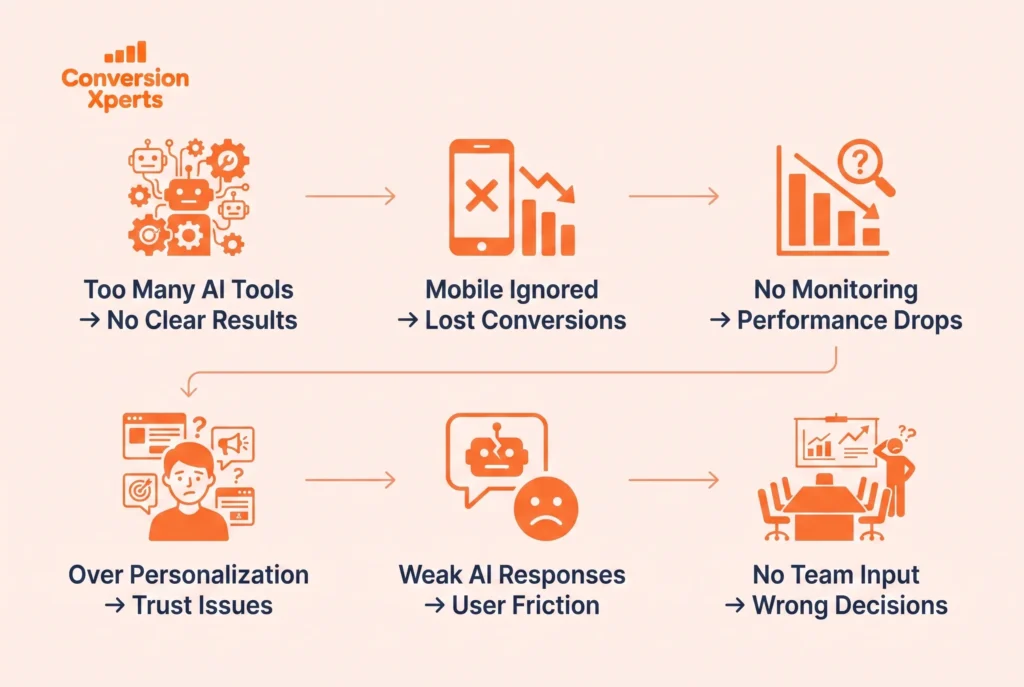
Turning on too many AI tools at once, which makes it impossible to know which one caused the change. When three or four new tools launch in the same month, any improvement or decline becomes impossible to attribute correctly, and teams end up making decisions based on guesswork rather than evidence.
Ignoring mobile experience while optimizing only desktop flows, even though most traffic for many businesses now comes from mobile. AI personalization that looks great on a desktop screen can break or feel cluttered on mobile, quietly undermining the gains made elsewhere.
Letting AI tools run unsupervised for months without reviewing whether the model is still aligned with current customer behavior, since buyer patterns shift over time. A model that performed well during a seasonal sale period may continue applying the same logic months later when customer intent has completely changed.
Overpersonalizing to the point of feeling invasive. There is a line between helpful personalization and content that feels like surveillance. Showing a visitor’s exact past browsing behavior too explicitly can create discomfort rather than trust, which can reduce rather than improve conversion.
Ignoring edge cases in automated responses. AI chat tools that handle ninety percent of questions well but fail badly on the remaining ten percent, especially around refunds, complaints, or technical issues, can damage trust faster than a slow human response would.
Failing to involve the team that owns the relationship with the customer. Sales and support teams often notice friction points that analytics dashboards miss entirely. Building AI tools without their input tends to produce technically accurate but practically unhelpful solutions.
Building a Long Term AI Conversion Strategy
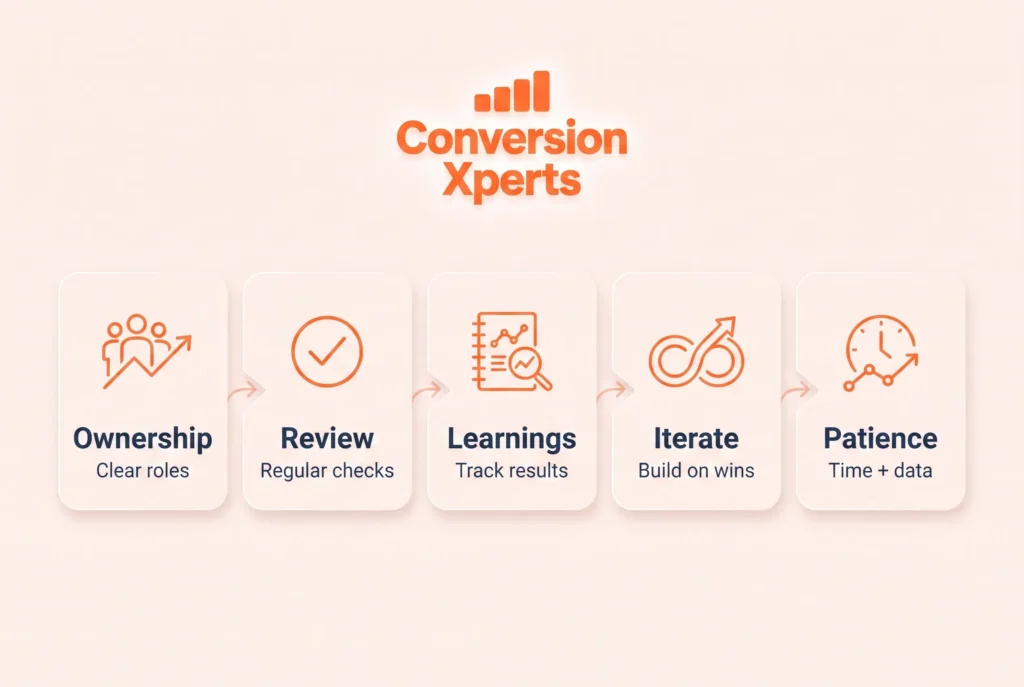
A short term test can prove a tactic works, but building a durable advantage requires treating AI as part of an ongoing operating rhythm rather than a one off project. This usually means assigning clear ownership for each AI tool, scheduling regular reviews of model performance, and keeping a living document of what has been tested, what worked, what failed, and why. Teams that build this habit tend to compound their gains over time, since each test informs the next one rather than starting from a blank page.
It also means staying realistic about timelines. Meaningful AI driven conversion improvements rarely happen in the first week of implementation. The real value tends to show up after the model has seen enough real customer behavior to refine its predictions, which is why patience combined with disciplined measurement consistently outperforms impatience combined with constant tool switching.