How to Improve Your Conversion Rate Lead Generation (And Actually Turn Leads Into Clients)
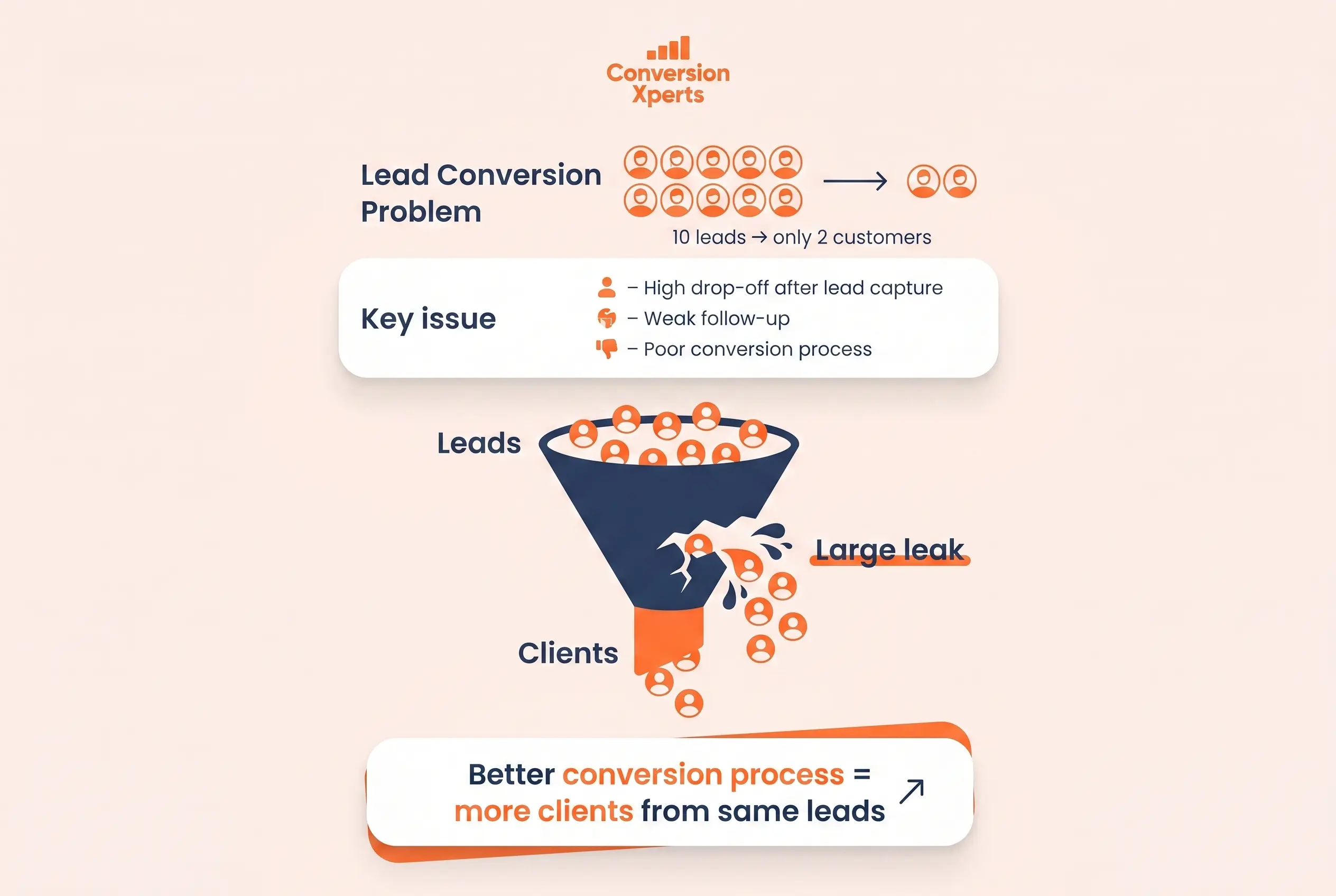
What Is Conversion Rate in Lead Generation?
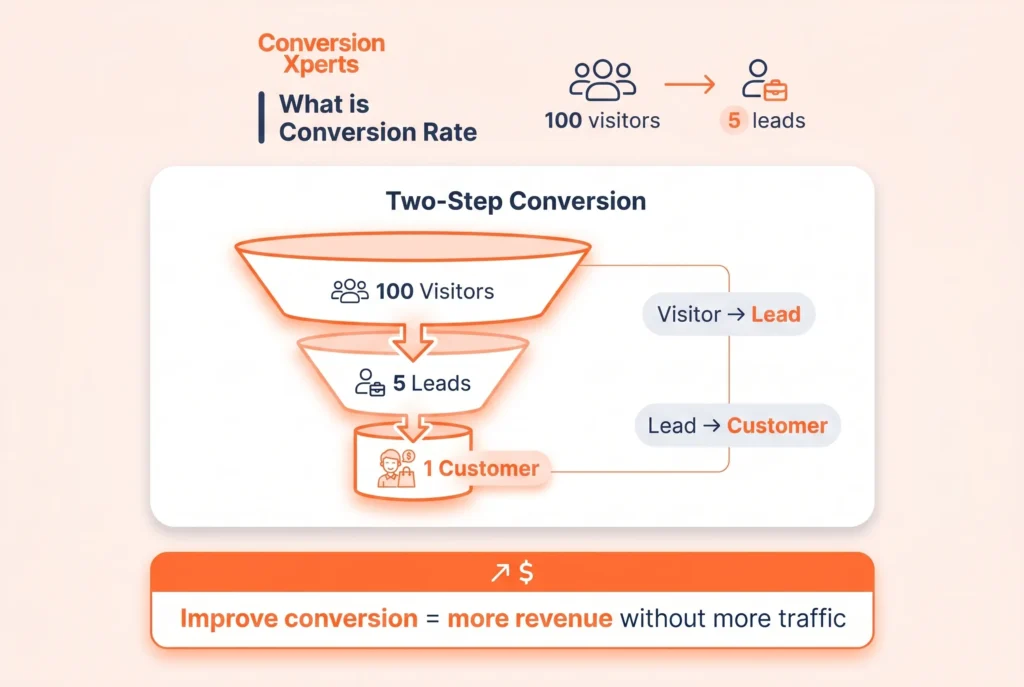
A conversion rate in lead generation is the percentage of people who take a desired action, such as filling out a form, booking a call, or signing up for a demo, compared to the total number of people who visited your page or saw your offer.
The formula is simple. If 100 people visit your landing page and 5 fill out your contact form, your conversion rate is 5%.
But here is what most people miss: there are actually two conversions that matter. The first is converting a visitor into a lead. The second is converting that lead into a paying customer. Both of these need attention if you want your lead generation and conversion efforts to actually grow your revenue.
Why Does This Number Matter So Much?
Most businesses focus all their energy on getting more traffic. More ads. More social posts. More outreach. But if your conversion rate is low, you are spending money to bring people through a broken door. Fixing your conversion rate often gives a better return than doubling your ad budget.
For example, imagine you are spending $2,000 a month on ads and getting 200 leads, but only 4 of them become clients. If you improve your conversion process so that 8 of those leads become clients, you doubled your revenue without spending a single extra dollar on ads.
Industry Benchmarks You Need to Know
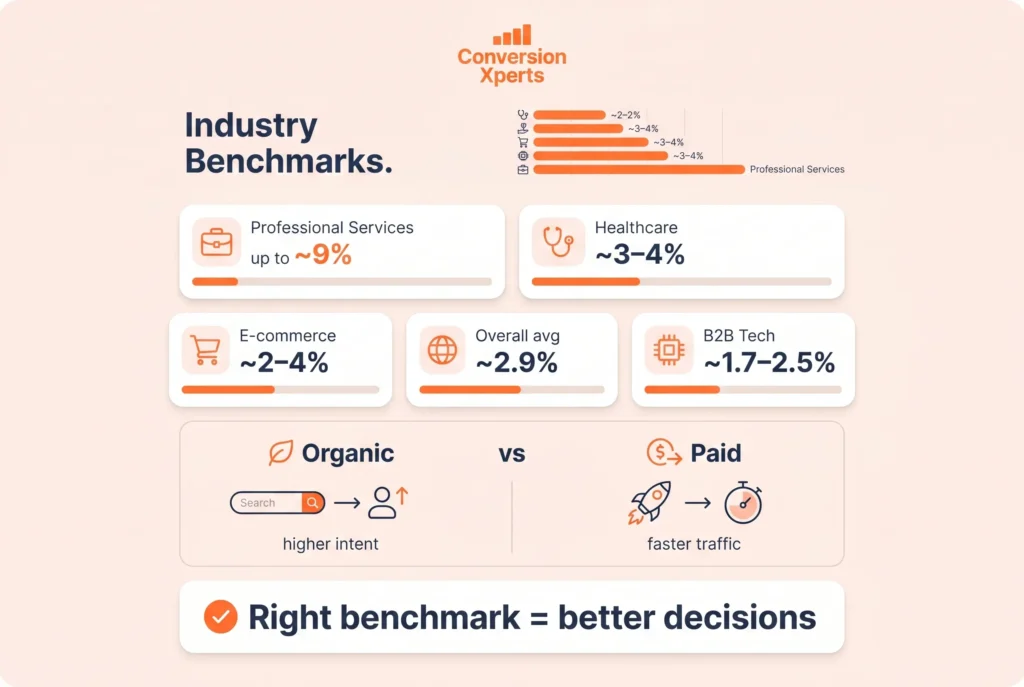
Before you can improve your conversion rate lead generation, you need to know what a good number looks like in your industry.
The average conversion rate across all fourteen industries is 2.9%. But that number varies widely depending on what you sell and who you sell it to.
Here is a quick comparison of average lead generation conversion rates by industry:
Industry | Average Conversion Rate Professional Services | 4.6% to 9.3% Healthcare | 3.1% to 4.0% E-commerce | 2.0% to 4.0% B2B Technology | 1.7% to 2.5% Real Estate | 1.7% to 2.5% Financial Services | 2.0% to 3.5% Overall Average | 2.9%
Sources: Ruler Analytics 2025, Growth List 2024, First Page Sage 2025
What Does This Mean for You?
Professional services businesses see the highest success in converting leads, at rates up to 9.3%. If you are in that space, reaching 5% or higher is very achievable with the right strategy. For B2B technology and real estate, the lowest average conversion rate sits around 1.7%, largely due to longer sales cycles and more complex buyer decisions.
Do not compare yourself to the wrong industry. A 3% rate is excellent for a B2B tech company but below average for a professional services firm.
Paid vs. Organic: Which Channel Converts Better?
Not all traffic converts at the same rate. Leads from organic search conversions result in 14.6% close rates, demonstrating high-value creation compared to other channels. That is because people who find you through a search engine are already looking for what you offer. They have intent.
Paid traffic can be fast, but organic traffic tends to bring in leads who are further along in their buying decision. Both matter, but if you want to convert more leads over the long term, investing in content and SEO is one of the smartest moves you can make.
Why Most Businesses Fail to Convert More Leads
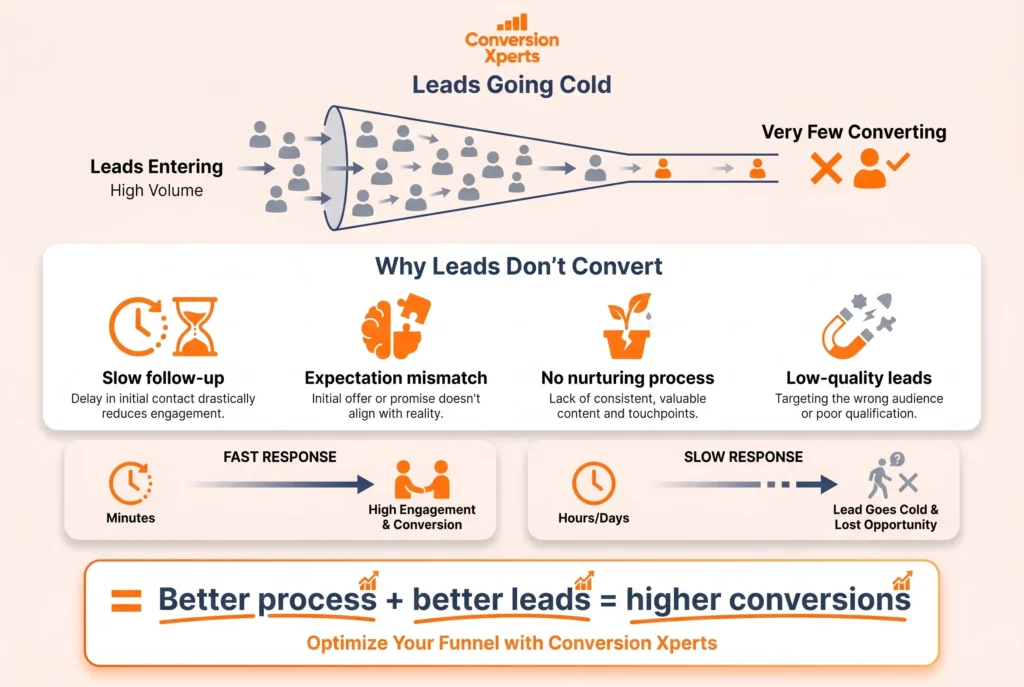
Here is an uncomfortable truth. 79% of inbound leads never convert, not because the lead was bad, but because businesses do not nurture them properly. They collect an email address, add it to a spreadsheet, and then wonder why nothing happens.
The Three Biggest Reasons Leads Go Cold
Slow follow-up is the first and most damaging mistake. Answering a lead in under five minutes can elevate conversion rates by as much as nine times compared to responding an hour later. Most businesses take hours or even days to follow up. By then, the person has already moved on to a competitor.
The second reason is a mismatch between the lead’s expectations and what you offer next. If someone downloads a free guide expecting tips, and you immediately send them a sales pitch, you lose their trust. The transition from lead to client needs to feel natural, helpful, and low pressure.
The third reason is not having a clear process. 63% of people who reach out to a business need more time before they are ready to commit. If you do not have a follow-up system in place to stay in front of those people, you lose them entirely, even though they were genuinely interested.
The Quality Problem Nobody Talks About
Many businesses also focus on volume over quality. They want more leads without asking whether those leads are actually a good fit. High volumes of poor-quality leads waste your team’s time and hurt your conversion rate, making your numbers look worse than they really are.
The fix is not always to get more leads. Sometimes the answer is to attract fewer, better leads.
How to Improve the Quality of Your Lead Generation
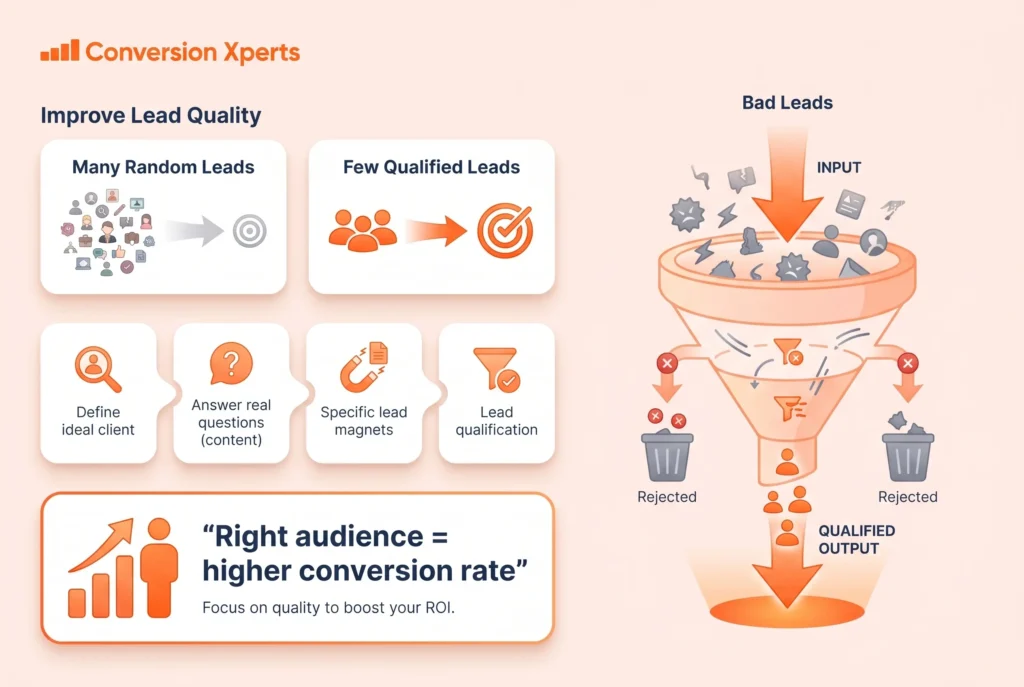
Improving your lead generation and conversion starts with attracting the right people in the first place. Here is how to do that.
Define Your Ideal Client Clearly
You cannot attract the right lead if you do not know exactly who that person is. Go beyond basic demographics. What problems are they trying to solve? What language do they use when they describe those problems? What are they afraid of getting wrong?
When your messaging speaks directly to one specific person’s situation, your conversion rate goes up automatically because the right people self-select in and the wrong ones self-select out.
Use Content That Answers Real Questions
91% of B2B marketers say that content marketing generates more leads than traditional marketing channels. But not just any content. Content that answers the specific questions your ideal client is already searching for online works the best.
Write blog posts, record short videos, or create simple guides that address real concerns your audience has. When someone finds your content and thinks, “this company actually gets what I am dealing with,” they are far more likely to reach out.
Use Lead Magnets That Attract Buyers, Not Just Browsers
A lead magnet is something you offer for free in exchange for someone’s contact information. This could be a checklist, a short video training, a free audit, or a downloadable guide.
The key is to make your lead magnet specific to a problem that only a serious buyer would care about. A generic “10 Marketing Tips” PDF attracts anyone. A “Checklist for Businesses Spending $5,000 a Month on Ads Without Seeing a Return” attracts exactly the kind of buyer you want.
According to a GetResponse survey, 47% of marketers find text-based and video lead magnets as better performers for opt-ins in 2024, with 73% saying short-form video resulted in higher conversion rates.
Qualify Leads Before You Spend Time on Them
Add a simple application or qualification step to your lead capture process. Ask two or three questions in your contact form that help you understand whether the person is a real fit. Questions like “What is your monthly budget?” or “What is the biggest challenge you are currently facing?” can instantly separate serious buyers from people who are just browsing.
Proven Strategies to Convert More Leads
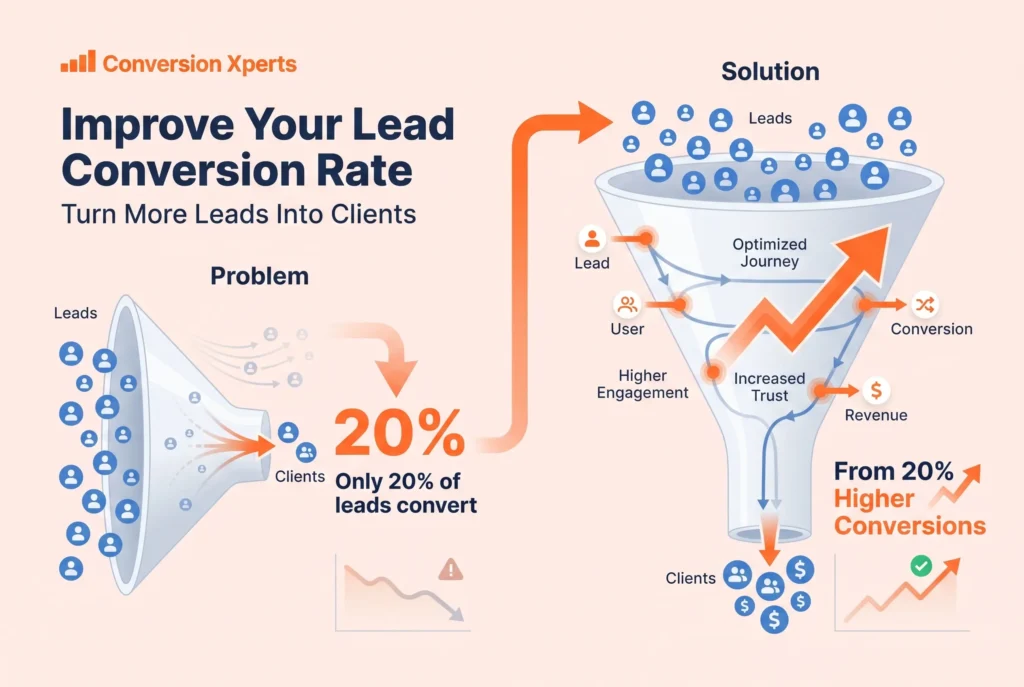
Now that you are attracting better leads, here is how to convert more of them into clients.
Optimize Your Landing Pages for One Goal
A landing page should do one thing: get the visitor to take one specific action. Remove navigation menus. Remove links to other pages. Remove anything that competes with your main call to action.
The standard conversion rate for landing pages across various sectors is 9.7%. If yours is below 5%, there is almost certainly room to improve the headline, the offer, or the call-to-action button.
Test your headlines first. Your headline is the first thing people read, and it has the biggest impact on whether they stay or leave. A headline that speaks directly to the outcome your client wants (“Get 3 Times More Clients Without Increasing Your Ad Budget”) will always outperform a generic one (“Welcome to Our Agency”).
Build Trust Before You Ask for the Sale
People do not buy from businesses they do not trust. Trust comes from testimonials, case studies, specific results, and consistent communication. Before asking someone to book a call or make a purchase, give them reasons to believe you can actually help them.
Client success stories are especially powerful. Instead of saying “we help businesses grow,” show a real example. “We helped a financial planning firm in Dubai go from 12 leads a month to 47 leads a month in 90 days using our content strategy” is 10 times more convincing than any generic claim.
Use Simple, Multi-Step Forms to Increase Sign-Ups
Long forms on a single page can feel overwhelming and cause people to leave. Breaking the same form into multiple short steps creates momentum.
Using multi-step forms can increase conversions by as much as 300%. Start with an easy question like “What service are you interested in?” and then move to contact details. By the time they get to the last step, they are already committed.
Add Clear and Specific Calls to Action
Vague calls to action like “Learn More” or “Click Here” perform much worse than specific ones. “Book Your Free 20-Minute Strategy Call” or “Download the Free Client Acquisition Checklist” tells people exactly what they will get, which makes them far more likely to act.
Leverage Social Proof at Every Stage
72% of shoppers exclusively interact with marketing content that resonates with their preferences. One of the most powerful ways to personalize trust is through social proof that matches your audience. If you serve small business owners, show testimonials from small business owners. If you serve e-commerce brands, show results from e-commerce clients.
Reviews, star ratings, case study numbers, and logos of businesses you have worked with all serve as quiet but powerful signals that you are the real deal.
The Role of Lead Nurturing in Lead Generation and Conversion
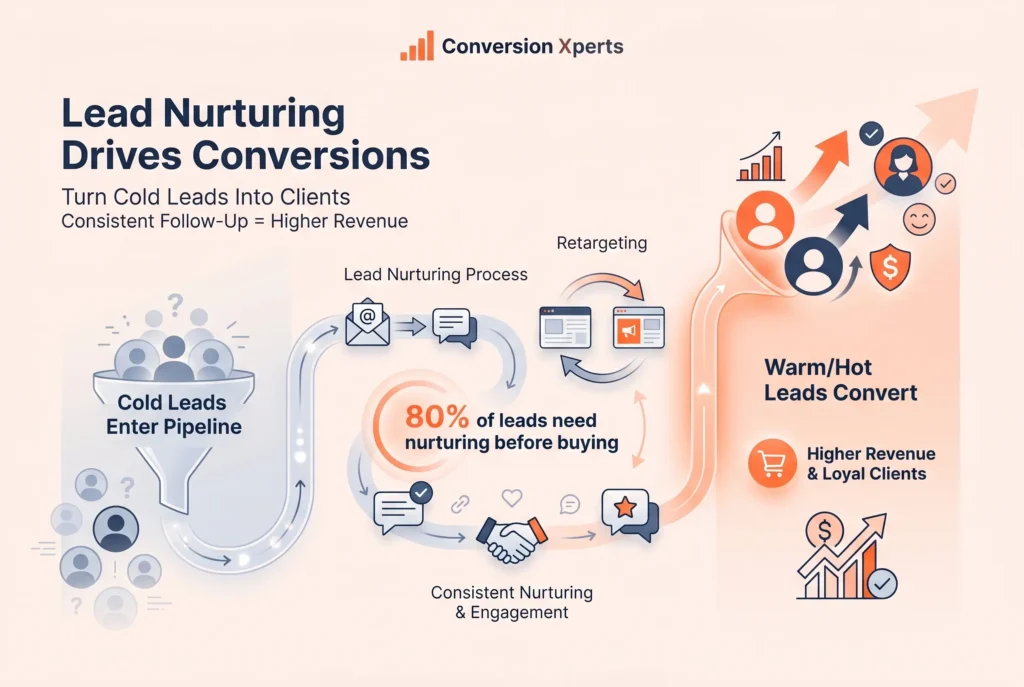
Lead nurturing is the process of staying in contact with a lead over time and gradually moving them toward a buying decision. It is where most businesses are leaving the most money on the table.
Why Nurturing Is Non-Negotiable
Only 21% of acquired leads are poised for an immediate sale when they first express interest. That means roughly 80% of your leads need more time, more information, and more reasons to trust you before they are ready to buy. If you give up after one or two follow-ups, you are abandoning most of your potential revenue.
Email is still one of the most effective nurturing tools available. 78% of lead nurturing practitioners rank email as the most effective channel for sustaining engagement over time. The key is to send emails that are genuinely helpful, not just promotional.
How to Build a Simple Nurturing Sequence
Start by mapping out the journey your ideal client takes before they buy. What questions do they have in the first week? What objections might come up in weeks two and three? What would finally push them to make a decision?
Then create a series of emails, each one answering a real question or addressing a real concern. One email might share a client success story. Another might explain how your process works. Another might answer the most common objection you hear.
Email continues to be a top performer due to personalization and automation, with drip campaigns outperforming newsletters in nurturing leads. A well-built drip campaign runs automatically in the background, keeping you top of mind without requiring daily effort.
Combine Email With Retargeting
Retargeting ads work by showing ads to people who have already visited your website or engaged with your content. Combined with email nurturing, retargeting creates a feeling of presence and consistency that builds trust quickly.
When a potential client sees your helpful email in their inbox on Tuesday and then sees a relevant ad from you on social media on Thursday, they start to feel like you are everywhere. That feeling drives conversions.
Tools That Help You Track and Improve Your Conversion Rate
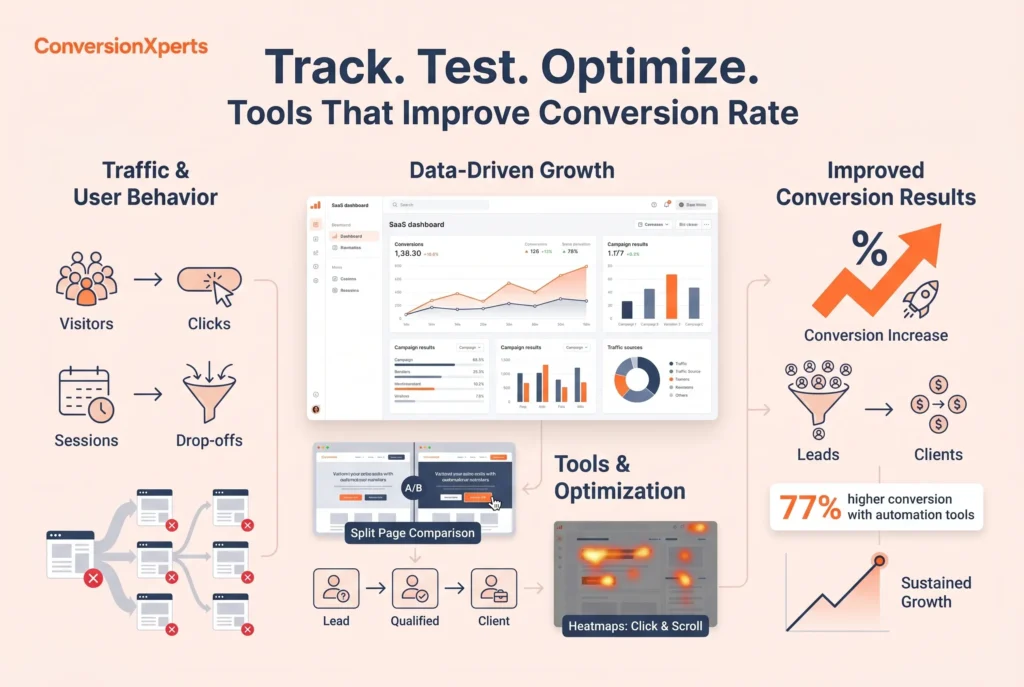
You cannot improve what you do not measure. Here are the types of tools you need to track and improve your conversion rate lead generation.
Analytics and Tracking
Google Analytics 4 is free and shows you where your traffic comes from, what pages people visit, and where they drop off. Connecting it to your ad platforms gives you a full picture of what is driving leads and what is draining budget.
CRM Systems
A customer relationship management (CRM) system like HubSpot, Pipedrive, or Zoho lets you track every lead from the moment they first reach out to the moment they become a client. Without a CRM, leads fall through the cracks constantly.
35% of business experts say they use automation tools mainly to attract more leads, and marketers who adopt these tools see 77% higher lead conversion than those who do not.
Landing Page and A/B Testing Tools
Tools like Unbounce, Instapage, or even simple WordPress plugins let you create and test landing pages quickly. Running an A/B test means showing one version of a page to half your visitors and a different version to the other half, then seeing which one converts better.
Even small changes, like testing two different headlines or two different button colors, can lead to meaningful improvements over time.
Heatmaps and Session Recordings
Tools like Hotjar or Microsoft Clarity show you where people click, how far they scroll, and where they stop engaging on your pages. This gives you a visual understanding of where your page is working and where it is losing people.