How to Optimize Dealership Website Traffic Conversion Rates
- Published by: Henry
- Last Updated: April 2026
Introduction
Most dealership websites focus heavily on getting traffic, but the real revenue comes from converting that traffic into leads and sales. According to a 2024 HubSpot study, the average website conversion rate across industries is only 2.35%, while top-performing websites convert 10–12% of visitors. That means most dealerships are losing thousands of potential customers every month.
If your website receives traffic but generates few leads, the problem is usually conversion optimization—not marketing.
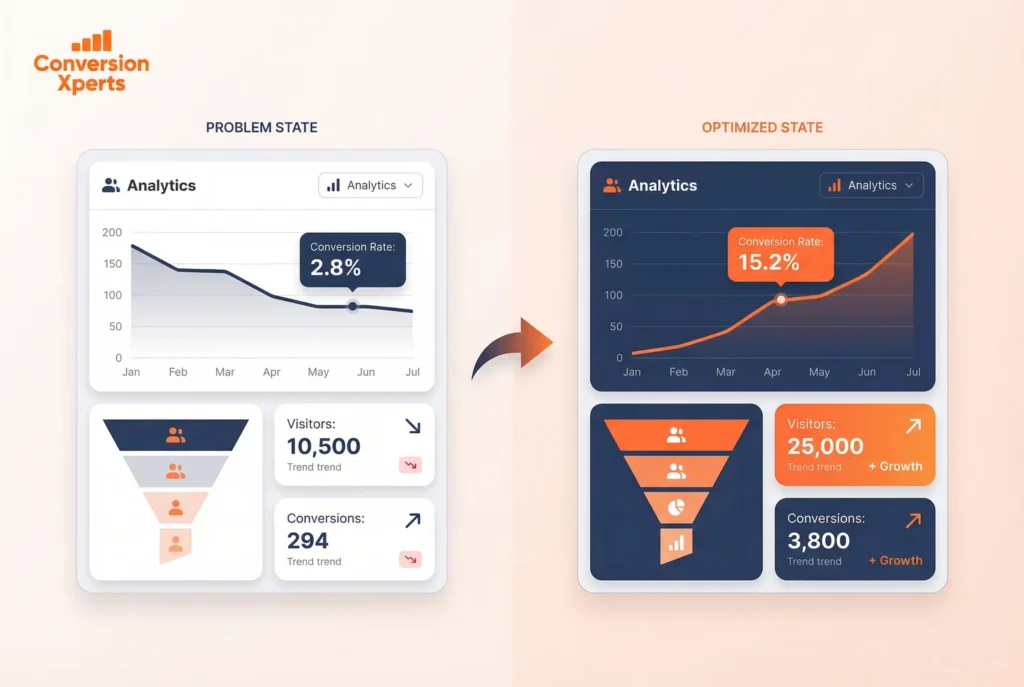
This is where Conversion Rate Optimization (CRO) becomes critical. Instead of spending more on ads, CRO improves the percentage of visitors who take action—such as booking a test drive, requesting a quote, or contacting your dealership.
In this guide you’ll learn how to optimize dealership website traffic conversion rates using data-driven CRO strategies, website audits, CRO statistics, and ecommerce optimization techniques. We’ll break down practical steps, real-world examples, and expert insights used by CRO specialists like conversionxperts.com to turn website visitors into customers.
Table of Contents
What Conversion Rate Optimization Means for Dealership Websites
Conversion Rate Optimization (CRO) is the process of improving a website so more visitors complete valuable actions such as booking appointments or submitting lead forms.
For dealerships, conversion actions usually include:
- Scheduling a test drive
- Requesting vehicle pricing
- Trade-in valuation requests
- Financing applications
- Calling the dealership
Conversion rate formula
| Metric | Formula |
|
Conversion Rate |
(Conversions ÷ Visitors) × 100 |
Example:
10,000 visitors → 200 leads = 2% conversion rate
Increasing this to 4% doubles your leads without increasing traffic.
This is why many CRO specialists emphasize optimization before scaling traffic campaigns.
Why CRO Statistics Show Most Dealership Sites Underperform
Understanding cro statistics reveals why many dealership websites struggle with conversions.
Key CRO Statistics (2024–2025)
- Average website conversion rate: 2.35% (HubSpot 2024)
- Top-performing websites: 10–12% conversion rates
- Companies using CRO tools see 223% ROI (Forrester 2023)
- 75% of users judge credibility based on website design (Stanford Web Credibility Research)
These cro statistics show one important truth:
Traffic alone does not generate sales—optimized experiences do.
Common Conversion Problems on Dealership Sites
Most dealerships experience similar issues:
- Slow page speed
- Complicated lead forms
- Weak call-to-action buttons
- Poor mobile optimization
- No trust signals or reviews
A professional website audit usually uncovers these issues quickly.
How a Website Audit Identifies Conversion Problems
A website audit analyzes design, UX, and data to identify barriers preventing visitors from converting.
Without a structured audit, dealerships often optimize the wrong elements.
Step 1: UX & Navigation Website Audit
The first stage of a website audit evaluates usability.
Key questions:
- Can users find vehicles easily?
- Are CTAs visible above the fold?
- Is navigation intuitive?
Example improvement:
Bad:
“Submit inquiry”
Better:
“Check Price for This Vehicle”
Small wording changes often increase conversion rate.
Step 2: Technical Performance Audit
Site speed directly affects conversions.
According to Google research (2023), if a page takes 3 seconds to load, over 53% of users leave.
A CRO audit should check:
- Page load speed
- Mobile responsiveness
- Core Web Vitals
- Image optimization
Tools commonly used:
- Google PageSpeed Insights
- GTmetrix
- Lighthouse
Step 3: Behavioral Data Analysis
The best CRO strategies rely on actual user behavior data.
Key metrics to analyze:
- Heatmaps
- Scroll depth
- Click tracking
- Exit pages
Platforms like Hotjar and Microsoft Clarity reveal where visitors drop off.
Proven Strategies to Optimize Dealership Website Traffic Conversion Rates
To optimize dealership website traffic conversion rates, businesses must improve both user experience and persuasion elements.
Below are the most effective CRO tactics.
1. Improve Call-to-Action Visibility
A CTA (Call-to-Action) tells visitors exactly what to do next.
Best practices:
- Use contrasting colors
- Place CTAs above the fold
- Repeat CTAs throughout the page
Examples:
- “Book a Test Drive Today”
- “Get Instant Price Quote”
These simple changes often increase conversion rate significantly.
2. Reduce Form Friction
Long forms reduce conversions.
| Form Type | Conversion Rate |
|
3 fields |
High |
|
6 fields |
Medium |
|
10+ fields |
Low |
Recommended fields:
- Name
- Phone
- Vehicle of interest
Reducing fields improves completion rates dramatically.
3. Add Trust Signals
Trust signals reassure visitors that your dealership is credible.
Effective trust signals include:
- Google reviews
- Customer testimonials
- Security badges
- Warranty details
A 2024 Nielsen study found 92% of consumers trust peer recommendations.
4. Optimize Mobile Experience
More than 60% of automotive searches happen on mobile devices (Google Automotive Trends 2024).
To optimize ecommerce site experiences on mobile:
- Use larger buttons
- Simplify navigation
- Reduce page weight
Mobile CRO improvements often increase conversion rate quickly.
CRO Audit Framework Used by Experts
A cro audit is a systematic evaluation of every conversion element on a website.
Professional CRO agencies like conversionxperts.com often follow this structured framework.
Step 1: Data Collection
Collect data from:
- Google Analytics
- Heatmaps
- Session recordings
- Conversion funnels
This step identifies bottlenecks.
Step 2: Hypothesis Creation
Example hypothesis:
“Reducing form fields from 8 to 4 will increase conversion rate by 25%.”
Every CRO change should be data-driven.
Step 3: A/B Testing
A/B testing compares two page versions.
| Test Type | Purpose |
|
A/B test |
Compare two page versions |
|
Multivariate |
Test multiple elements |
|
Split test |
Compare different layouts |
Testing ensures changes improve performance before full implementation.
How to Optimize Ecommerce Site Elements on Dealership Websites
Dealership websites increasingly function like ecommerce platforms where customers research and shortlist vehicles.
Therefore, many ecommerce CRO techniques apply.
Product Page Optimization
Vehicle pages should include:
- High-quality images
- Transparent pricing
- Financing options
- Clear CTAs
To optimize ecommerce site performance, each vehicle listing should guide visitors toward contact or booking.
Personalized Recommendations
Recommendation engines improve engagement.
Example:
“Customers viewing this SUV also considered…”
This tactic increases both engagement and conversion rate.
Urgency and Scarcity
Scarcity improves conversions.
Examples:
- “Only 2 vehicles left in stock”
- “Offer ends this weekend”
These psychological triggers influence buying decisions.
CRO Tools and Data to Measure Success
The right tools help track improvements.
Essential CRO Tools
| Tool | Purpose |
|
Google Analytics |
Traffic & conversion tracking |
|
Hotjar |
Heatmaps & session recordings |
|
Optimizely |
A/B testing |
|
VWO |
CRO experimentation |
These tools provide data needed for continuous optimization.
For further CRO research, consult:
These sources publish updated cro statistics and industry benchmarks.
FAQ: Conversion Rate Optimization for Dealership Websites
What is a good conversion rate for dealership websites?
A good conversion rate is typically 5–10% for high-performing dealership websites. Most sites average around 2–3%, so improving UX, trust signals, and calls-to-action can significantly increase leads without increasing traffic.
What is a CRO audit?
A cro audit is a detailed analysis of website performance, user behavior, and design elements to identify barriers that prevent conversions. It typically includes UX evaluation, technical checks, funnel analysis, and testing recommendations.
Why is a website audit important for CRO?
A website audit reveals hidden problems such as slow page speed, poor navigation, and weak CTAs. These issues often reduce conversion rates. Identifying them early allows businesses to prioritize the most impactful optimizations.
How long does CRO optimization take?
Initial CRO improvements can show results within 4–6 weeks, especially when using A/B testing. However, ongoing optimization is recommended because customer behavior and search trends constantly change.
How do CRO statistics help improve websites?
CRO statistics provide benchmarks and insights about user behavior. By comparing your conversion rate with industry averages, businesses can identify gaps and prioritize the most impactful improvements.
How is CRO different from SEO?
SEO focuses on increasing traffic, while CRO focuses on converting that traffic into leads or sales. Both strategies work together: SEO brings visitors, and CRO ensures those visitors take action.
Conclusion
Learning how to optimize dealership website traffic conversion rates is one of the most profitable strategies for automotive businesses.
Instead of investing heavily in new traffic sources, CRO improves results from existing visitors.
Key takeaways:
- Start with a website audit to identify UX and technical issues.
- Use cro statistics and data analysis to guide optimization decisions.
- Apply ecommerce optimization strategies such as strong CTAs, simplified forms, and trust signals.
Businesses that consistently run cro audits and A/B tests see dramatically higher conversion rates and revenue.
If you want expert-level CRO strategies implemented on your dealership website, specialists like conversionxperts.com focus specifically on increasing conversions through data-driven optimization.
Remember: traffic brings visitors, but CRO turns them into customers.