AdWords Conversion Optimizer: The Ultimate 2026 Guide to Doubling Your Ad ROI
- Published by: Henry
- Last Updated: March 2026
Did you know that businesses using the AdWords conversion optimizer see an average of 21% more conversions at the same or lower cost per acquisition? Yet most advertisers in America still leave that performance on the table simply because they do not fully understand how to use it.
If you are running Google Ads and you are not using the conversion optimizer correctly, you are paying more money to get fewer results. That is a painful truth, but it is also a fixable one.
The AdWords conversion optimizer is Google’s smart bidding system that automatically adjusts your bids to help you get the most conversions possible within your budget. It uses machine learning and historical data to predict which clicks are most likely to lead to a sale, a signup, or whatever goal matters to your business.
In this guide, you will learn exactly what the AdWords conversion optimizer is, how it works in 2026, how to set it up the right way, how to combine it with conversion rate optimization (CRO) strategies to maximize results, and how our agency ConversionXperts can help you get there faster.
Table of Contents
What Is the AdWords Conversion Optimizer and Why It Matters in 2026
The AdWords conversion optimizer is an automated bidding strategy inside Google Ads that uses machine learning to set your bids at every single auction. Its goal is simple: help you get the most conversions or conversion value for your budget.
Instead of you manually setting a bid for every keyword, Google’s system looks at hundreds of signals in real time. Things like the user’s device, their location, the time of day, their search history, and even the browser they are using. Then it adjusts your bid up or down to chase the clicks most likely to convert.
In 2026, this tool will have become more powerful than ever. Google’s AI has access to far more data than it did even two years ago, and the signals it uses to predict conversion probability are sharper and faster.
Why Most Advertisers Are Still Getting It Wrong
Many advertisers turn on the conversion optimizer and walk away. That is a mistake. The tool needs clean conversion data, the right target settings, and a well-built landing page to perform at its best. Without those three things working together, you can actually spend more and get less.
According to a 2026 Google Ads benchmark report, advertisers who actively manage their conversion optimizer settings alongside landing page testing see up to 34% lower cost per conversion compared to those who set it and forget it.
The Connection Between the Optimizer and Your Conversion Rate
Your conversion rate is the percentage of people who click your ad and then complete a desired action. If 100 people click your ad and 5 of them buy something, your conversion rate is 5%. The conversion optimizer works to bring in the people most likely to be in that 5%. But conversion rate optimization, or CRO, works to push that 5% higher. When you combine both, you create a powerful engine for growth.
How the Conversion Optimizer Works Under the Hood
The AdWords conversion optimizer uses a system called Target CPA bidding or Target ROAS bidding, depending on your campaign goal. It is powered by Google’s Smart Bidding engine.
Smart Bidding Signals: What Google Actually Looks At
Google’s system analyzes over 70 contextual signals at the moment of each auction. In 2026, these include:
Device and browser type. Mobile users converting on iOS behave differently from Android users on Chrome. The optimizer knows this.
Time and day patterns. If your conversions historically spike on Tuesday mornings, the system bids more aggressively during that window.
Geographic micro-signals. Not just city level, but neighborhood level. A user in downtown Chicago may convert differently from one in a suburb.
Audience behavior history. Has this user visited your website before? Did they add something to the cart and leave? The optimizer factors in retargeting signals automatically.
Search query intent signals. The exact words someone types shift the predicted conversion probability. The system adjusts in real time.
Target CPA vs Target ROAS: Which One Should You Use
These are the two main modes of the conversion optimizer. Here is a plain-English breakdown:
| Setting | Best For | How It Works |
| Target CPA | Lead generation, signups, app installs | You set a cost per acquisition goal. Google chases conversions at or below that price. |
| Target ROAS | Ecommerce, product sales | You set a return on ad spend goal. Google optimizes for conversion value, not just volume. |
| Maximize Conversions | New campaigns with limited data | Google spends your full budget to get as many conversions as possible with no CPA cap. |
| Maximize Conversion Value | High-ticket ecommerce | Like Maximize Conversions but focused on revenue, not just transaction count. |
For most American small and mid-sized businesses running lead gen campaigns, Target CPA is the best starting point. For ecommerce stores with a strong catalog and purchase history, Target ROAS delivers stronger results.
How Much Data Does the Optimizer Need to Work Well
This is where most people run into trouble. The conversion optimizer needs a minimum of 30 conversions in the last 30 days to perform well. Below that threshold, the machine learning model does not have enough data to make smart predictions.
A 2026 industry study from WordStream showed that campaigns with fewer than 30 monthly conversions that used Target CPA saw 18% higher cost per conversion than those using manual CPC. In other words, turning on the optimizer too early can hurt you.
The fix is simple. Start with Maximize Conversions to build data. Once you cross 30 conversions per month consistently, switch to Target CPA or Target ROAS.
How to Set Up the AdWords Conversion Optimizer Step by Step
Setting up the AdWords conversion optimizer correctly from day one saves you money and speeds up results. Here is the exact process to follow in 2026.
Step 1: Make Sure Your Conversion Tracking Is Accurate
Before you touch bidding settings, your conversion tracking must be clean. This means:
You have Google Ads conversion tracking installed on your thank-you page, purchase confirmation page, or form submission page. The conversion tag is firing correctly. You are not counting duplicate conversions. You have chosen the right conversion window (how long after a click you still count a conversion).
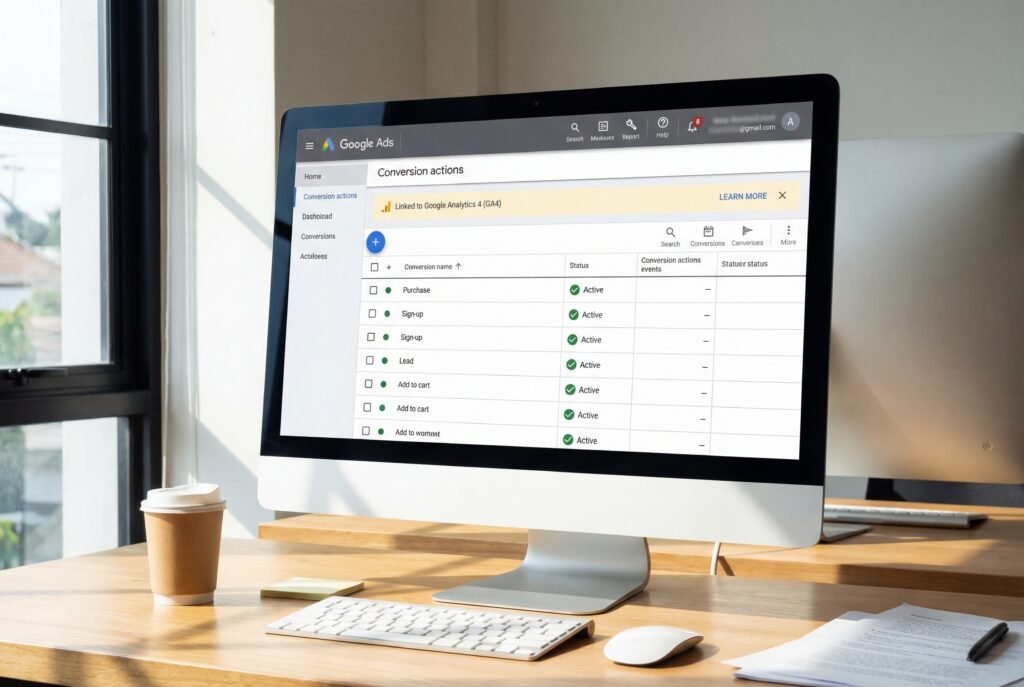
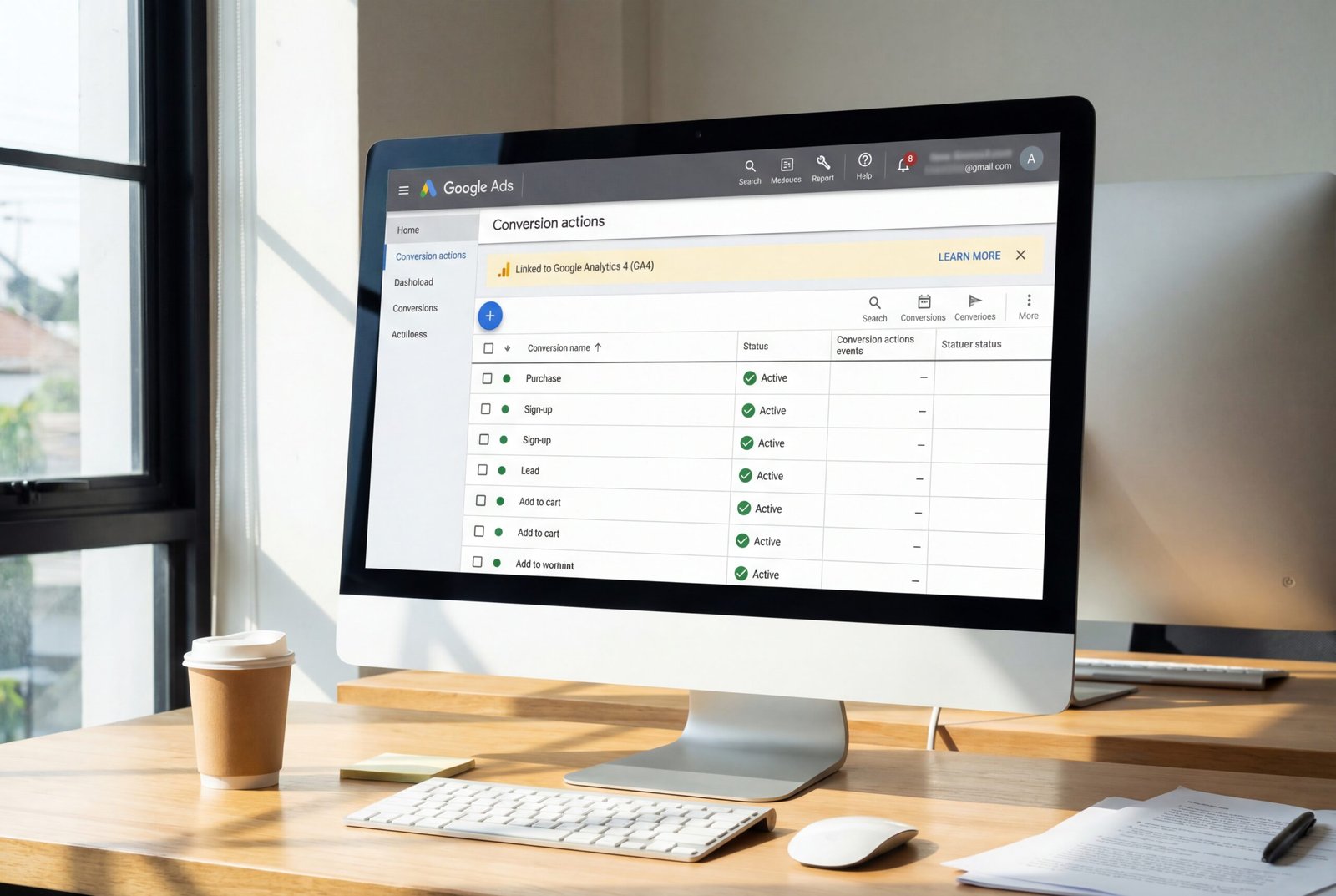
A quick way to check: open Google Ads, go to Tools and Settings, then Conversions. Every conversion action should show a green status and recent activity.
If your tracking is broken or double-counting, the optimizer will optimize toward bad data, and your results will suffer. This is the number one mistake our team at ConversionXperts sees when auditing new client accounts.
Step 2: Choose the Right Campaign Bidding Strategy
Go to your campaign settings. Under Bidding, click the option to change your bid strategy. You will see a dropdown with all Smart Bidding options. For beginners, select Maximize Conversions first. This builds your data pool without requiring a CPA target upfront.
Once your campaign has 30 or more conversions in 30 days, return to this setting and switch to Target CPA. Enter a realistic CPA target based on your current average, not your dream number. Starting with a target that is 20 to 30% above your current average gives the system room to learn.
Step 3: Set Up Conversion Value Rules (For Ecommerce)
If you run an ecommerce business, conversion value rules let you tell Google that certain types of conversions are worth more than others. For example, a customer who buys from your high-margin product line is worth more than one who buys a discounted item. You can assign multipliers to those conversions, and Google will optimize toward higher-value outcomes.
This feature became significantly more powerful in 2026 with the rollout of enhanced conversion value modeling, which uses first-party data to fill in gaps where cookie tracking is limited.
Step 4: Set Bid Limits Only If Necessary
Many advertisers set maximum CPC limits inside Smart Bidding campaigns. This is usually a bad idea. When you cap the maximum bid, you prevent Google from bidding aggressively on high-intent searches that could convert at a premium. The result is you win fewer of the valuable auctions.
Unless you have a very specific business reason to limit max CPC, let the optimizer work without a ceiling. Trust the target CPA to keep costs in check.
Step 5: Run an Ad Schedule Audit
Even with Smart Bidding active, reviewing your conversion data by time of day and day of week is valuable. If you are a B2B business and your ads run on weekends when nobody is in the office, you are wasting money on low-intent traffic that will dilute your conversion data.
Adjusting your ad schedule to focus on peak conversion windows helps the optimizer work with cleaner signals.
Conversion Rate Optimization Strategies That Multiply Your Results
The AdWords conversion optimizer brings better traffic. Conversion rate optimization, or CRO, turns more of that traffic into customers. Together, they create compounding gains.
CRO is the process of improving your website or landing pages so that a higher percentage of visitors take the action you want. If your current conversion rate is 3% and CRO pushes it to 6%, you have effectively doubled your results without spending a single extra dollar on ads.
Landing Page CRO: The Highest Leverage Opportunity
Your landing page is where the conversion either happens or does not. Every element of that page either builds trust and pushes the visitor toward action or creates friction that pushes them away.
The highest-impact elements to test and optimize are:
Headline clarity. Your headline should immediately tell the visitor what they get and why it matters. A vague headline kills conversions. A specific, benefit-driven headline boosts them.
Page load speed. According to Google’s 2026 Core Web Vitals report, pages that load in under 2.5 seconds see conversion rates that are on average 27% higher than pages loading in 4 or more seconds. Every second of delay costs you money.
Call to action (CTA) placement and language. The CTA button should be visible without scrolling on desktop and mobile. The language should tell people exactly what happens when they click. “Get My Free Quote” converts better than “Submit.”
Social proof. Reviews, testimonials, case study snippets, client logos, and trust badges all increase conversion rates by reducing buyer anxiety. A 2026 BrightLocal study found that 91% of American consumers read online reviews before contacting a business.
A/B Testing: The Engine of CRO
A/B testing means showing two versions of a page to different visitors and measuring which one converts better. It is the scientific backbone of conversion rate optimization.
You should always be running at least one A/B test on your most important landing pages. Start with the elements that have the highest impact: headlines, hero images, CTA buttons, and form length.
Use tools like Google Optimize alternatives available in 2026 (since Google Optimize was sunset in 2023), such as VWO, Optimizely, or Convert.com, to run structured tests with statistical significance.
Mobile CRO: Where American Advertisers Lose the Most Money
In 2026, over 67% of Google Ads clicks in the United States come from mobile devices,s according to Statista’s digital advertising report. Yet conversion rates on mobile are still significantly lower than desktop for most industries.
This gap is not because mobile users do not buy. It is because most landing pages are still built with desktop in mind first. Mobile visitors face tiny text, buttons that are hard to tap, forms with too many fields, and checkout flows that are not optimized for small screens.
Fixing mobile CRO alone can increase your overall conversion rate by 15 to 4,0% depending on your industry. This is one of the first things ConversionXperts audits for every new client.
Form Optimization: Fewer Fields, More Conversions
Every field you add to a contact form reduces the chance someone fills it out. This is not an opinion. It is a consistent finding across thousands of CRO studies.
The ideal lead generation form for most American businesses has three to four fields maximum: name, email, phone number, and one qualifying question. Longer forms are justified only when you need to qualify leads heavily or when the offer is high-value enough that the visitor is willing to invest time.
[INTERNAL LINK: form design and conversion rate tips]
Conversion Rate Tools That Work Best Alongside Google Ads
Using the right conversion rate tool alongside the AdWords conversion optimizer gives you a data advantage your competitors likely do not have.
Heatmap and Session Recording Tools
Heatmap tools show you where visitors click, scroll, and spend time on your landing pages. Session recordings let you watch real visitor behavior like a silent film of how people interact with your page.
The leading tools in this category in 2026 are Hotjar, Microsoft Clarity (free), and Crazy Egg. These tools reveal hidden friction points that analytics alone cannot show. For example, you might discover that 60% of visitors scroll right past your CTA button because they are distracted by an image lower on the page. That is a fixable problem, and finding it is worth thousands of dollars in recovered conversions.
Google Analytics 4 for Conversion Funnel Analysis
Google Analytics 4 is your primary conversion rate tool for understanding the full funnel. Set up conversion paths to see exactly where people drop off between clicking your ad and completing the goal. Look at:
Which traffic sources have the highest conversion rate? Which device types are underperforming. Which geographic regions convert best? How many sessions does it typically take before someone converts.?This data feeds directly back into your AdWords conversion optimizer settings and helps you make smarter targeting decisions.
CRM Integration for True Conversion Attribution
Most Google Ads accounts track a lead form submission as a conversion. But a form submission is not always a real conversion. The real conversion is when that lead becomes a paying customer.
By integrating your CRM (like Salesforce, HubSpot, or Zoho) with Google Ads, you can import offline conversions. This means Google learns which clicks actually became customers, not just which ones filled out a form. This dramatically improves the quality of data the optimizer uses and leads to smarter, more profitable bidding decisions.
According to a 2026 HubSpot study, advertisers using offline conversion imports saw 29% improvement in lead quality and 22% reduction in cost per actual customer acquisition.
Comparison: Top Conversion Rate Tools for Google Ads Users in 2026
| Tool | Best Use | Price Range | Integrates With Google Ads |
| Hotjar | Heatmaps, recordings, surveys | Free to $99 per month | Yes (via GA4) |
| Microsoft Clarity | Free heatmaps and recordings | Free | Yes (via GA4) |
| VWO | A/B testing and personalization | $199 plus per month | Yes |
| Unbounce | Landing page building and testing | $99 plus per month | Yes |
| Google Analytics 4 | Funnel analysis and attribution | Free | Native |
| CallRail | Call tracking and attribution | $45 plus per month | Yes |
Real World Results: What B2 Optimization Looks Like in Practice
B2 optimization refers to business-to-business conversion optimization. It is a specific discipline within CRO because B2B buyers behave very differently from retail consumers.
B2B buyers take longer to decide. They involve multiple stakeholders. They do more research before filling out a form. Their conversion actions (like requesting a demo or downloading a whitepaper) have much higher long-term value than a single retail purchase.
Case Study: B2B Software Company Using the Conversion Optimizer
A software-as-a-service company targeting small business owners in the United States was running Google Ads with manual bidding. Their average cost per lead was $187, and their conversion rate on their landing page was 2.4%.
After switching to Target CPA bidding with a $200 target and running three months of landing page CRO tests (including a new headline, a shorter form, and added testimonials), their results shifted dramatically:
Cost per lead dropped to $134. Conversion rate climbed to 4.1%. Monthly lead volume increased by 38% on the same budget.
This is what happens when the AdWords conversion optimizer and CRO work together. Neither alone produced these results. Combined, they compounded.
Why B2 Optimization Requires Patience That B2C Does Not
B2B sales cycles can be 30, 60, or even 90 days. This means your offline conversion data takes longer to flow back into Google Ads. Your optimizer needs more time to learn what a real customer looks like.
The solution for B2B advertisers is to set up multiple conversion actions at different stages of the funnel. Track form submissions as a micro-conversion. Track demo completions or proposal requests as a higher-value conversion. Then weight them appropriately when feeding data back into your Smart Bidding strategy.
The Role of Remarketing in B2 Optimization
Remarketing is especially powerful for B2B. Because the sales cycle is long, most visitors will not convert on their first visit. Remarketing lets you stay visible to those visitors as they continue their research across the web.
When combined with the conversion optimizer, remarketing audiences can be used to adjust bids upward for visitors who have already shown strong intent signals, like visiting your pricing page or watching a demo video. This is called RLSA (Remarketing Lists for Search Ads), and it is one of the most underused features in Google Ads.
Common Mistakes That Kill Your Conversion Rate (and How to Fix Them)
Even experienced advertisers make these mistakes. Knowing them in advance saves you significant money.
Mistake 1: Switching Bidding Strategies Too Often
Every time you change your bidding strategy, Google resets its learning period. This learning period can last one to two weeks, during which performance is unstable, and costs can spike.
The fix: Commit to a strategy for at least four to six weeks before evaluating results. Give the system time to learn.
Mistake 2: Setting a Target CPA That Is Too Aggressive
If your average cost per conversion is $150 and you set a target of $60, the system will not be able to meet that goal. It will either spend very little (because it cannot find enough cheap conversions) or it will miss your target consistently.
The fix: Start your Target CPA at your actual average or slightly above. Lower it by 10 to 15% every two to four weeks as the system adapts.
Mistake 3: Ignoring Quality Score
Quality Score is Google’s rating of your ads, keywords, and landing pages. A high Quality Score means you pay less per click for the same position. A low score means you pay more.
Many advertisers focus entirely on bidding strategy and ignore Quality Score. But a better Quality Score makes every dollar you spend go further and helps the conversion optimizer get more conversions ata lower cost.
Mistake 4: Sending Ad Traffic to Your Homepage
Your homepage is designed for many audiences. Your ad is designed for one specific audience with one specific need. Sending ad traffic to your homepage creates a mismatch that kills conversions.
Always send ad traffic to a dedicated landing page that matches the intent and message of the ad.
Mistake 5: Not Testing Enough
Most advertisers run one landing page and never test alternatives. This is leaving enormous value on the table. Even a 1% improvement in conversion rate compounded over 12 months represents a massive difference in revenue.
Run at least one A/B test per month on your highest-traffic landing pages.
How ConversionXperts Can Help You Grow Faster
At ConversionXperts, we are a performance marketing agency built specifically around one mission: turning your ad spend into real, measurable business growth.
We work with businesses across the United States who are tired of running Google Ads that eat budget without delivering a clear return. Whether you are a local service business, a B2B company, or an ecommerce store, we bring the same disciplined approach to every account we manage.
What We Offer
Google Ads Management and Optimization. We handle everything from campaign structure and keyword research to bidding strategy and ad copy. We use the AdWords conversion optimizer strategically, not blindly. Every decision is backed by data and tested before we scale.
Conversion Rate Optimization (CRO) Services. We audit your landing pages, identify friction points using heatmaps and session recordings, build A/B testing plans, and implement changes that lift your conversion rate month over month.
Conversion Tracking Setup and Audit. Bad data leads to bad decisions. We make sure your conversion tracking is accurate, complete, and feeding the right signals into your Smart Bidding campaigns. This includes offline conversion imports for B2B clients.
Full Funnel Strategy. We do not just optimize one piece of the puzzle. We look at your entire customer journey from the first ad click to the final sale and find opportunities to improve at every stage.
Monthly Reporting and Transparency. You always know exactly where your money is going and what results it is producing. No confusing reports, no vague metrics. Just clear data tied to real business outcomes.
B2B Optimization Programs. We specialize in B2B campaigns that require longer attribution windows, multi-touch reporting, and CRM integration. If you sell to other businesses, we understand your world.
If you want to stop guessing and start growing, ConversionXperts is ready to audit your Google Ads account and show you exactly where you are losing money and how to get it back.
Frequently Asked Questions
What is the AdWords conversion optimizer?
The AdWords conversion optimizer is an automated bidding system in Google Ads that uses machine learning to adjust your bids at every auction. Its goal is to get you the most conversions or conversion value for your budget. It analyzes over 70 real-time signals, including device, location, time, and user behavior.
How many conversions do I need before using the conversion optimizer?
You need at least 30 conversions in the last 30 days for the optimizer to work effectively. Below this threshold, use Maximize Conversions mode to build your data first. Launching Target CPA with too little data often results in higher costs and unstable performance.
What is the difference between conversion rate and conversion rate optimization?
Your conversion rate is a number: the percentage of visitors who complete a desired action. Conversion rate optimization (CRO) is the process of improving your website, ads, and landing pages to increase that percentage. CRO uses testing, data analysis, and design changes to make more visitors convert without increasing ad spend.
What is a good conversion rate for Google Ads in 2026?
According to WordStream’s 2026 Google Ads benchmark data, the average conversion rate across all industries is approximately 4.4% for search campaigns. Top performers achieve 10% or higher. Industries like legal services and finance tend to have lower rates, while home services and education can see higher rates depending on the offer.
What isB2B optimization in the context of Google Ads?
B2 optimization, or business-to-business optimization, refers to the process of tailoring your Google Ads campaigns and landing pages specifically for B2B buyers. B2B audiences take longer to convert, involve multiple decision makers, and require a different approach to lead qualification, ad messaging, and conversion tracking compared to consumer-focused campaigns.
What is the best conversion rate tool for small businesses in America?
For small businesses, Microsoft Clarity is the best free conversion rate tool because it provides heatmaps and session recordings at no cost. For paid options, Hotjar is the most widely used and most user-friendly option. For A/B testing on a budget, Google’s free tools combined with manual testing can work well when combined with Google Analytics 4.
Should I use Target CPA or Target ROAS for my Google Ads campaign?
Use Target CPA if your goal is generating leads, signups, or fixed-price conversions. Use Target ROAS if you run an ecommerce store where order values vary and you want to maximize total revenue. If your campaign is new or has fewer than 30 monthly conversions, start with Maximize Conversions before switching to either Target CPA or ROAS.
How long does the Google Ads learning period take?
The learning period for Smart Bidding strategies typically lasts one to two weeks. During this time, you may see a higher cost per conversion and inconsistent performance. Avoid making major changes to bids, budgets, or targeting during the learning period. Wait for the system to stabilize before evaluating results.
Conclusion
The AdWords conversion optimizer is one of the most powerful tools available to American advertisers in 2026. But like any powerful tool, it only works when you use it correctly.
Here are the three most important takeaways from this guide:
First, the conversion optimizer needs clean data and the right setup before it can perform. Get your conversion tracking right, build up at least 30 conversions per month, and choose the right bidding mode for your campaign goals.
Second, the optimizer alone is not enough. Pairing it with strong conversion rate optimization practices, a fast-loading and well-designed landing page, and the right conversion rate tools creates compounding results that none of these strategies can achieve alone.
Third, patience is required. Smart Bidding learns over time. The advertisers who see the best long-term results are those who give the system time to learn, test consistently, and make incremental improvements every month.
If you are ready to get real results from your Google Ads investment, the team at ConversionXperts is here to help. We combine expert-level Google Ads management with proven CRO strategies to help businesses across America grow faster and spend smarter. Reach out today and let us show you what is possible.
Have questions about starting your CRO program or running your first A/B test? Drop a comment below — every question gets a response.
Sources referenced: Google Ads Performance Benchmark Report 2026, WordStream Google Ads Benchmarks 2026, HubSpot Marketing Statistics Report 2026, BrightLocal Local Consumer Review Survey 2026, Statista Digital Advertising Report 2026, Google Core Web Vitals Documentation 2026.