Why AI Is Revolutionizing Conversion Rate Optimization

Converting website visitors into paying customers has always been the holy grail of digital marketing. Traditional conversion rate optimization relied on manual A/B testing, intuition, and weeks of data analysis. Today, artificial intelligence is transforming this landscape completely, enabling businesses to optimize conversions in real-time with unprecedented accuracy.
AI conversion optimization uses machine learning algorithms to analyze user behavior, predict customer intent, and automatically adjust website elements to maximize conversions. Companies implementing AI-driven conversion strategies are seeing conversion rate improvements of 20-300%, with some e-commerce businesses reporting revenue increases exceeding $1 million annually.
This comprehensive guide explores everything you need to know about AI conversion optimization, from foundational concepts to advanced implementation strategies that drive measurable results.
1. What Is AI Conversion Optimization?

AI conversion optimization is the process of using artificial intelligence and machine learning technologies to improve the percentage of website visitors who complete desired actions, such as making purchases, signing up for newsletters, or requesting demos.
Unlike traditional CRO methods that rely on static rules and manual testing, AI conversion optimization continuously learns from user interactions. The technology analyzes thousands of data points, including click patterns, scroll depth, time on page, device type, traffic source, and behavioral signals, to identify conversion opportunities that humans might miss.
The core advantage lies in AI’s ability to process massive datasets instantly and identify complex patterns. For example, AI can detect that mobile users from social media who land on your homepage between 6-8 PM are 47% more likely to convert if they see testimonials before product features, while desktop users prefer the opposite sequence.
Modern AI conversion systems utilize several technologies working together: predictive analytics forecast which visitors are most likely to convert, natural language processing personalizes messaging, computer vision optimizes visual elements, and reinforcement learning continuously improves decision-making based on outcomes.
2. How AI Conversion Optimization Works: The Technology Behind the Magic

At its core, AI conversion optimization operates through a continuous cycle of data collection, pattern recognition, prediction, and optimization. Understanding this process helps businesses implement these systems effectively.
Data Collection and Integration: AI systems aggregate data from multiple sources,s including website analytics, customer relationship management systems, email marketing platforms, and advertising channels. This creates a unified view of each customer’s journey across all touchpoints.
Machine Learning Models: Sophisticated algorithms analyze historical conversion data to build predictive models. These models identify which combinations of factors lead to conversions. For instance, the AI might discover that first-time visitors who view three specific pages within five minutes have a 68% conversion probability.
Real-Time Personalization: Based on predictions, the AI dynamically adjusts website elements for each visitor. This includes modifying headlines, changing call-to-action buttons, reordering content sections, adjusting images, or displaying personalized product recommendations.
Continuous Learning: Unlike static optimization, AI systems improve over time. Every visitor interaction becomes new training data, allowing the algorithms to refine their predictions and recommendations. This creates a compounding effect where conversion rates steadily improve.
Multivariate Testing at Scale: Traditional A/B testing compares two versions of a page. AI can simultaneously test hundreds of variations across multiple elements, identifying winning combinations exponentially faster than manual methods.
3. Key Benefits of Implementing AI for Conversion Rate Optimization

The advantages of AI-powered conversion optimization extend far beyond simple percentage increases in conversion rates. Businesses adopting these technologies experience transformative changes across their entire digital ecosystem.
Dramatically Increased Conversion Rates: The most obvious benefit is higher conversion rates. Companies typically see improvements ranging from 20% to 300%, depending on their starting point and implementation sophistication. E-commerce sites often experience the most dramatic gains, with some reporting conversions jumping from 2% to 6% or higher.
Reduced Customer Acquisition Costs: When more visitors convert, your cost per acquisition drops proportionally. If AI optimization doubles your conversion rate, you effectively cut your customer acquisition cost in half without spending less on advertising.
Enhanced Personalization at Scale: AI enables true one-to-one personalization for thousands or millions of visitors simultaneously. Each person sees the version of your website most likely to resonate with them based on their characteristics and behavior.
Faster Optimization Cycles: Traditional testing might take weeks or months to achieve statistical significance. AI-powered systems can identify winning variations in days or even hours, dramatically accelerating your optimization velocity.
Data-Driven Decision Making: AI removes guesswork from conversion optimization. Instead of relying on opinions about what might work, businesses make decisions based on empirical evidence and predictive modeling.
24/7 Autonomous Optimization: AI systems work continuously without human intervention, optimizing conversions while your team sleeps. This around-the-clock operation ensures no conversion opportunities are missed.
Improved Customer Experience: When visitors see content tailored to their needs and preferences, their overall experience improves. This leads to higher engagement, better brand perception, and increased customer lifetime value.
4. AI-Powered Personalization: Delivering the Right Message to the Right Person

Personalization represents one of the most powerful applications of AI in conversion optimization. Generic, one-size-fits-all websites are increasingly ineffective in a world where consumers expect tailored experiences.
Behavioral Segmentation: AI analyzes real-time behavior to categorize visitors into micro-segments. Rather than broad categories like “returning customers,” AI creates highly specific segments such as “mobile users from paid search who previously abandoned cart with items over $200.”
Dynamic Content Adjustment: Based on segment classification, AI modifies webpage content instantly. Headlines change to address specific pain points, product recommendations align with browsing history, and calls-to-action use language that resonates with that visitor’s decision-making style.
Predictive Product Recommendations: E-commerce sites using AI recommendation engines see significant revenue increases. These systems analyze purchase patterns, browsing behavior, and similar customer profiles to suggest products each visitor is most likely to buy.
Personalized Messaging and Tone: Natural language processing enables AI to adjust messaging tone and complexity based on visitor characteristics. A technical audience might see detailed specifications, while casual browsers receive benefit-focused messaging.
Timing Optimization: AI determines the optimal moment to display pop-ups, chat widgets, or special offers based on engagement signals. Instead of annoying visitors with immediate pop-ups, the system waits for the ideal psychological moment.
Cross-Channel Consistency: Advanced AI systems maintain personalization across channels. A visitor who clicks on an email about running shoes sees running-related content when they arrive at your website, creating seamless continuity.
5. Predictive Analytics: Anticipating Customer Behavior Before It Happens
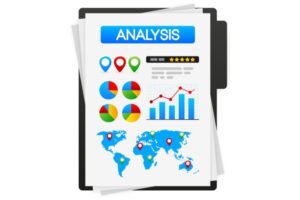
Predictive analytics represents the forward-looking dimension of AI conversion optimization, enabling businesses to anticipate and influence customer actions before they occur.
Lead Scoring and Prioritization: AI assigns probability scores to each visitor indicating their likelihood to convert. Sales teams can prioritize high-probability leads, while marketing automation nurtures lower-scoring prospects with targeted content until they’re ready.
Churn Prediction: By analyzing behavioral patterns, AI identifies customers at risk of churning before they leave. This enables proactive retention efforts such as special offers, personalized outreach, or product recommendations that re-engage wavering customers.
Purchase Intent Signals: AI detects subtle signals indicating purchase readiness, such as increased page visits, longer session durations, or specific page sequences. When intent signals strengthen, the system can trigger interventions like limited-time offers or live chat invitations.
Lifetime Value Prediction: Not all conversions are equally valuable. AI predicts which customers will generate the highest lifetime value, allowing businesses to allocate resources strategically and create differentiated experiences for high-value segments.
Optimal Price Sensitivity: Advanced systems analyze how price-sensitive different visitor segments are, enabling dynamic pricing strategies that maximize both conversion rates and profit margins.
Cart Abandonment Prevention: Rather than simply sending recovery emails after abandonment, predictive AI identifies visitors likely to abandon and intervenes with incentives, reassurance messaging, or simplified checkout options before they leave.
6. Smart A/B Testing: How AI Transforms Traditional Experimentation

Traditional A/B testing has been the backbone of conversion optimization for years, but AI is revolutionizing how businesses approach experimentation, making it faster, more sophisticated, and dramatically more effective.
Automated Test Creation: AI systems can generate test hypotheses based on data analysis, suggesting which elements to test and predicting which variations will likely win. This removes the guesswork from test planning.
Multi-Armed Bandit Algorithms: Unlike traditional testing that evenly splits traffic between variations, multi-armed bandit algorithms dynamically allocate more traffic to winning variations while tests are running. This maximizes conversions during the testing period itself.
Multivariate Testing at Scale: AI enables simultaneous testing of numerous variables and their interactions. While manual multivariate testing becomes impractical beyond a few variables, AI can optimize dozens of elements simultaneously.
Faster Statistical Significance: Machine learning algorithms can identify winning variations with smaller sample sizes and shorter testing periods by applying sophisticated statistical methods that account for multiple variables and contextual factors.
Contextual Testing: AI considers context when determining winners. A variation might perform better for mobile users but worse for desktop users. AI automatically segments results and applies winning variations to appropriate contexts.
Continuous Optimization: Rather than running discrete tests with clear start and end dates, AI enables continuous experimentation where the system constantly tests new variations and implements improvements without human intervention.
Avoiding Local Maxima: Traditional testing might find a good solution,n but miss the best solution. AI’s exploration algorithms help avoid settling for local optima by periodically testing radically different approaches.
7. Chatbots and Conversational AI: Engaging Visitors in Real-Time

Conversational AI has emerged as a powerful conversion tool, providing instant engagement and personalized assistance that guides visitors toward conversion actions.
24/7 Availability: AI chatbots provide immediate responses regardless of time zones or business hours. This eliminates the conversion-killing delays that occur when potential customers have questions outside business hours.
Intelligent Qualification: Conversational AI asks strategic questions to understand visitor needs and qualifications, then routes them appropriately. High-intent visitors connect with sales teams, while others receive automated assistance or content recommendations.
Personalized Recommendations: By understanding visitor requirements through natural conversation, chatbots provide highly relevant product or service recommendations, acting as virtual sales assistants that scale infinitely.
Objection Handling: Advanced conversational AI is trained on common objections and can provide compelling responses that address concerns and move visitors closer to conversion. This replicates the objection-handling skills of top salespeople.
Seamless Human Handoff: When conversations require human expertise, AI smoothly transfers to human agents along with full conversation context, ensuring visitors never repeat themselves and receive consistent service.
Proactive Engagement: Rather than waiting for visitors to initiate contact, AI analyzes behavior signals and proactively offers assistance when visitors show confusion, hesitation, or high purchase intent.
Multi-Language Support: AI chatbots can converse fluently in dozens of languages, dramatically expanding market reach without hiring multilingual support staff.
8. Visual and Design Optimization: Using AI to Perfect User Experience

Visual elements profoundly impact conversion rates, and AI brings unprecedented capabilities to optimize design elements for maximum effectiveness.
Heatmap Analysis and Optimization: AI analyzes heatmap data to understand how visitors interact with page elements. It identifies which areas attract attention and which are ignored, then suggests design modifications to improve focus on conversion elements.
Eye-Tracking Prediction: Advanced computer vision models predict where visitors will look first and how their attention moves across pages. Designers can optimize layouts to guide visual attention toward key conversion elements.
Image Selection and Testing: AI evaluates which images resonate most with different audience segments. E-commerce sites might discover that lifestyle images outperform product-only shots for certain demographics, while the reverse is true for others.
Color Psychology Optimization: AI tests color variations for buttons, backgrounds, and text to identify combinations that maximize conversions for specific audiences. These subtle changes can yield significant conversion improvements.
Layout Personalization: Rather than showing everyone the same page layout, AI dynamically rearranges elements based on visitor characteristics and behavior. Mobile users might see a simplified layout while desktop users see comprehensive information.
Load Time Optimization: AI identifies which visual elements slow page loading and suggests optimizations. Since every second of load time impacts conversion rates, these technical improvements directly affect bottom-line results.
Accessibility Enhancement: AI ensures designs work effectively for visitors with disabilities by analyzing contrast ratios, text sizing, and navigation patterns, expanding the potential customer base while improving conversion rates.
9. Top AI Conversion Optimization Tools and Platforms

The AI conversion optimization landscape includes numerous powerful platforms, each offering different capabilities and suited to various business needs and budgets.
Google Optimize with AI Capabilities: Google’s free tool integrates with Analytics and uses machine learning for personalization and testing. It’s ideal for businesses starting their AI optimization journey with limited budgets.
Dynamic Yield: This enterprise-grade platform offers comprehensive personalization across web, mobile, and email. It excels at omnichannel optimization and is used by major e-commerce brands.
Optimizely with Intelligence Cloud: Optimizely combines traditional experimentation with AI-powered recommendations and automated optimization. Their platform suits mid-market to enterprise businesses seeking sophisticated capabilities.
VWO (Visual Website Optimizer): VWO provides accessible AI-powered testing and personalization with strong visual editing capabilities. It’s particularly popular with marketing teams that prefer intuitive interfaces.
Unbounce Smart Traffic: This landing page platform uses AI to automatically send visitors to the variation they’re most likely to convert on, making optimization accessible to small businesses.
Personyze: Specializing in personalization, Personyze offers extensive customization options and integrations. It’s effective for businesses wanting granular control over personalization rules.
Adobe Target: Part of Adobe Experience Cloud, Target provides enterprise-level personalization and automated allocation testing, integrating seamlessly with other Adobe marketing tools.
Evergage (Salesforce Interaction Studio): Real-time personalization platform that excels at behavioral targeting and integrates tightly with Salesforce CRM for coordinated marketing and sales optimization.
10. Implementing AI Conversion Optimization: A Step-by-Step Strategy

Successfully implementing AI conversion optimization requires strategic planning and methodical execution. Follow this proven framework to maximize your chances of success.
Step 1 – Audit Your Current Conversion Funnel: Begin by thoroughly analyzing your existing conversion process. Identify where visitors drop off, which pages have the lowest conversion rates, and where the biggest opportunities exist.
Step 2 – Define Clear Conversion Goals: Establish specific, measurable objectives. Rather than vague goals like “increase conversions,” set targets such as “increase email signup rate from 3% to 5%” or “reduce cart abandonment from 70% to 60%.”
Step 3 – Ensure Robust Data Collection: AI requires quality data to function effectively. Implement comprehensive tracking using tools like Google Analytics, heatmapping software, and customer data platforms to capture all relevant visitor interactions.
Step 4 – Select Appropriate AI Tools: Choose platforms that align with your budget, technical capabilities, and optimization goals. Start with one or two tools rather than overwhelming your team with too many new systems.
Step 5 – Start with High-Impact Pages: Focus initial optimization efforts on pages with the highest traffic and greatest conversion potential. Homepage, product pages, and checkout flows typically offer the best return on investment.
Step 6 – Implement Personalization Gradually: Begin with simple personalization based on traffic source or device type, then progressively add more sophisticated behavioral and predictive personalization as you gain experience.
Step 7 – Test Aggressively: Use AI’s testing capabilities to experiment extensively. Test headlines, images, calls-to-action, page layouts, and messaging variations to identify what resonates with your audience.
Step 8 – Monitor and Analyze Results: Regularly review performance metrics and AI recommendations. Look for patterns in what works and doesn’t work, using these insights to refine your overall conversion strategy.
Step 9 – Integrate Across Channels: Extend AI optimization beyond your website to email, mobile apps, and advertising. Consistent cross-channel optimization creates compounding improvements.
Step 10 – Continuously Iterate: AI conversion optimization is not a one-time project but an ongoing process. Allocate resources for continuous testing, learning, and refinement to sustain long-term improvement.
11. Common Challenges and How to Overcome Them

While AI conversion optimization offers tremendous benefits, implementation isn’t without challenges. Understanding these obstacles and their solutions helps ensure successful deployment.
Challenge: Data Privacy and Compliance: AI optimization requires extensive data collection, raising privacy concerns and regulatory compliance issues with GDPR, CCPA, and similar regulations.
Solution: Implement privacy-first AI systems that anonymize data, provide clear opt-out mechanisms, and maintain transparent privacy policies. Many modern AI platforms include built-in compliance features that help meet regulatory requirements.
Challenge: Technical Integration Complexity: Integrating AI tools with existing marketing technology stacks can be technically challenging, especially for businesses with legacy systems.
Solution: Prioritize tools with robust APIs and pre-built integrations for popular platforms. Consider working with implementation partners who specialize in AI marketing technology integration.
Challenge: Insufficient Data Volume: AI algorithms require substantial data to generate accurate predictions and recommendations. New websites or low-traffic pages struggle to achieve reliable optimization.
Solution: Start AI optimization on high-traffic pages where sufficient data exists. For lower-traffic areas, use AI insights from similar pages or rely on traditional optimization methods until adequate data accumulates.
Challenge: Over-Reliance on Automation: Completely automated AI optimization can miss strategic opportunities or make changes that conflict with brand values or business objectives.
Solution: Maintain human oversight of AI systems. Review recommendations before implementation, set guardrails that align with brand guidelines, and combine AI insights with human strategic thinking.
Challenge: Measuring True Incrementality: AI optimization might appear to improve conversions when it’s simply identifying and targeting visitors who would have converted anyway.
Solution: Conduct holdout tests where a percentage of traffic receives unoptimized experiences, allowing you to measure true incremental lift from AI optimization.
Challenge: Change Management Resistance: Teams accustomed to traditional optimization methods may resist AI adoption due to fear of obsolescence or preference for familiar processes.
Solution: Position AI as an enhancement to human capabilities rather than a replacement. Involve team members in implementation, provide training, and celebrate early wins to build confidence and buy-in.
12. The Future of AI Conversion Optimization: What’s Coming Next

The AI conversion optimization landscape continues evolving rapidly. Understanding emerging trends helps businesses prepare for the next wave of innovation and maintain competitive advantages.
Hyper-Personalization Through Emotional AI: Future systems will analyze emotional states through facial recognition, voice tone analysis, and behavioral micro-signals, enabling personalization based not just on what visitors do but how they feel.
Augmented Reality Integration: As AR becomes mainstream, AI will optimize how virtual products appear in customers’ real environments, testing different presentations, sizes, and configurations to maximize conversion likelihood.
Voice Commerce Optimization: With voice-activated shopping growing rapidly, AI will optimize conversational flows and responses for voice assistants, ensuring seamless conversion experiences through Alexa, Google Assistant, and similar platforms.
Quantum Computing Enhanced AI: Quantum computers will enable AI systems to process more variables and scenarios exponentially, identifying conversion opportunities invisible to current technology and optimizing at previously impossible scales.
Predictive Inventory and Pricing: Advanced AI will coordinate conversion optimization with inventory management and dynamic pricing, ensuring optimal conversion rates while maximizing profit margins and preventing stockouts.
Cross-Company Learning Networks: AI platforms will learn from anonymized data across multiple companies in similar industries, allowing businesses to benefit from collective intelligence while maintaining competitive privacy.
Neuromorphic Computing for Real-Time Decisions: Brain-inspired computing architectures will enable microsecond-level optimization decisions, personalizing experiences with latency so low that every page element can be customized before it fully loads.
Conclusion: Taking the First Step Toward AI-Powered Conversion Success
AI conversion optimization represents one of the most significant opportunities in digital marketing today. The technology has matured beyond experimental status into proven, production-ready systems delivering measurable results for businesses of all sizes.
The competitive advantage AI provides continues growing as algorithms improve, and more data becomes available. Companies implementing these systems now position themselves ahead of competitors still relying on manual optimization methods, creating widening performance gaps that become increasingly difficult to close.
Success doesn’t require massive budgets or extensive technical expertise. Start with accessible tools, focus on high-impact pages, test extensively, and scale gradually based on results. The compounding nature of AI optimization means small improvements generate increasingly significant returns over time.
The question isn’t whether to adopt AI conversion optimization, but when and how. Businesses that embrace this technology strategically, combining AI capabilities with human insight and creativity, will dominate their markets in the years ahead.
Your journey toward dramatically improved conversion rates begins with a single step. Audit your current conversion funnel, identify your biggest opportunity areas, select an appropriate AI tool, and start optimizing. The results will speak for themselves.